New national research shows Red Deer, a mid‑sized city in central Alberta, recorded a higher per‑capita rate of people experiencing homelessness than Toronto in 2024 — a finding that underlines mounting pressure on the city’s lowest‑cost rental market.
Rates and counts
The Canadian Alliance to End Homelessness analysed Point‑in‑Time counts and rental market data from 36 communities across Canada. For Red Deer, the Alliance recorded a homelessness rate of 66.02 per 10,000 residents in 2024, compared with Toronto’s rate of 47 per 10,000 that year. By 2025 both cities saw declines in their rates: Red Deer to 55.88 and Toronto to 37.28.
| Indicator | Red Deer (2024) | Red Deer (2025) | Toronto (2024) | Toronto (2025) |
|---|---|---|---|---|
| Homelessness rate (per 10,000) | 66.02 | 55.88 | 47 | 37.28 |
| Number counted | 747 | 645 | 15,418 | 12,196 |
What the Alliance found
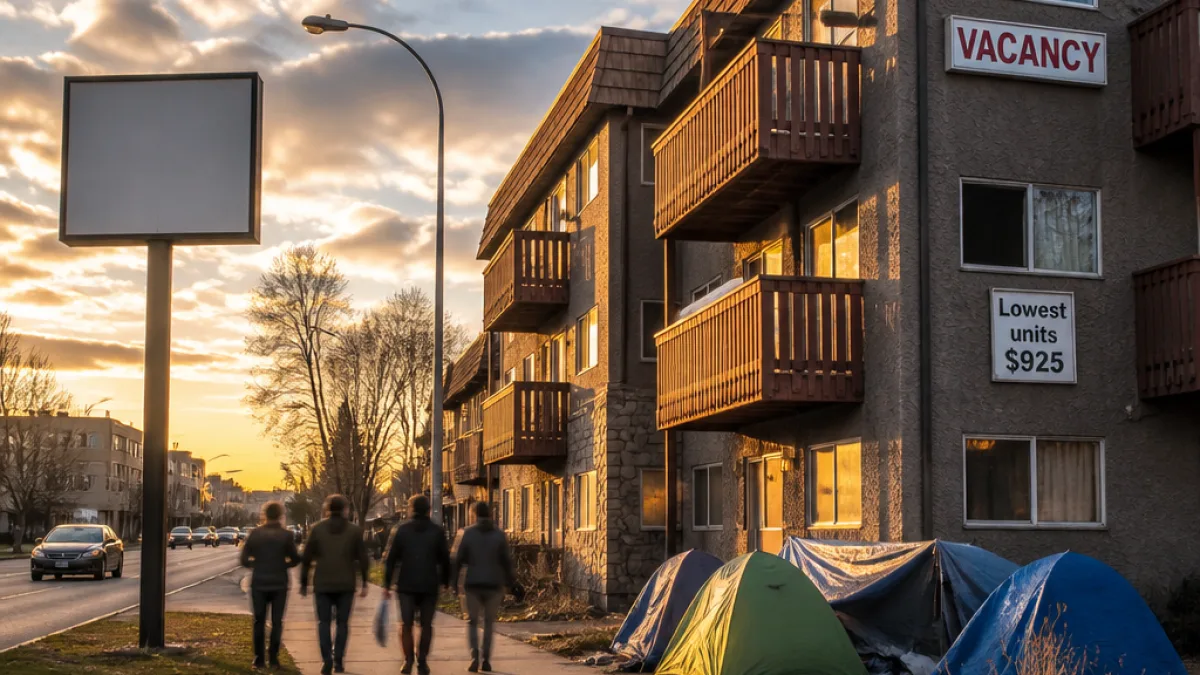
The Alliance’s preliminary report, Homelessness is a Housing Problem in Canada, links the rise in homelessness in certain communities to a shrinking supply of the lowest‑cost rental units and reduced vacancy. In Red Deer, vacancy in lowest‑cost rental housing fell markedly from 10.8 per cent to 1.6 per cent over a seven‑year period examined by the report. By contrast, average rents for those lowest‑cost units moved modestly from $823 to $925, signalling that constrained supply, not rapid price spikes, was a key factor.
“It’s really striking when you think that a city the size of Red Deer, (that) their homelessness rate quadrupled between 2018 and 2024,”
The Alliance’s president and CEO, Tim Richter, said the Red Deer findings stood out among the communities studied. He tied the trend to local population growth, falling vacancy and rising costs in the cheapest units, layered on top of broader cost‑of‑living pressures.
Local consequences and pressures
For Red Deer, the numbers signal challenges for municipal services, shelters and housing programs. While the city’s counted number of people experiencing homelessness fell from 747 in 2024 to 645 in 2025, the per‑capita rate remains above many larger centres. That gap matters when planning shelter capacity, outreach resources and prevention programs.
- Service demand: Higher per‑capita homelessness can increase pressure on shelters, health and social supports.
- Housing supply: A collapse in vacancy for the lowest‑cost units limits options for people at immediate risk of homelessness.
- Policy response: The data points to the need for targeted interventions to preserve and expand lowest‑cost rental supply and to stabilise households.
What the data does — and doesn’t — say
The Alliance based its analysis on available Point‑in‑Time counts (2018–2024) and Canadian Mortgage and Housing Corporation rental market data. Point‑in‑Time counts give a snapshot of people who are experiencing homelessness on a particular day; they are useful for trend analysis but do not capture people who move in and out of homelessness between counts.
Local officials and agencies in Red Deer will need to weigh this research alongside municipal data, shelter occupancy records and regional housing strategies to shape immediate and longer‑term responses. The Alliance’s analysis highlights that even modest rent increases for the cheapest units, when combined with very low vacancy, can translate into larger rises in homelessness — a caution for municipalities watching their rental markets.
As the city considers housing and service priorities, the Alliance’s preliminary report is likely to restart conversations about preserving low‑cost rentals, boosting supply, and aligning regional housing supports to prevent further increases in homelessness.