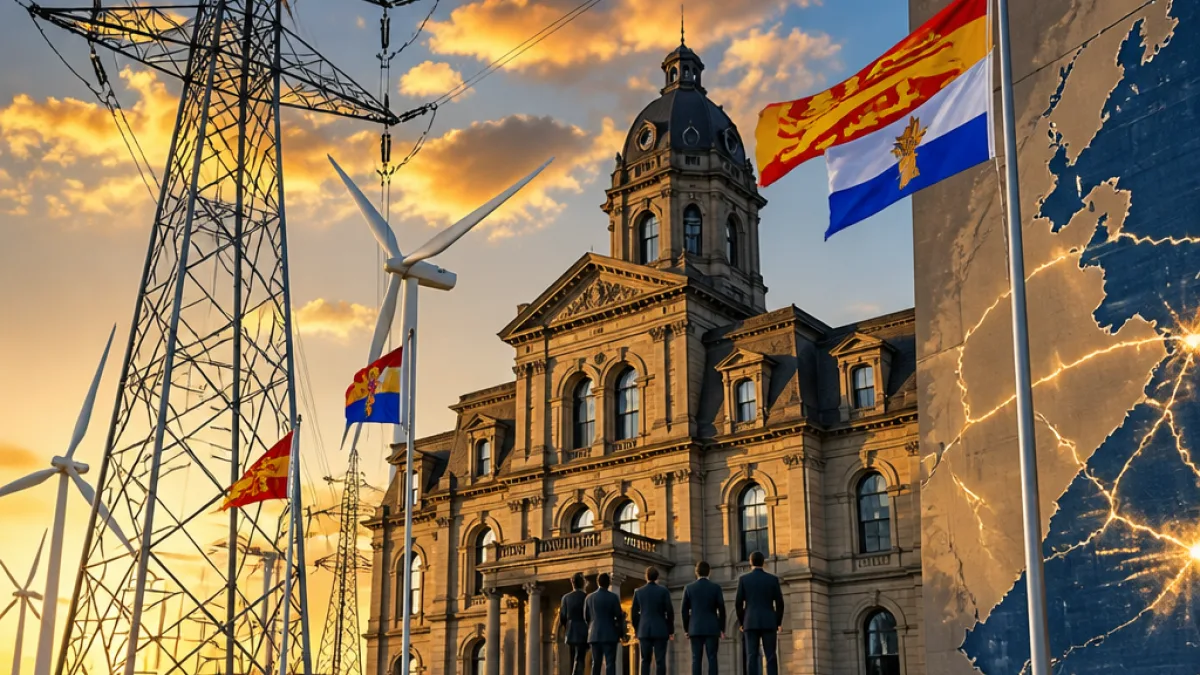
New Brunswick Premier Susan Holt says the province is prepared to use the tools at its disposal — potentially including energy exports to New England — to help secure a national trade resolution and avert sweeping U.S. tariffs she warned would harm the provincial economy.
Premier frames energy as part of a broader negotiating toolkit
“They hurt our economy, they make life more expensive for everyone,” Holt said, describing the potential tariffs as damaging for producers and consumers alike. The government is considering how best to support federal negotiations and, she said, may be prepared to use the province’s energy relationships as leverage.
Holt was careful to underline the contingency of the idea: the province may ultimately decide not to take action on that front, but keeping options visible can strengthen Canada’s negotiating position. “We have to be very strategic about how we use the leverage that we have,” she said, echoing a colleague who urged leaders to “walk softly and carry a big stick.”
Local economic stakes
According to Holt’s office, the threatened tariffs would affect roughly $112 million in New Brunswick goods, equal to about 0.8 per cent of the province’s exports to the United States. The measures name-checked a wide range of products — from alcohol and electronics to molasses — and would strike an already pressured softwood lumber sector.
Holt highlighted the uneven local consequences of the tariffs, pointing to one entrepreneur whose cardboard and box-making operations could face a $44-million hit. Such impacts would ripple through supply chains, raising costs for businesses and consumers.
- Estimated provincial exposure: $112 million (0.8% of exports to the U.S.)
- Noted vulnerable sectors: alcohol, electronics, molasses, softwood lumber
- Example cited: up to $44 million impact in cardboard/box manufacturing
Experts and business groups urge caution
Not everyone supports using energy as a bargaining chip. Maria Panezi, an associate law professor at the University of New Brunswick, warned that threatening to redirect or withhold energy supplies when those supplies are not directly affected carries legal and diplomatic risks — particularly given that the tariffs themselves are not yet in force.
“I think it’s a good idea to walk carefully when you try to redirect as a way to force the hand of a trading partner,” Panezi said.
Rhonda Tulk-Lane, president and CEO of the Atlantic Chamber of Commerce, said she hopes the federal government can resolve the dispute without escalation. “There’s decades and decades of research that show that no one wins when tariffs are slapped on,” she said, reflecting widespread concern among business groups about the cost of a trade confrontation.
Context inside broader Canada–U.S. trade tensions
The proposed U.S. tariffs represent a broad threat across multiple product lines. Holt’s intervention places provincial energy — electricity and other exports sent to New England markets — into the conversation as a potential bargaining chip, alongside federal diplomatic efforts and legal avenues.
The premier’s comments underscore the interconnectedness of regional markets and the potential for provincial measures to influence federal bargaining positions. But they also illuminate the balancing act provincial leaders face: signalling resolve without triggering retaliation or unintended economic consequences.
What this means for New Brunswickers
For exporters and workers in affected sectors, the immediate risk is higher costs and lost sales if tariffs are enacted. For households, secondary effects could include higher prices for goods sourced from affected supply chains.
Holt’s remarks reflect an effort to protect local interests while remaining part of a national response. How Ottawa chooses to respond — diplomatically, legally or by negotiating exemptions — will shape the ultimate outcome for New Brunswick businesses and consumers.
| Metric | Value |
|---|---|
| Estimated provincial exposure | $112 million (0.8% of exports to U.S.) |
| Example impact cited | $44 million (cardboard/box sector) |
| Key sectors mentioned | Alcohol, electronics, molasses, softwood lumber |
As discussions continue in Ottawa and with U.S. authorities, the degree to which provinces like New Brunswick will be asked or willing to backstop federal negotiating strategies remains uncertain. Holt’s remarks make clear the province intends to be an active participant in efforts to limit economic fallout for New Brunswick businesses.
For now, businesses and residents will be watching federal moves closely while provincial leaders signal readiness to bring regional tools to bear.