As more services, banks and government programs migrate online, some New Brunswickers are finding that a connection to the internet is only the first step. This summer, the University of New Brunswick's McKenna Institute has been sending Student Digital Mentors into communities across the province to provide in-person help — a reminder that human support remains essential in a digital age.
Local outreach, practical help
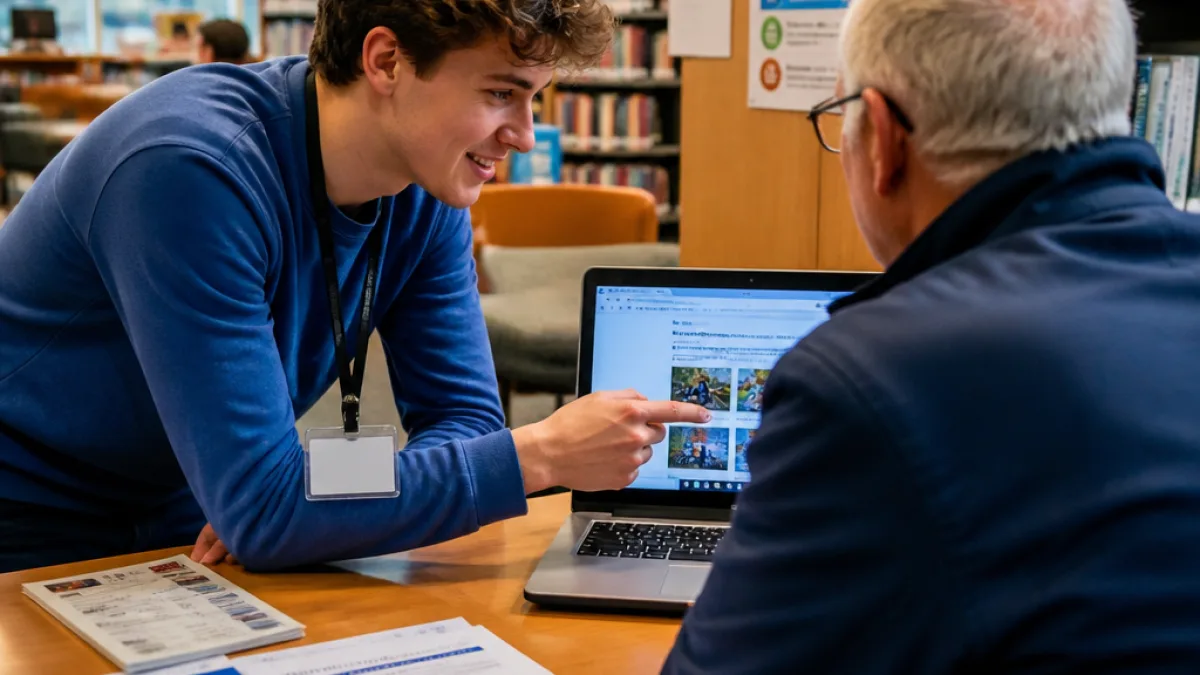
The McKenna Connect program has been running workshops and offering hands-on assistance in towns and libraries, including a recent session in Three Rivers where a Student Digital Mentor led a technology workshop for seniors. A similar scene unfolded in the Sussex Regional Library, where a woman arrived with a problem she had been trying to solve for three months.
Those encounters illustrate a common pattern: people can have devices and internet access but still need guidance to navigate apps, accounts and online forms. The mentors act as translators of technology — helping with things such as email set-up, accessing online services and troubleshooting device issues — bringing patience and step-by-step instruction that many find difficult to get from automated help lines.
Why in-person assistance still matters
Digital literacy is not simply a technical skill. It involves trust, confidence and the ability to recognise and avoid online risks. For older adults and others who may be unfamiliar with current platforms, a face-to-face explanation can make a difference between using a service independently or avoiding it altogether.
Program organisers say the mentors are students who provide time-limited, practical support in community settings. That combination of youthful digital fluency and a local, human presence can reduce frustration and build lasting skills. Even when an issue is small — an account locked by a forgotten password, a confusing government form — resolving it can restore access to important services.
- Where: Community centres and public libraries across New Brunswick, including Three Rivers and Sussex.
- Who: Student Digital Mentors supplied by UNB's McKenna Institute through McKenna Connect.
- Why: To provide hands-on, person-to-person support so residents can access online services confidently.
Local impact and everyday examples
In Sussex, the story of a resident who brought a longstanding problem to a library illustrates the program’s practical value. Small fixes — recovering an account, learning to scan and attach a document, or setting up video calls with family — often have outsized effects on people’s lives, improving their ability to communicate, access services and manage finances.
Public libraries and community centres have become natural hubs for this type of help. They are trusted local institutions where people already go for information and support, and the presence of Student Digital Mentors augments existing services with targeted technical assistance.
| Program | Delivery | Example site |
|---|---|---|
| McKenna Connect | Workshops and one-on-one mentoring | Three Rivers, Sussex Regional Library |
Broader context
Across the country, governments and organisations continue to expand online delivery of services to improve efficiency and reach. Yet digital expansion without adequate support can widen gaps for those who are less comfortable with technology. Programs that combine digital access with instruction and human assistance aim to close that gap by building capacity and confidence within communities.
Students serving as mentors bring an additional benefit: they gain community experience and a deeper understanding of the real-world barriers people face when accessing digital services. For seniors and other learners, this exchange can be empowering rather than patronising — a collaborative way to develop skills that last beyond a single session.
For many participants, the takeaway is straightforward: a computer or smartphone is only as useful as the person's ability to use it. The McKenna Institute’s summer outreach underlines that community-based, human-led support remains a key piece of the digital inclusion puzzle in New Brunswick.
Residents interested in local sessions should check with their public libraries and community centres for schedules and availability. Those organisations typically post upcoming workshops or can direct people to regional program coordinators who arrange the mentors' visits.
As the province continues to embrace online services, initiatives such as McKenna Connect offer a reminder that progress is most durable when paired with patient, local support.