GODMANCHESTER, Que. — Three people have received post‑exposure treatment after encountering a stray cat that was later confirmed to have contracted the raccoon rabies variant, health authorities said Thursday, marking the first identified case of that strain in a cat in Quebec.
Immediate treatment after bites, officials say
Health officials from Santé Québec Montérégie‑Centre reported that the cat was linked to exposures that required post‑exposure prophylaxis. The treatment is essential because rabies, if untreated in humans, can be fatal.
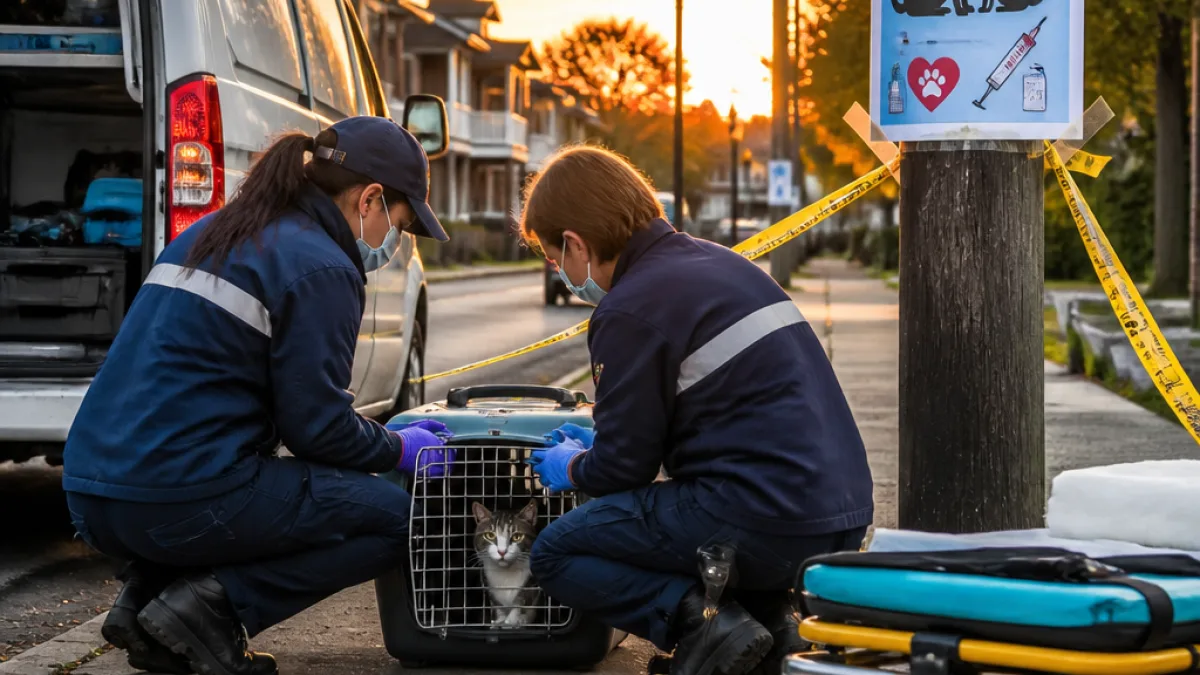
One of the people bitten, a resident of the area, described the encounter as sudden and violent. The woman said the stray cat attacked without provocation, biting and scratching her leg and hand before emergency responders captured the animal. A paramedic was also bitten during the incident and received emergency care.
“Out of nowhere, this cat lunged at me, latched onto my left leg, bit, and scratched,” the woman said. “When I tried to pull the cat away, it bit my hand, too.”
Timeline and local impact
According to health authorities, the sequence of events reported to NEXO RADAR is as follows:
- July 16 — A resident was bitten and scratched by a stray cat; emergency services responded.
- Shortly after — A paramedic who helped at the scene was also bitten; both received emergency treatment.
- About one week later — Laboratory testing confirmed the cat was infected with the raccoon rabies variant.
- Three people received post‑exposure prophylaxis to prevent rabies from developing.
| Item | Date |
|---|---|
| Reported bite incident | July 16 |
| Positive laboratory confirmation | About one week later |
| People treated | 3 |
Health advice: wash, call 811, vaccinate pets
Santé Québec Montérégie‑Centre emphasised prompt action for anyone who is bitten, scratched or comes into contact with the saliva of a suspected rabid animal. The guidance is clear and aligns with provincial public‑health practice:
- Immediately wash the affected skin with soap and water for 15 minutes;
- Contact Info‑Santé at 811 without delay for assessment and possible preventive treatment;
- Ensure household pets are up to date on rabies vaccinations and avoid contact with stray or wild animals.
Quebec’s agricultural ministry also urged pet owners to keep vaccinations current following the confirmation. Rabies control in domestic animals is a central line of defence against spillover from wildlife reservoirs such as raccoons.
Why this matters in Montérégie and beyond
The detection of the raccoon rabies variant in a domestic cat is notable because it signals transmission from wildlife into a pet that lives close to people, increasing opportunities for human exposure. Raccoon rabies has caused concern in parts of eastern North America where it is established in wild populations. When the virus crosses into cats or dogs, the risk to owners and first responders increases because these animals commonly have close contact with people.
Health officials stress that while rabies remains rare in Quebec, the disease is treatable if action is taken quickly after exposure. Vaccination of pets reduces the likelihood of domestic animals acting as a bridge between infected wildlife and humans.
Practical steps for residents
Residents in the South Shore and Montérégie should consider the following practical measures:
- Keep pets’ rabies vaccinations current and bring proof to veterinary appointments;
- Do not approach or attempt to capture stray or wild animals; contact local animal control instead;
- If bitten or scratched, wash wounds immediately, seek medical attention and call 811 for public‑health advice;
- Report unusual animal behaviour to municipal authorities or public health units.
Authorities did not provide further details about the stray cat’s capture, its current status, or whether other animals were tested. Santé Québec Montérégie‑Centre said it was notifying affected individuals and continues surveillance in the area.
The confirmed feline case has prompted renewed calls from officials for vigilance among pet owners and for prompt medical attention after any potential exposure to rabies.