Governments and emergency services are being pushed to prioritise wildfire prevention as evidence mounts that fires will grow more frequent and destructive in coming decades. A growing body of research and international assessments warns that tackling blazes after they ignite is no longer sufficient: building landscapes and communities that resist fire is becoming essential.
Projections underline urgency
The United Nations Environment Programme has modelled increases in extreme wildfires if current trends continue, highlighting a steady rise over the rest of the century. Their estimates show an uptick of up to 14 per cent by 2030, 30 per cent by 2050 and 50 per cent by the end of the century. Those figures underscore the need for action now to limit future losses to homes, infrastructure and natural systems.
| Year | Projected increase in extreme wildfires |
|---|---|
| 2030 | Up to 14% |
| 2050 | 30% |
| End of century | 50% |
Prevention is multidisciplinary
Modern wildfire prevention brings together ecological knowledge, engineering, planning and community engagement. Rather than relying solely on suppression technologies, land managers increasingly favour tools that reduce fuels, restore natural fire regimes and make built environments less vulnerable.
Key prevention measures in current practice include:
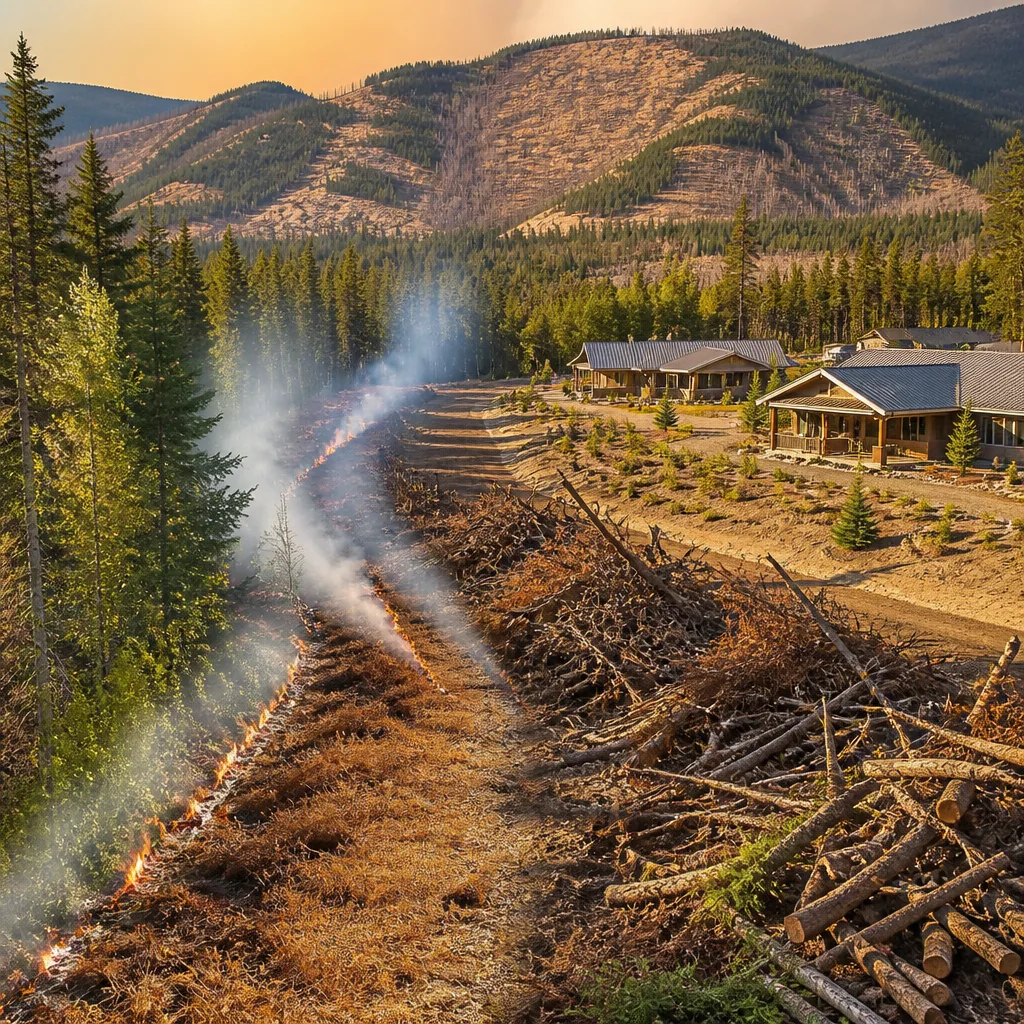
- Prescribed burning — deliberately igniting low-intensity fires under controlled conditions to remove flammable litter and undergrowth;
- Mechanical thinning — removing small trees and dense shrubs to reduce fuel continuity and crown-fire potential;
- Fire-resistant construction — designing homes and infrastructure with materials and landscaping that limit ignition from embers and radiant heat;
- Landscape-scale planning — aligning development patterns and land-use decisions with fire risk to avoid high-exposure growth; and
- Nature-based approaches — restoring ecosystems that evolved with frequent, low-intensity fire regimes to improve overall resilience.
Prescribed burning: benefits and caveats
Prescribed burning, also called controlled burning, is one of the most widely used prevention tools. When professionally planned and executed under favourable weather, these low-intensity fires consume accumulated dead vegetation and leaf litter that would otherwise fuel intense wildfires. Research from agencies such as the U.S. Forest Service indicates that prescribed fire, particularly when combined with mechanical thinning, can lower wildfire severity and improve conditions for firefighting.
At the same time, prescribed burning is not without limitations. It requires trained personnel, appropriate weather windows, public acceptance and regulatory frameworks that permit its safe use. Smoke management and risks of escape are operational concerns that agencies must manage carefully.
From science to community action
Experts stress that effective prevention is implemented at multiple scales: from regional fuel-management plans to household-level measures such as defensible-space landscaping. Indigenous and traditional practices, where available and appropriate, are part of the toolbox — offering local knowledge about fire’s historical role in many ecosystems.
Investing in prevention also has economic implications. Suppression costs climb rapidly during extreme events; by contrast, fuel treatments and community retrofits are often more cost-effective over time. Moreover, prevention protects ecosystem services — such as water supply and carbon storage — that might be lost to megafires.
As climate change alters the seasonality and intensity of fire weather, and as development continues near fire-prone forests and grasslands, policymakers face difficult choices. The models signal that without a stronger emphasis on prevention and landscape resilience, Canada and other nations can expect larger and more frequent wildfire disasters.
What happens next will depend on whether governments, Indigenous authorities and communities invest in the cross-disciplinary planning and resources needed to implement prevention at scale. For now, the message from scientists and land managers is clear: reducing wildfire risk before ignitions occur remains the most durable strategy to protect people, property and ecosystems.