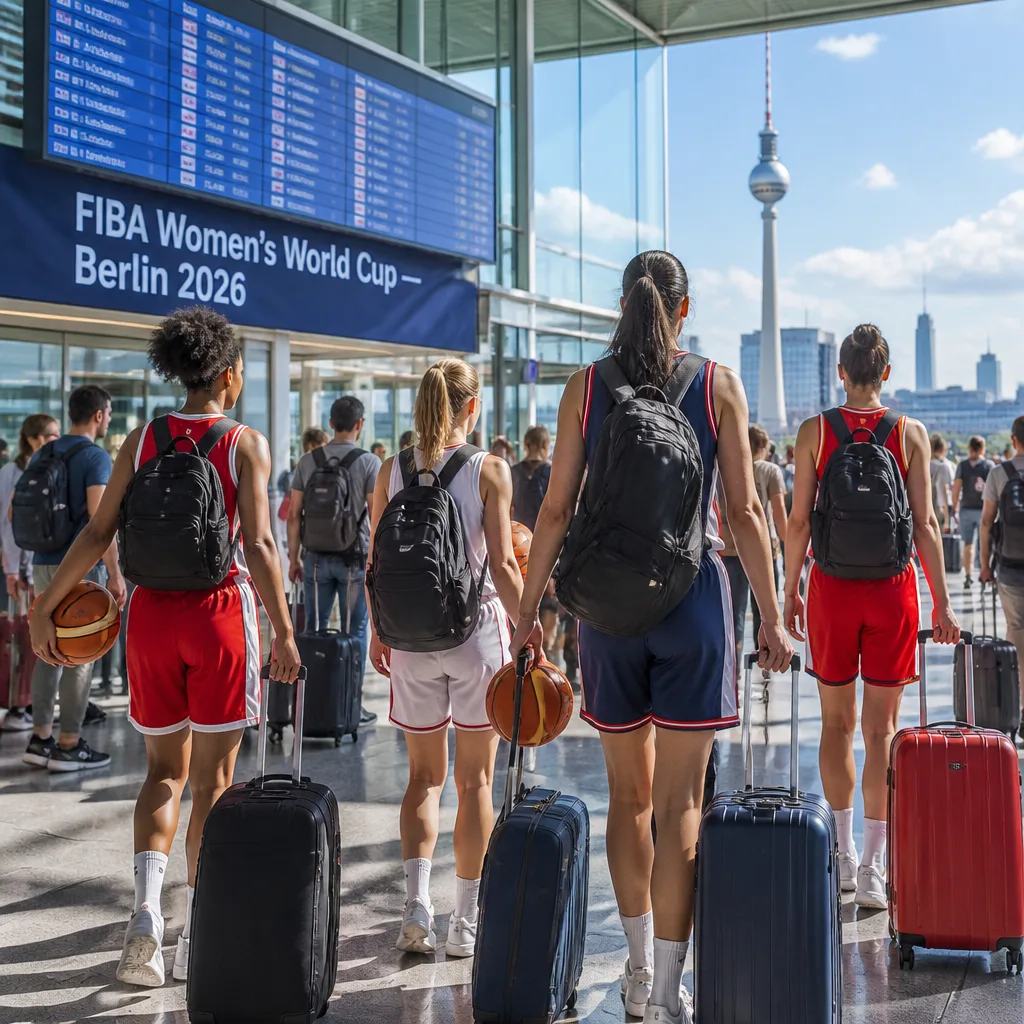
The 2026 FIBA Women’s Basketball World Cup in Berlin arrives with an unprecedented infusion of WNBA talent, reinforcing the sport’s rapid global growth and the increasing interdependence between North America's premier women’s league and international competition. According to league figures, 51 WNBA players — roughly 23.5 per cent of the league’s 217 rostered players — will compete for national teams across the 16‑nation tournament, which tips off on Friday and runs through Sept. 13.
What the numbers mean
The participation of 51 players represents both a substantive presence and a symbolic moment. WNBA athletes will come from 14 of the league’s 15 teams and will represent 15 of the 16 nations taking part in the competition. The overlap underlines how the WNBA now serves as a hub for elite international players and how national squads increasingly rely on professional experience gained in the league.
- 51 WNBA players competing (23.5% of 217 rostered players)
- 14 of 15 WNBA teams represented
- 15 of 16 nations at the World Cup include WNBA players
The broader context is important. This edition of the World Cup expands the field from 12 to 16 teams, mirroring growth within the WNBA itself, which has just moved to 15 teams and is planning further expansion toward 18 by 2030. League officials have pointed to larger roster sizes under the new Collective Bargaining Agreement and the addition of franchises as factors that have opened opportunities for more international players to join the WNBA and gain sustained high‑level experience.
Tournament structure and schedule
The World Cup’s format places teams into four groups of four, with group winners advancing directly to the quarterfinals and the second‑ and third‑placed teams entering a play‑in phase to fill the remaining quarterfinal berths. From that point the competition moves to single‑elimination play. Key calendar markers provided by organisers include:
| Stage | Date |
|---|---|
| Quarterfinals | Sept. 10 |
| Semifinals | Sept. 12 |
| Championship / Third place | Sept. 13 |
The groups are as follows:
- Group A: Japan, Spain, Germany, Mali
- Group B: Hungary, Korea, Nigeria, France
- Group C: Belgium, Australia, Puerto Rico, Turkey
- Group D: USA, Czech Republic, Italy, China
Implications for the WNBA and international game
The sizeable WNBA presence at the World Cup has several practical and symbolic consequences. Practically, it elevates the level of competition at the tournament and increases scouting, tactical exchange and international exposure for players who split time between club and country. Symbolically, the figures reflect a maturation in women’s basketball — both as a global spectator product and as a labour market for elite athletes.
For the WNBA, the World Cup is a showcase that can attract new fans and commercial partners, while also offering franchises a global recruitment pipeline. For national programmes, reliance on WNBA experience can accelerate tactical development and professionalism but also creates calendar and workload challenges tied to player release, travel and recovery.
As the tournament unfolds in Berlin, attention will focus on the United States, seeking a fifth consecutive World Cup gold, and on how expanded formats and heightened WNBA involvement reshape competitive dynamics. The next 10 days will provide a practical test of how league expansion, contract structures and international competition can coexist and mutually reinforce growth in the women’s game.
Coverage of the World Cup will follow developments across group play, the play‑in phase and the knockout rounds as teams jostle for medals and as WNBA stars showcase their talents on the global stage.