
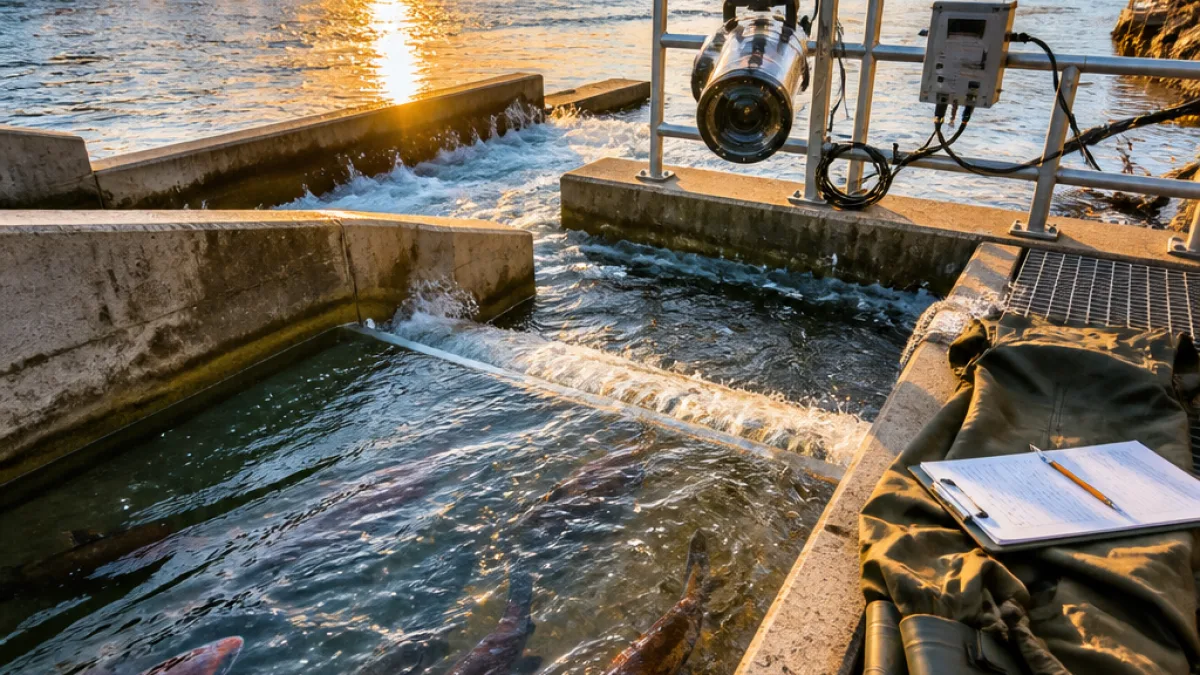
Whitehorse — Chinook salmon moving up the Yukon River have begun to arrive at the Whitehorse fish ladder in numbers that fisheries staff say mark one of the strongest runs in recent years.
Early counts point to an upswing
As of Wednesday evening, fisheries managers reported that 19 chinook salmon had been recorded passing through the Whitehorse fish ladder — a running total that, while modest, is ahead of last year’s early tally and forms part of a broader Yukon River migration not seen at this scale since 2019.
Whitehorse fish ladder manager Liam Milford said staff review footage from an underwater camera to count returning salmon. The camera system, which replaced earlier manual counts that required blocking passage at night, allows fish to move through the ladder at any hour, he said.
"So far, we are ahead of what we had last year,"
The increased monitoring hours and camera footage have changed how staff record passage compared with historical manual counts. Milford said the camera has helped provide continuous observation and a clearer picture of movement through the ladder.
Regional context and numbers
Chinook that reach the Whitehorse ladder have swum a substantial distance. Fisheries personnel note the Yukon River migration is among the longest in the world, stretching as far as about 3,200 kilometres from the Bering Sea in Alaska to northern spawning streams in the Yukon and British Columbia.
Across the border, sonar counts at Eagle, Alaska — roughly 30 kilometres downstream from the Yukon border — have registered a much larger total for this season. The Alaska Department of Fish and Game recorded about 27,000 chinook at the Eagle sonar station so far.
| Location | Reported count (season-to-date) |
|---|---|
| Whitehorse fish ladder | 19 |
| Eagle sonar station (Alaska) | ~27,000 |
Good signs, but still short of long-term targets
Although this season’s return is the most substantial since 2019, fisheries officials caution it still falls short of historical averages and the conservation targets set for Yukon River chinook. The species has faced years of low returns that have affected subsistence harvests, commercial fisheries and community food security across the region.
Managers say continued monitoring at the Whitehorse ladder will help track the run as it progresses toward upstream spawning areas. The ladder acts as a key observation point for fish returning late in the migration — the counts here are a late-stage indicator, not a full-season total.
Local and Indigenous implications
Chinook salmon returns are closely watched by communities along the river, including many First Nations whose food, cultural and economic practices depend on reliable salmon runs. While the early uptick offers encouragement, Indigenous leaders and fisheries managers have in past years called for continued conservation measures and careful sharing of limited returns when numbers are low.
Officials emphasise that ongoing cooperation between territorial, federal and Alaska agencies is essential for managing the transboundary Yukon River run. The migration crosses international boundaries and spans a variety of fishing jurisdictions and traditional territories.
What to watch for next
Fish ladder staff will continue to monitor footage and report numbers as more salmon arrive. Residents and river users should expect counts to change as the run develops and more fish reach upstream areas.
- Keep an eye on updates from the Whitehorse fish ladder and the Alaska Department of Fish and Game for revised counts.
- Fishing regulations and harvest restrictions may be adjusted throughout the season based on run size — consult local authorities before harvest.
- Interest from researchers and Indigenous harvesters means data from this season could inform conservation discussions in the coming months.
For now, the appearance of chinook at the Whitehorse ladder offers a cautiously positive sign for Yukoners who follow the long migration upstream — a reminder of the river’s central role in northern ecosystems and community life.