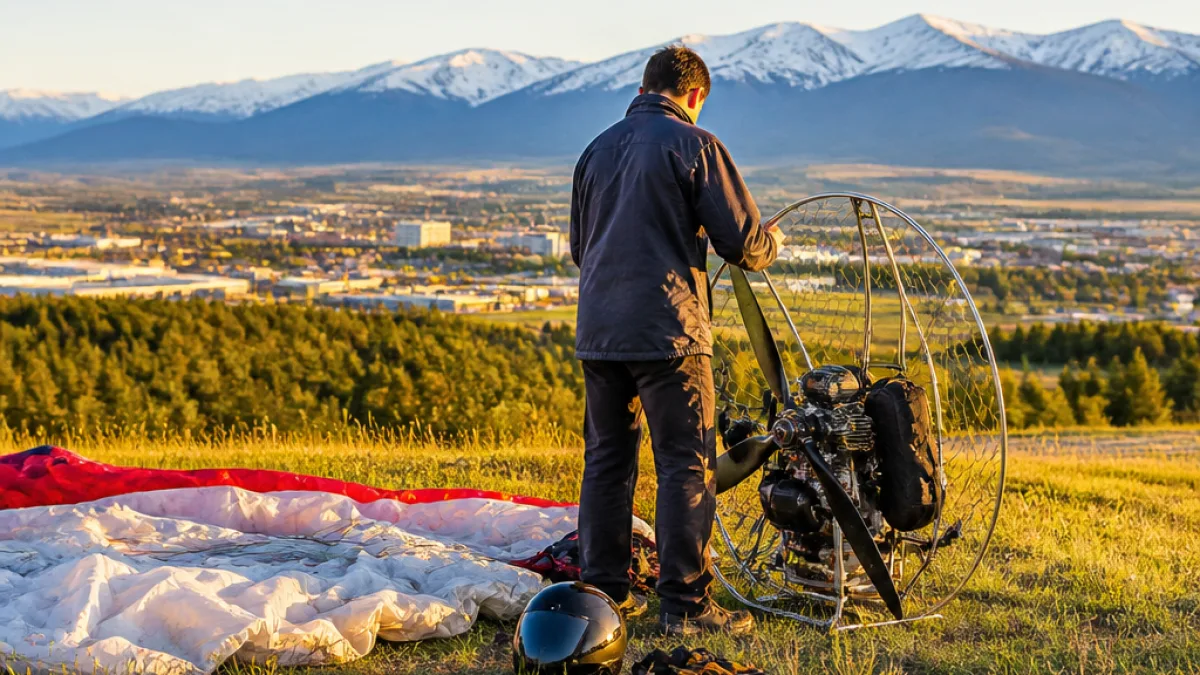
Whitehorse now hosts the Yukon’s first dedicated paramotor school, bringing a rare form of powered paragliding to the territory and expanding the scope of available adventure activities. The initiative was launched by a French expat with long experience as both a pilot and instructor who moved to Whitehorse in 2024.
What is paramotoring?
Paramotoring combines the fabric wing of a paraglider with a small engine strapped to the pilot’s back, allowing individual pilots to take off from flat terrain rather than from hillsides. The sport sits within a tiny corner of flight sports and has grown globally in recent years through social media exposure and online video channels.
How the school started
The operator, a pilot with 16 years of personal flying experience and about five years of prior instructing under his belt in France, decided to bring paramotoring to the North after observing a demand for new outdoor activities in the territory. He relocated to Whitehorse in 2024 with his family and spent several years navigating the regulatory and certification steps required to teach in Canada.
He said the idea came from noticing the popularity of other adventure sports locally and realising there were no formal opportunities for residents to learn powered paragliding.
“When I arrived [in Whitehorse] I saw there was nothing for paramotors.”
Local context and implications
The arrival of a paramotor school adds a new dimension to Whitehorse’s outdoor recreation scene, already known for activities such as canoeing, hiking, mountain biking and flightseeing. For residents and visitors seeking airborne experiences, paramotoring offers a different kind of access to the territory’s wide landscapes — solo, low-and-slow flights that emphasise manoeuvrability and personal control rather than the larger aircraft used for scenic tours.
Because the sport is highly specialised, the school’s presence may also attract people from other parts of the North and further afield interested in receiving training in a region with abundant open space. At the same time, growth will be shaped by local weather patterns, remoteness, and the necessary attention to safety and regulatory requirements in Canadian airspace.
- Experience of operator: 16 years as a paramotor pilot
- Instructor background: five years instructing in France
- Relocation: moved to Whitehorse in 2024
- Status: Yukon’s first identified paramotor school
Starting a school required the operator to re-certify his qualifications under Canadian regulations — a process that took several years and included both pilot and instructor credentials. That groundwork aims to ensure that training meets local aviation standards and that students receive instruction aligned with Canadian airspace rules.
| Detail | Figure |
|---|---|
| Pilot experience | 16 years |
| Instructor experience (France) | 5 years |
| Year moved to Whitehorse | 2024 |
| School status | First in Yukon |
Safety, regulation and community reception
Paramotoring carries inherent risks — like all forms of aviation — which puts a strong emphasis on structured instruction, equipment checks and local knowledge of terrain and weather. By completing Canadian re-certification, the instructor has sought to align his teaching with the regulatory expectations that govern ultralight and sport aviation in Canada.
Community reaction is likely to be mixed: many Yukoners value new outdoor options that provide unique ways to enjoy the territory’s landscapes, while others will want assurances that operations are conducted safely and respectfully of wildlife and existing air traffic. The presence of a certified school could help build a local community of pilots, offer guided learning pathways, and set standards for safe operation.
For now, the school represents a new small-business addition to Whitehorse and a fresh way for residents and visitors to experience Yukon airspace up close. As interest develops, local regulators, pilots and community members will all play a role in shaping how paramotoring becomes part of the North’s outdoor scene.