
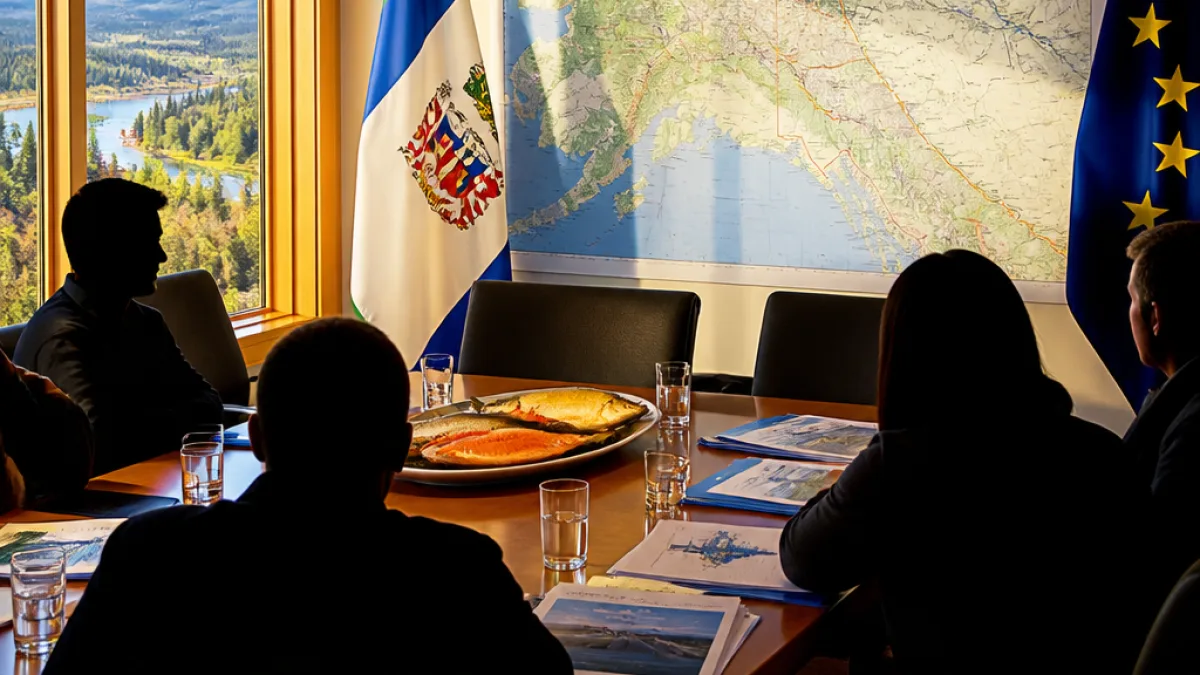
Whitehorse — Yukon Premier Currie Dixon spent several days in Anchorage this spring pressing for closer co‑operation with Alaska on shared environmental, economic and infrastructure challenges, his office said.
Cross‑border issues on the agenda
The Yukon and Alaska share a long history of intertwined ecosystems, communities and economies. Dixon, who was elected premier in November as leader of the right‑of‑centre Yukon Party, used the trip to meet senior Alaska officials about matters that affect both jurisdictions, including salmon management, energy development and maintenance of the Alaska Highway.
On the visit he renewed an agreement with Alaska Governor Mike Dunleavy aimed at bolstering collaboration on salmon management and cross‑border tourism, according to interviews conducted while he was in Anchorage.
He also met with Alaska’s commissioner of fish and game, Doug Vincent‑Lang, and transportation commissioner Ryan Anderson, and toured medical facilities with Indigenous leaders from Whitehorse to learn about Alaska’s Indigenous health system.
Why the relationship matters to Yukon
The Yukon and Alaska share a 750‑mile border, the iconic runs of the Yukon River salmon, migrating caribou herds and many Indigenous nations whose territories cross the international line. Communities on both sides of the border rely on each other for services, trade and cultural ties. Small Alaska towns near the border often look to Whitehorse as a regional hub for shopping, repairs and veterinary care.
| Feature | Yukon / Alaska |
|---|---|
| Border length | ~750 miles |
| Yukon population | ~50,000 |
Infrastructure and the Shakwak corridor
Discussion in Anchorage touched on the Alaska Highway and an international arrangement known as the Shakwak Agreement, which governs repair and maintenance funding for key stretches of highway connecting Alaska and the Yukon. Funding and upkeep of that corridor remain a priority for communities that depend on reliable road access for freight, tourism and emergency services.
While details of specific funding decisions were not released, Dixon’s meetings with transportation officials signal the Yukon government’s intent to be active at the table on any negotiations that could affect northern transportation links.
Shared management of salmon and wildlife
Salmon runs up the Yukon River are central to the culture and food security of many Indigenous communities on both sides of the border. Renewing arrangements with Alaska aims to coordinate management strategies for the fishery and mitigate pressures from resource development and environmental change.
Dixon’s conversations with Alaska fish and wildlife officials are part of longstanding bilateral work on fisheries and transboundary wildlife such as caribou herds that do not recognise the international boundary.
Health systems and Indigenous partnerships
The premier toured Anchorage medical facilities alongside Indigenous leaders from Whitehorse to better understand Alaska’s Indigenous healthcare system. Yukon leaders say those exchanges are intended to identify best practices that could inform Ottawa‑Yukon strategies for improving services in remote and rural communities.
Who is Currie Dixon?
Dixon, 40, is the Yukon’s first premier born in the territory. Before entering public office he spent time in the mining industry and has a background in territorial politics. As leader of the Yukon Party he replaced the previous centre‑left government led by Ranj Pillai in the November election.
His Anchorage trip was his first there since becoming premier. The visit included public and private meetings and was framed by officials as an effort to reaffirm the practical ties and shared priorities between the Yukon and Alaska.
Practical implications for Yukoners
For Yukoners, the renewed focus on cross‑border co‑operation could mean:
- Closer coordination on salmon conservation and fishing seasons that affect Indigenous harvests and local livelihoods.
- Advocacy for sustained funding and timely repairs to the Alaska Highway and connecting routes under the Shakwak framework.
- Potential exchange of healthcare approaches to improve services in remote communities.
Officials from both jurisdictions will likely continue discussions through formal and informal channels. For residents whose daily lives and economic activities cross the boundary, those talks are more than diplomatic: they can affect harvests, travel and access to services.
This trip underscored that, for the Yukon, relationships with nearby Alaska remain a practical priority — not just a matter of shared geography.
Sheila Netro is NEXO RADAR’s Yukon correspondent.