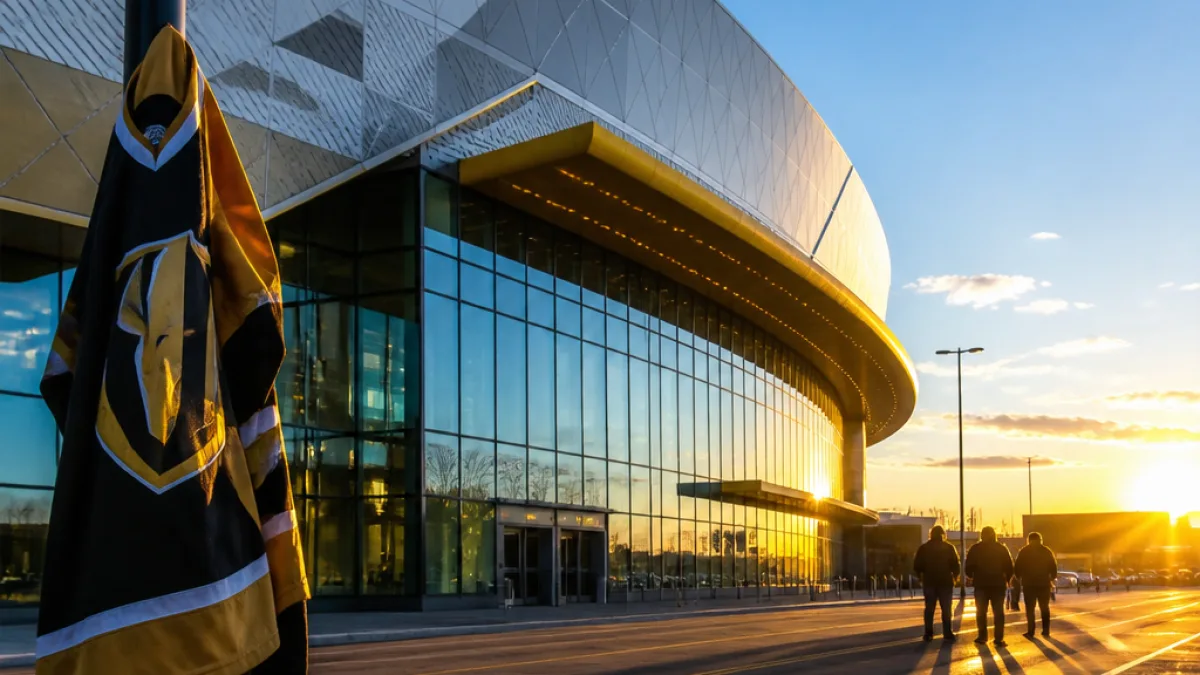
Quebec City continues to be discussed inside NHL corridors but the capital’s hopes for a return of a franchise hinge not on its arena or fan support, but on ownership, the league’s deputy commissioner said this week.
Ownership, not arena capacity, is the obstacle
Bill Daly, the NHL’s deputy commissioner, told hosts Pierre McGuire and Jimmy Murphy on The Sick Podcast that the league has repeatedly considered Quebec City as a potential site for expansion — but has been unable to identify a suitable owner. That admission comes as many in the city point to an NHL-ready Centre Vidéotron with a capacity of 18,259 and a long-standing, passionate hockey market.
“I think the biggest issue that we’ve faced with Quebec City is we have not identified an owner who either is willing to pay the price tag to put a team in Quebec City or is willing to operate a franchise long-term in Quebec City,” Daly said.
League officials have also discussed the impact of the exchange rate between the Canadian and U.S. dollar. Daly acknowledged the currency presents challenges but rejected it as the primary reason Quebec City has been passed over, saying Canada’s overall state of hockey remains strong.
Where Quebec City fits in the NHL’s recent expansion thinking
The NHL has been active in expansion discussions in recent years. Commissioner Gary Bettman announced in June that the league is exploring a potential new franchise in Texas with billionaire Dan Friedkin and the Friedkin Group, naming Austin or Houston as possibilities. Daly noted the league has continued conversations with Quebec City for “at least 10 years,” going back to the time the NHL added a team in Las Vegas in 2016.
- Market readiness: Centre Vidéotron meets NHL standards and the city has a history of strong hockey support dating to the Nordiques era.
- Economic concerns: Currency fluctuations are a factor but not seen as decisive by the league.
- Critical factor: The league has not identified an owner willing to bear the expansion cost and operate long-term in Quebec City.
Local consequences and questions for municipal leaders
For residents and municipal decision-makers, Daly’s statement clarifies where efforts to bring the NHL back should be focused. With arena infrastructure in place, attention shifts toward cultivating an ownership group prepared to meet the NHL’s financial demands and commit to multi-decade stewardship.
That reality has implications for how local business leaders, provincial officials and potential investors calibrate their strategies. Efforts to gather backing — public or private — will need to address both the large up-front price of expansion and the realities of running an NHL club in a market that operates in Canadian dollars while the league’s revenues and many costs are tied to the U.S. dollar.
For fans, Daly’s comments are a mixed message: optimism that Quebec City remains on the NHL’s radar but frustration that the decisive element — a viable owner — remains missing. The city has not had an NHL team since the Nordiques relocated to Colorado and became the Avalanche in 1995, a loss still felt in many corners of the community.
| Event | Year |
|---|---|
| Nordiques relocate to Colorado | 1995 |
| NHL expansion to Las Vegas | 2016 |
| League says it has explored Quebec City | “At least” 10 years |
The NHL’s focus on Texas this year underscores the league’s commercial calculus. Still, Daly’s remarks keep the door ajar for Quebec City — provided the city can attract an ownership group ready to meet the league’s financial and operational expectations. Until that happens, local hopes for a resurrected franchise will depend on continued discussions rather than immediate action.
For now, Centre Vidéotron stands ready, local support endures, and the conversation with the NHL, according to Daly, remains ongoing — with ownership as the decisive missing element.