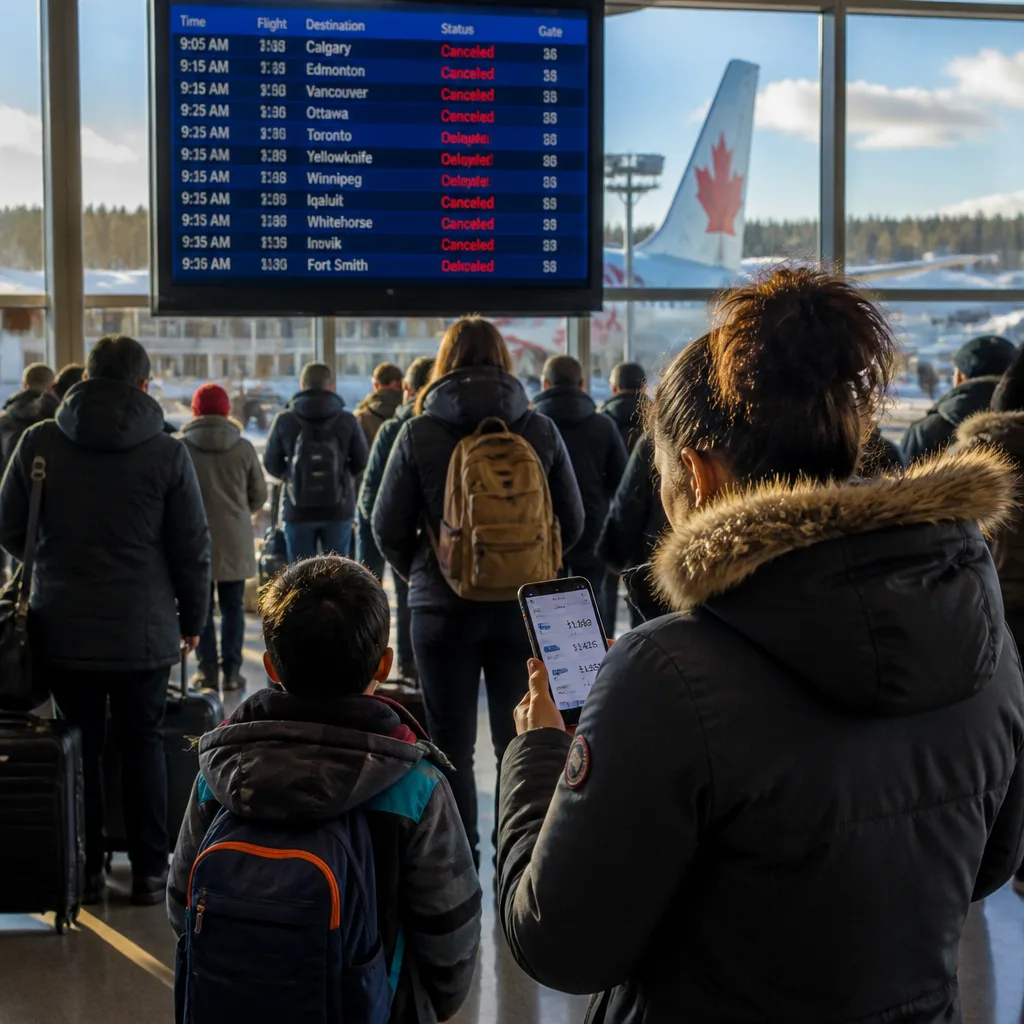
Flight cancellations and uncertainty at WestJet are causing acute problems for travellers from northern Canada, where limited air service and high fares can make alternative arrangements costly or impractical, a Yellowknife family said as labour negotiations continued.
One family’s worry underscores larger strain
Robyn Scott of Yellowknife said she and her daughter were due to depart Monday on a WestJet flight from Yellowknife to Edmonton as the first leg of a trip to the Maritimes. Her younger daughter had flown separately from Winnipeg and was scheduled to meet them in Moncton, New Brunswick.
"If we're delayed several days, that really throws up a problem when they're a minor flying by themselves,"
Scott said the flight remained listed as on time on WestJet's website on Sunday morning, but she questioned how reliable that information was amid shifting schedules. She noted that some Yellowknife flights are operated on WestJet Encore De Havilland Dash Q400 aircraft, which remain in service even as the airline’s Boeing 737 fleet has been grounded.
That distinction, Scott said, left her uncertain whether rescheduling higher-capacity routes or reassigning aircraft could affect the smaller regional services that northern communities rely on.
High alternative fares, limited choices
Travel options to and from northern Canada are already constrained, with few direct routes and significant expense for detours. Scott said a one-way ticket to replace the WestJet segment from Yellowknife to Edmonton on other carriers was prohibitively expensive.
| Airline | One-way fare cited (Yellowknife → Edmonton) |
|---|---|
| Canadian North | $991.67 |
| Air Canada | $863.00 |
"Rebooking with another airline is not an option right now," Scott said, describing the financial and logistical barriers that would make an alternative impractical for her family. She added that although the situation is inconvenient, she supports the flight attendants' demands and said it would be unfair if the federal government invoked Section 107 to compel them back to work.
What the account shows about broader consequences
The family’s experience points to several national concerns during labour disruptions at major carriers:
- Access and vulnerability: Northern communities depend on a small number of routes; cancellations can leave minors and vulnerable travellers at risk of being stranded.
- Cost of alternatives: Limited competition on northern routes drives up prices when travellers try to reroute, creating steep barriers to timely travel.
- Labour and policy tensions: Passengers may sympathize with workers’ demands but still face immediate personal hardships, while calls for federal intervention, such as invoking Section 107, raise questions about balancing public interest and collective bargaining rights.
Scott said she believes the flight attendants' requests are reasonable even as she hopes for a prompt resolution so her child can return home safely.
The family’s story is emblematic of the wider ripple effects that airline labour disputes can have across Canada, especially in regions where aviation is the primary link to the rest of the country. As negotiations continue, travellers and communities with few alternatives wait to see whether a settlement will restore predictable service or whether government action will be taken to maintain operations.
At the same time, the case highlights operational complexities: some regional aircraft continue to operate even when larger jets are grounded, but schedule reshuffles may still disrupt those services. For travellers in remote and northern locations, even short delays can cascade into serious logistical problems — particularly when minors are travelling alone.
Until talks conclude, many passengers face uncertainty and steep rebooking costs, underscoring the broader national stakes of disruptions at major carriers and the balance policymakers must weigh between worker rights and service continuity.