
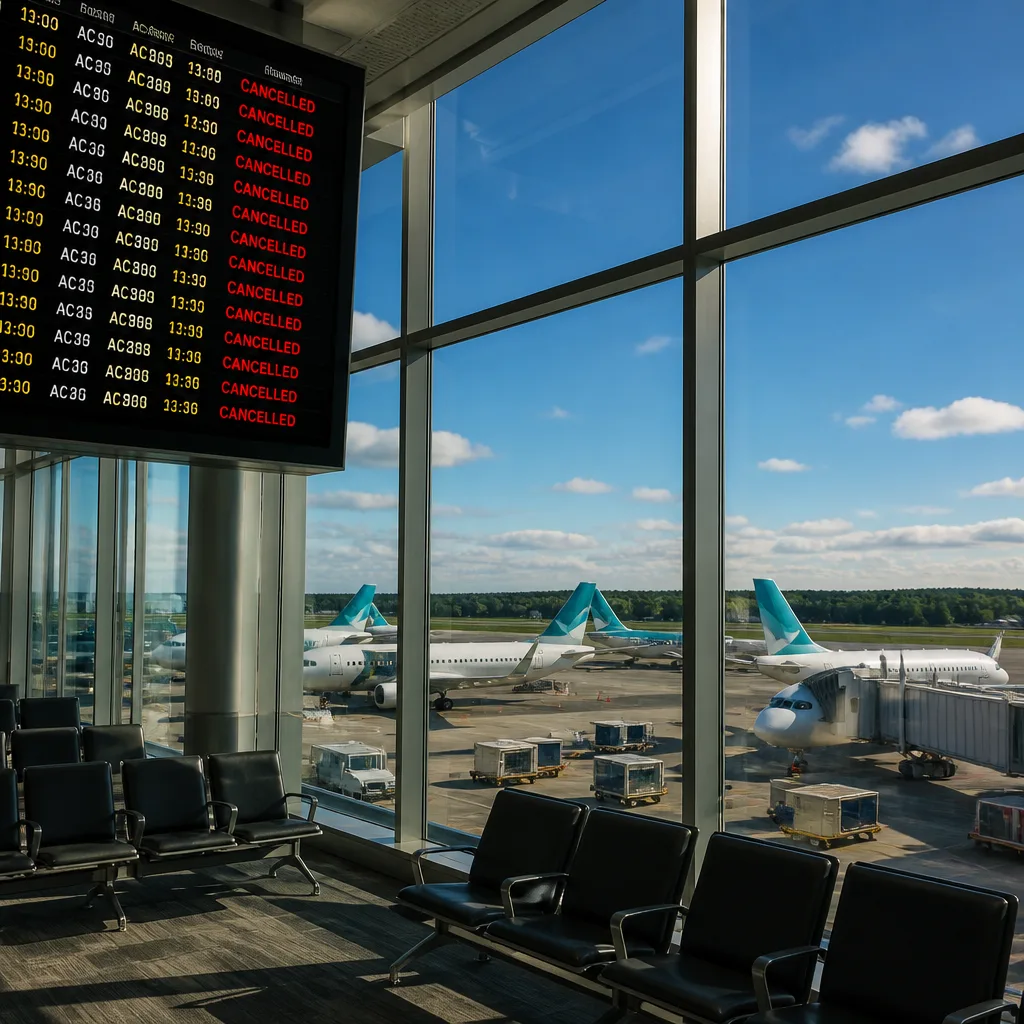
WestJet has started reducing its flying schedule and cancelled 81 flights as it prepares for a potential labour stoppage involving flight attendants later this weekend. The move follows reciprocal 72-hour notices from the airline and the union representing cabin crew.
Airline issues 'organized take-down' ahead of deadline
In a brief statement late Friday, WestJet said it had launched an "organized take-down" of parts of its network and begun notifying travellers about cancellations to limit the risk of widespread disruption should a strike or lockout begin. The airline did not specify which routes were cut, but said the action was intended to allow aircraft to be parked, secured and maintained.
The dispute involves about 4,400 flight attendants who are members of the Canadian Union of Public Employees. CUPE issued a 72-hour strike notice; WestJet immediately issued a matching 72-hour lockout notice. The notice period expires at 12:01 a.m. MT on Sunday, the earliest time either side could implement a work stoppage if there is no agreement.
"To ensure the integrity of WestJet’s network, and to minimize the risk of stranding guests and aircraft, the airline has started to issue cancellations and reduce flying," the company said in its announcement.
Core disagreement over pay for ground duties
The central tension in talks is compensation for duties performed off the aircraft. Flight attendants say they increasingly perform a range of tasks on the ground — from boarding and safety checks to handling delays — for which they are not adequately paid under current terms.
- CUPE represents approximately 4,400 WestJet flight attendants.
- Both sides served 72-hour notices; the earliest strike or lockout start time is 12:01 a.m. MT Sunday.
- WestJet reported cancelling 81 flights as a precaution as of 12:30 a.m. EST Saturday.
Labour and aviation experts offered context for the airline's decision. Barry Eidlin, a sociology professor and labour specialist at McGill University, pointed to changes in the nature of flight attendants' work and said they have reached a breaking point over unpaid hours on the ground. "They’ve come to a point now where the flight attendants are basically saying, ‘Enough’s enough, we need to be paid for the hours that we’ve been working,'" he told reporters.
John Gradek, a lecturer and aviation management specialist at McGill, described the cancellations as a pragmatic step that allows WestJet to reposition and secure aircraft if a stoppage begins. By reducing scheduled flying in advance, airlines can limit the number of passengers and planes left scattered across the network in the event of abrupt disruption.
| Item | Detail |
|---|---|
| Union | Canadian Union of Public Employees (represents ~4,400 flight attendants) |
| Notices | 72-hour strike notice (CUPE); 72-hour lockout notice (WestJet) |
| Cancelled flights (as reported) | 81 (as of 12:30 a.m. EST Saturday) |
WestJet described its most recent offer as aiming to be "industry-leading" and said it sought to address the union’s priorities, but indicated that bargaining had not yet produced a deal. The company framed the schedule reductions as damage control to avoid leaving passengers and equipment stranded if a labour stoppage were to occur.
For travellers, the immediate effect will be a rising risk of cancellations and rebookings if the dispute is not resolved before the 72-hour window closes. Passengers booked with WestJet should monitor communications from the airline, check flight status before travelling to airports and prepare for possible delays or changes to itineraries.
The situation remains fluid. If talks continue, either side could still reach an agreement before the lockout/strike period opens, averting a work stoppage. If no settlement is found by the expiry of the notices, the cancellations already issued are likely only an initial reduction, with further adjustments possible depending on the bargaining outcome and operational needs.