
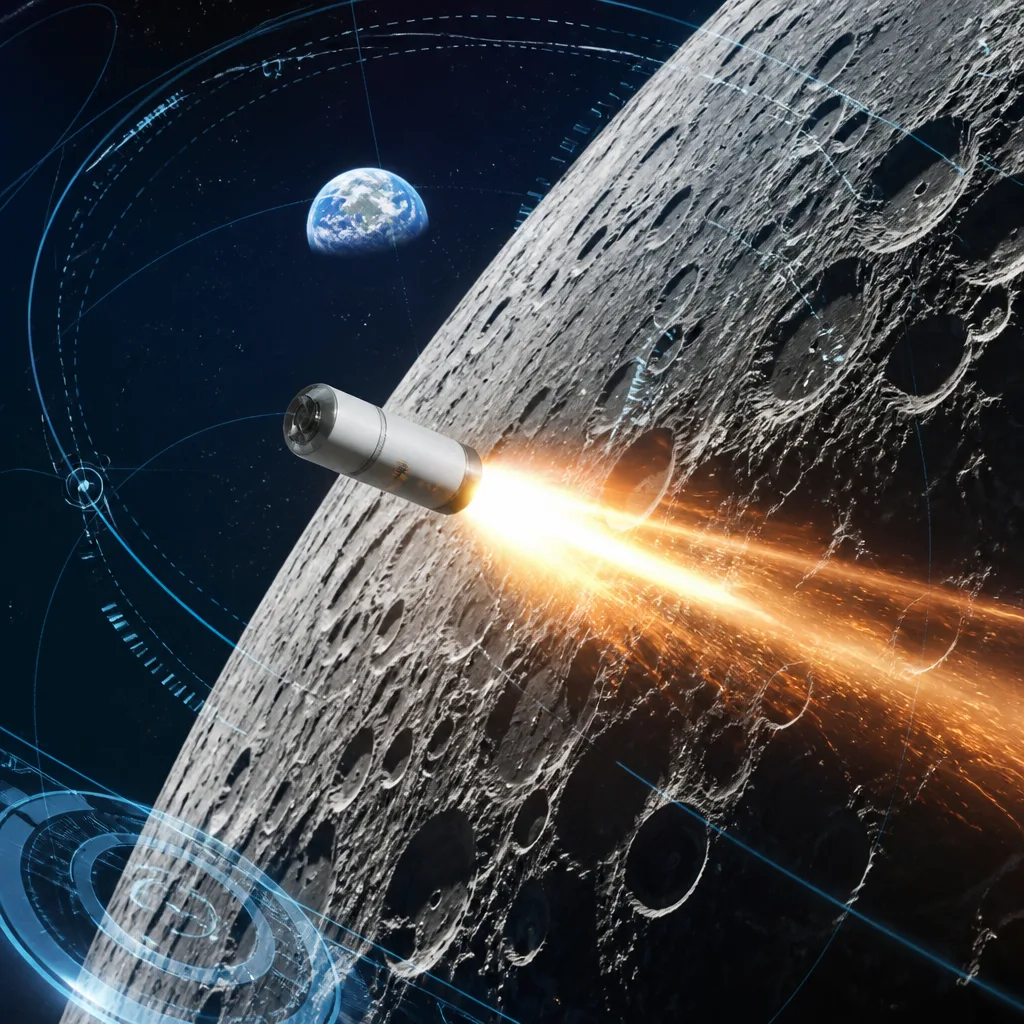
A spent SpaceX rocket upper stage that launched a pair of lunar landers is believed to have impacted the Moon on Wednesday after spending roughly a year on an unintended trajectory, scientists reported. Tracking data and observations indicated the fragment almost certainly struck the lunar surface at high velocity, although official confirmation was pending.
What happened
According to public reports, the leftover booster section — described by analysts as a 4‑ton upper stage — was observed heading directly toward the Moon and was expected to reach it at about 5,400 mph (8,700 km/h). The stage had been unplanned for a lunar collision after it veered off its intended path during its post‑mission drift.
“working with NASA to avoid future wrecks,”
SpaceX spokesperson Julianna Scheiman said the company is coordinating with NASA to reduce the chance of similar events in future missions and noted the impact was not intentional. She attributed the trajectory change to a combination of solar effects and gravitational forces that altered the stage’s course.
Why it matters
Experts say the incident highlights a growing issue: lunar surface and near‑Moon space are becoming increasingly cluttered as nations and commercial operators send more missions beyond Earth orbit. Uncontrolled rocket bodies and mission remnants can create hazards for future landers and complicate scientific observations of the lunar environment.
Retired astrophysicist Jonathan McDowell commented that nighttime observations of the dead stage showed it en route to the Moon, reinforcing expectations that the impact was inevitable given the observed trajectory.
- Speed at impact: ~5,400 mph (8,700 km/h)
- Mass of upper stage: ~4 tonnes
- Launch: Falcon 9 carrying two landers (Jan. 15, 2025)
Context and precedents
This episode is not unique. In 2022 a Chinese rocket stage unintentionally struck the Moon following a lunar mission, and analysts say other uncontrolled fragments probably collided with the Moon in earlier decades without being noticed. As lunar activity ramps up — with government and private missions planned by multiple countries — such accidental impacts are likely to recur unless industry and agencies adopt different end‑of‑mission practices.
| Item | Value |
|---|---|
| Estimated impact speed | 5,400 mph (8,700 km/h) |
| Upper stage mass | 4 tonnes |
| Original launch date | Jan. 15, 2025 |
Responses and next steps
SpaceX said it is working with NASA to learn from the event and to develop measures aimed at preventing similar occurrences. Agency and industry officials will likely examine whether new guidelines are needed for disposal strategies, trajectory planning and post‑mission tracking for vehicles that travel beyond Earth orbit.
Scientists and mission planners track such objects using ground‑ and space‑based sensors; however, confirming a collision on the lunar surface can require follow‑up observations from telescopes, radar facilities or lunar orbiters. Determining the precise site and effects of an impact can also inform assessments of cumulative changes to the lunar environment.
The incident raises practical questions for future lunar exploration, including how to protect planned scientific installations and crewed missions from inadvertent strikes and how to document and mitigate anthropogenic changes to the Moon. As activity near and around the Moon increases, so too will the importance of international coordination on debris and traffic management beyond low Earth orbit.
The collision, once confirmed, will add to an emerging record of accidental impacts on the Moon and may prompt renewed discussion among space agencies and commercial operators about best practices for end‑of‑life disposal for vehicles that travel or linger in cislunar space.
Reporting from Cape Canaveral and aggregated agency statements.