
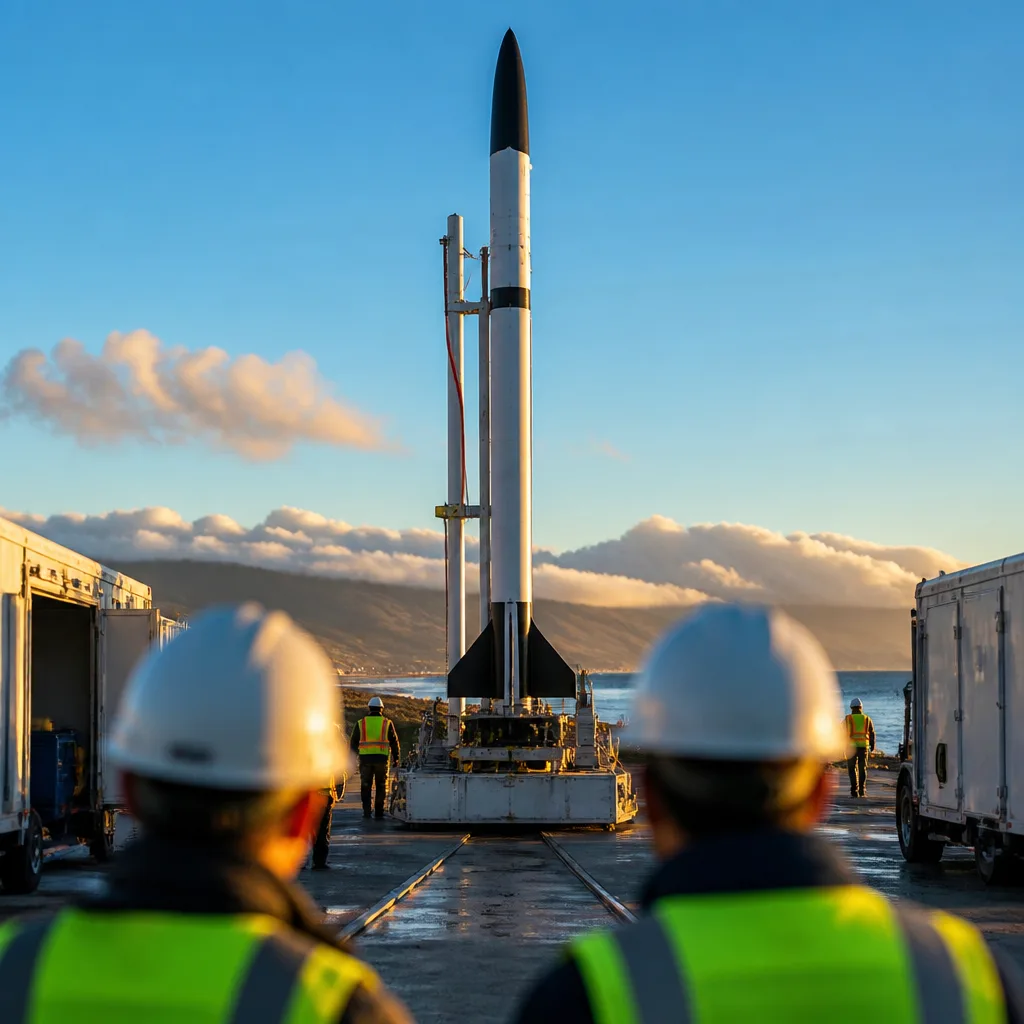
“A sounding rocket launch test is slated for next year. Yes, we are going to launch a rocket into space,” President Bongbong Marcos Jr. declared in his 2026 State of the Nation Address, signalling a new, high-profile push by the Philippines into space activity.
What is planned
According to the Philippine Space Agency (PhilSA), the test will demonstrate the country’s ability to deploy a liquid-fuelled rocket carrying a payload of up to 2 kg. The project is to be implemented by PhilSA, the Department of Information and Communications Technology (DICT) and the Cagayan Economic Zone Authority (CEZA), in partnership with private and foreign firms including Ascend International Gateway, Inc. and South Korea’s Perigee Aerospace, Inc.
“Our vision is for the Philippines to have a spaceport that serves as a gateway for safe, responsible, and sustainable space access for the region and the world,” PhilSA Director General Gay Jane Perez said.
Perez told reporters the Cagayan project aims to capitalise on geographical advantages — the Pacific Ocean to the east and proximity to the equator — to offer “safe and secure rocket launch and recovery operations,” reduce costs, improve launch efficiency and create future commercial opportunities.
Partners and scope
The announcement frames the effort as a commercial-driven, government-enabled initiative, with PhilSA stressing predictable timelines for launch licensing and authorizations. The stated immediate technical goal is modest: a suborbital sounding rocket trial that validates liquid propulsion and small payload handling.
| Agencies/Partners | Role |
|---|---|
| Philippine Space Agency (PhilSA) | Project lead, regulatory vision |
| Department of Information and Communications Technology (DICT) | Implementation partner |
| Cagayan Economic Zone Authority (CEZA) | Local host and economic zone partner |
| Ascend International Gateway, Inc. | Local corporate partner |
| Perigee Aerospace, Inc. (South Korea) | Technical partner |
Questions of national priority
The timing and emphasis of the space project drew scrutiny in the same speech that highlighted a string of persistent domestic problems: rising prices, ongoing flood control investigations and what the address characterised as instability in public institutions. Critics and commentators have raised the question posed by observers: with many pressing needs on the homefront, is committing resources and political capital to space launch infrastructure the right priority now?
Supporters point to a shift in the Philippines’ role in space affairs — from being primarily a user of international space services to aiming to become a provider. PhilSA and project backers argue a Philippine spaceport could offer regional launch capabilities, bring down costs for customers and open economic opportunities tied to a growing global market for space access.
- Technical test: a liquid-fuelled sounding rocket with a 2 kg payload is the immediate goal.
- Geographic pitch: Cagayan’s easterly ocean approach and equatorial position are highlighted as advantages.
- Partnership model: government agencies working with local and international private firms.
What remains unclear from public statements is how the project’s costs, timelines and environmental and safety reviews will be balanced against other national spending priorities. PhilSA’s language emphasises predictability in launch licensing and a commercial focus, but details such as overall budget allocation, community consultation and the handling of potential environmental impacts were not outlined in the material released with the announcement.
Implications and next steps
The proposed sounding rocket test is framed as a proof of concept that could pave the way for broader commercial launch services in the region. If successful, proponents suggest it could position the Philippines as an attractive site for launches, given its geographical advantages.
For now, the plan sits alongside familiar national debates about spending priorities and governance. The coming months will likely see calls for more detailed disclosures from agencies and for parliamentary or public scrutiny of how the space initiative fits with other urgent national needs.
The announcement marks a notable moment in the country’s longer-term ambitions in space, but it also raises immediate questions about sequencing, transparency and how a nation balances long-term technological investment with short-term social and economic challenges.