The United States and India are accelerating a bilateral science and technology partnership that now spans lunar science, deep-space communications, robotics, satellite systems and terrestrial technologies such as semiconductors and artificial intelligence.
From transfer to partnership
What began after India's economic liberalization as exchanges in education, software services and research has evolved into collaborative innovation, the partnership’s architects say. Rather than a one-way flow of expertise, the relationship increasingly reflects joint development across multiple high-tech fields.
"If defense cooperation has become the backbone of the India-U.S. strategic partnership, science and technology have become its engine of growth."
Joint programmes now include work in AI, quantum computing, biotechnology, advanced materials, renewable energy, cybersecurity, telecommunications and next-generation manufacturing. The trend mirrors India’s emergence as an innovation hub and U.S. recognition that major breakthroughs increasingly arise from international collaboration.
Space cooperation and flagship missions
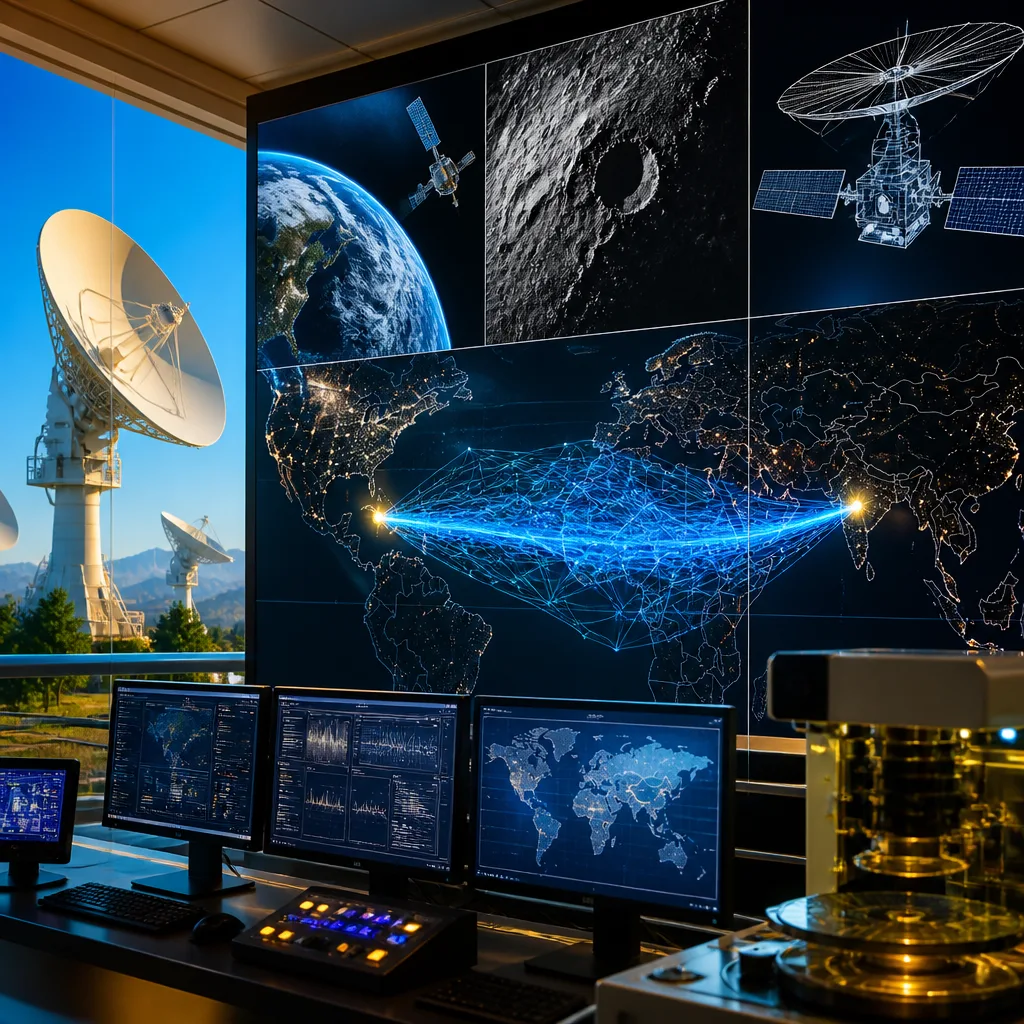
Space science figures prominently in the partnership. The collaboration reaches from lunar research to mapping Earth's dynamics. A prominent example is the NASA–ISRO Synthetic Aperture Radar mission, known as NISAR, which is designed to map planetary surface changes with high precision.
Beyond NISAR, cooperative efforts under discussion or development encompass deep-space communications, robotic systems for exploration and technologies that would support future human missions. These areas reflect mutual interest in scientific discovery and strategic capability.
Industry links and an innovation corridor
The India–U.S. connection is visible in commercial technology as well as government research. Indian-origin executives lead major American technology firms and many U.S. companies operate research and development centres in India. That dynamic has created a practical innovation corridor—informal and formal linkages between places such as Silicon Valley and Bengaluru—that supports joint product development and scale-up.
- Semiconductors: cooperation on fabrication and supply-chain resilience.
- Artificial intelligence: joint research programmes and shared talent networks.
- Space science: collaborative missions like NISAR and deep-space communications work.
Officials and industry observers describe this phase as a move from technology transfer—where expertise went mainly one way—to technology partnership, in which research, investment and commercialisation are mutual. That shift reflects both India’s growing R&D capabilities and U.S. interest in partnering globally on strategic technologies.
Implications and limits
The expanding partnership carries scientific and industrial benefits: pooled expertise, shared infrastructure and larger markets for new technologies. It may also bolster supply‑chain resilience and diversify research networks in fields deemed critical to economic and national security.
At the same time, collaboration is shaped by national priorities and export controls, and by broader geopolitical considerations. Where defence cooperation forms the security spine of the relationship, science and technology provide momentum for innovation and economic ties—yet the extent of integration will depend on policy decisions, regulatory alignment and mutual trust.
| Area | Examples of cooperation |
|---|---|
| Space science | NISAR mission, lunar science, deep-space communications |
| Digital and emerging tech | AI, quantum computing, cybersecurity |
| Industrial tech | Semiconductors, next-generation manufacturing |
For Canada’s national science community and policy-makers watching global technology alliances, the India–U.S. partnership illustrates how strategic relationships now combine security, commerce and research collaboration. The partnership signals a model of cross-border innovation that other nations may emulate or respond to, depending on their own industrial priorities.
As the relationship matures, observers will be watching whether joint projects translate into durable institutions and shared standards that lower barriers to long-term collaboration across both civilian and strategic domains.