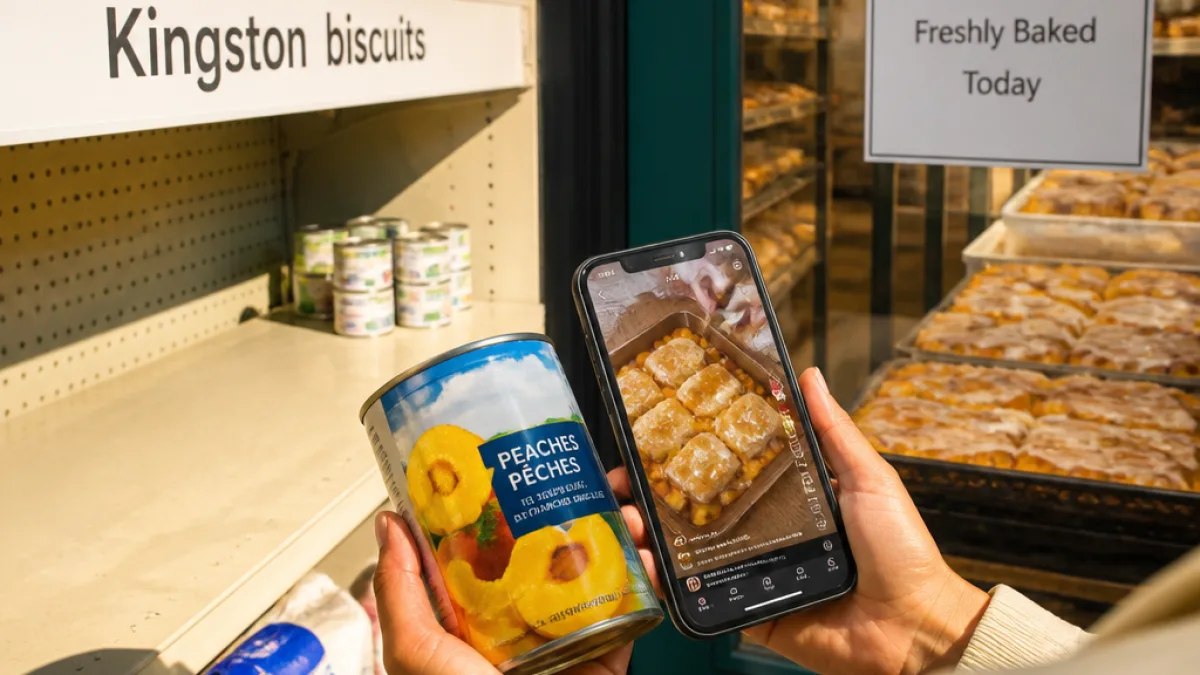
What’s being called the “Kingston biscuit” bake has become an international social-media sensation, with shoppers and broadcasters in Australia and New Zealand reporting sudden demand for Arnott’s Kingston biscuits after a straightforward recipe circulated online.
How the trend works
The dessert is uncomplicated: layer packets of Kingston biscuits in a baking dish, top with a tin of canned peaches and bake. Television presenters and food writers in New Zealand described assembling two packets of the biscuits with a large can of peaches and putting the dish in the oven for about 20 minutes.
| Ingredient | Typical amount |
|---|---|
| Kingston biscuits | Two packets (as reported) |
| Canned peaches | One large tin |
| Bake time | Approximately 20 minutes |
The simplicity is part of the appeal: the process is quick to film, easy to reproduce at home and lends itself to social-media sharing — whether the final result becomes a hit or a humorous misfire.
Retail impact overseas, and why it matters here
Retailers in the region where the craze began reported an abrupt spike in sales. Woolworths staff described their stock for the biscuit “more than tripling” in demand nearly overnight, and grocery teams had to account for store-floor supply and depot inventories while trying to restock from suppliers.
“We’ve seen a three-fold increase in this biscuit. It's more than tripled, it's quite amazing.”
Marketing experts told local media the phenomenon illustrates how viral content can revive historic brands by exposing them to younger consumers who might not previously have known the product.
- Brands: A long-established product can gain fresh attention when a simple preparation captures social feeds.
- Retailers: Sudden spikes in demand can strain supply chains, forcing rapid stock checks and reallocation.
- Consumers: Participating in trends often matters as much as the taste — people share the process whether the dish succeeds or not.
What Kingston, Ont. residents should consider
While the recipe and brand at the centre of the craze are connected to Australia’s Arnott’s range, the pattern is familiar to Canadian shoppers: viral recipes can quickly influence buying habits for a particular ingredient or packaged good.
Local grocery managers and shoppers told NEXO RADAR that while they have not seen the same spike for Arnott’s products, smaller, local fads do occasionally trigger temporary shortages — especially for pantry staples involved in popular online recipes. Those shopping for novelty or curiosity items can expect:
- Possible short-term unavailability of specific imported products if a trend crosses the Pacific;
- Increased interest in simple, comforting desserts that use shelf-stable ingredients such as biscuits and canned fruit;
- Opportunities for local bakers and cafés to create variations that suit Canadian tastes and available ingredients.
Local cooks curious to try the dessert can experiment with substitutes if Arnott’s Kingston biscuits are not stocked nearby. Many Canadian bakeries and manufacturers produce similar tea biscuits and shortbread that will perform comparably in a simple bake with fruit.
Television and food commentators who tried the viral dish described a range of outcomes, reinforcing an important takeaway for home cooks: social-media fame does not guarantee universal taste approval, but it does create a shared moment in food culture — and often a handy recipe to adapt.
For Kingstonians, the story is less about a specific imported biscuit than about how ideas travel and reshape everyday shopping and home cooking. Whether the “Kingston biscuit” bake becomes a local kitchen staple or just an amusing internet detour, it’s another example of how global food trends can find their way into neighbourhood cupboards.
Angelica Santos reports for NEXO RADAR as Ontario correspondent, focusing on community stories that connect local life to wider cultural currents.