MANILA — As President Ferdinand Marcos Jr. prepares to deliver his fourth State of the Nation Address, education officials and stakeholders warn that the Philippine school system remains at a crossroads, grappling with pandemic-era learning losses, overcrowded classrooms and persistent shortages of teaching resources.
Reform agenda and lingering challenges
When then–Vice‑President Sara Duterte assumed leadership of the Department of Education (DepEd) in July 2022, she inherited a school system trying to absorb the effects of prolonged closures. Millions of children returned to classrooms with varied learning gaps, while teachers faced heavier workloads in schools with inadequate infrastructure and limited support staff.
Duterte introduced the long‑term “MATATAG” agenda in January 2023, a framework intended to make the curriculum more relevant, improve service delivery in basic education, promote learner well‑being and inclusion, and strengthen support for teachers. During her stint at DepEd, several initiatives were launched or piloted, including a revised curriculum under the MATATAG banner, a National Learning Camp, Catch‑Up Fridays and a review of the Senior High School curriculum. The department also moved to institutionalize a 30‑day uninterrupted vacation period for teachers, and to bolster learner protection and mental‑health programs.
Despite those measures, critics and many frontline educators say the policies have yet to fully translate into better outcomes for students in classrooms. Persistent problems cited by stakeholders include overcrowding, teacher shortages, insufficient education support personnel and uneven implementation across regions.
“We expect reforms in education that will address classroom shortages, increase teaching and education support personnel, and improve teachers’ salaries.”
What has been piloted
DepEd’s reform package includes a mixture of curriculum experimentation and welfare initiatives aimed at addressing both learning and teacher well‑being. Key elements rolled out or tested under the MATATAG framework include:
- Piloting a new MATATAG Curriculum to make classroom content more relevant;
- Implementing catch‑up programs such as the National Learning Camp and Catch‑Up Fridays to mitigate learning loss;
- Reviewing Senior High School offerings to better align with skills demand;
- Introducing measures for teacher respite, notably a 30‑day uninterrupted vacation policy;
- Expanding mental‑health and learner‑protection initiatives.
| Initiative | Purpose |
|---|---|
| MATATAG Curriculum | Update content relevance and delivery |
| National Learning Camp / Catch‑Up Fridays | Address pandemic learning losses |
| 30‑day teacher vacation | Support teacher well‑being |
Outcomes and uncertainties
Advocates for deeper reform caution that piloting new curricula and welfare programs is only the start: sustained investment, scale‑up, staffing and consistent monitoring are needed to ensure the measures change classroom practice. Questions remain about whether the reforms will be sufficiently resourced and whether gains in pilot areas can be replicated nationally.
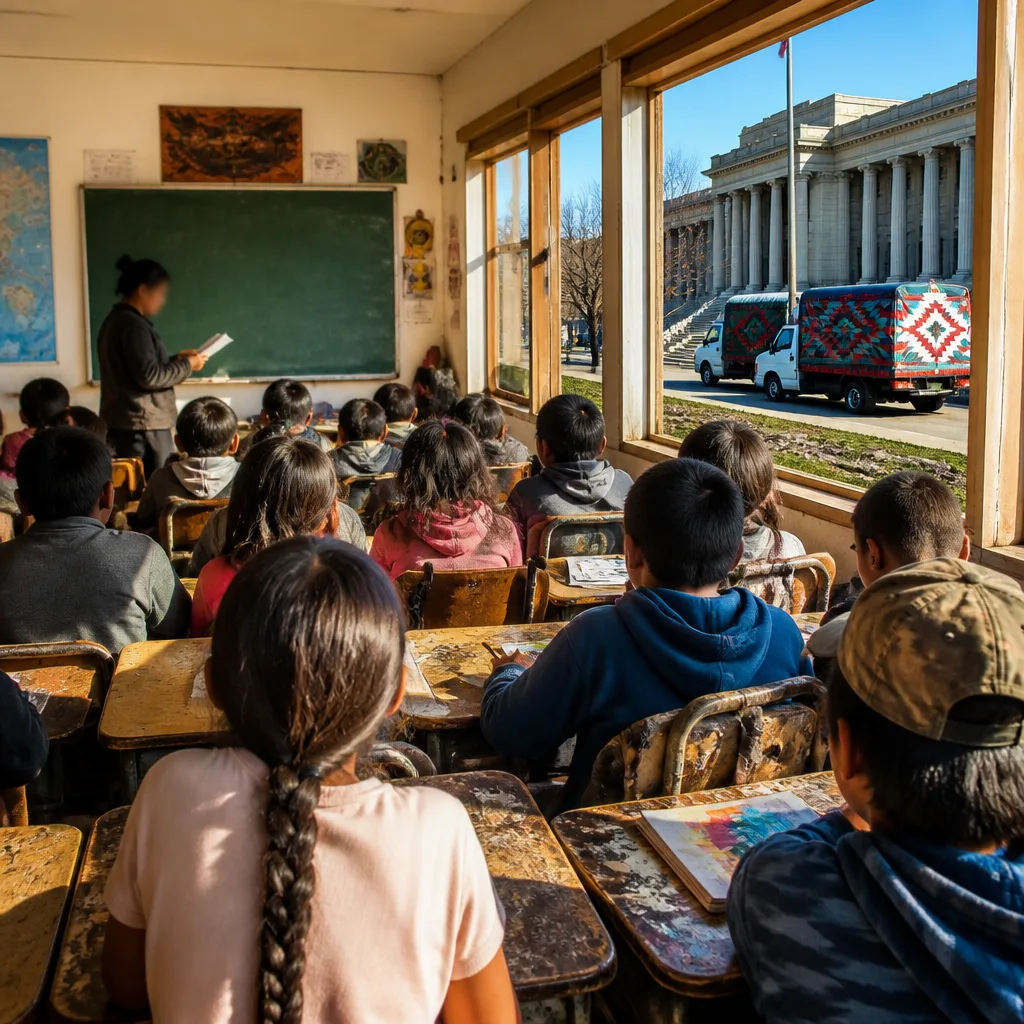
Community groups have also drawn national attention to the unequal educational experiences across the country. For example, Indigenous Lumad children staged a multi‑day camp‑out at DepEd’s central office in Pasig City, where organisers held mobile classes to underline gaps in access and services for marginalised learners.
As the administration readies its public accounting during the State of the Nation Address, education stakeholders say they will be listening for concrete commitments on school infrastructure, hiring of additional teaching and support staff, improved compensation for educators and measurable plans to close learning gaps.
The success of the next phase of reform will be judged not only by policy announcements but by whether classrooms across the archipelago see smaller class sizes, greater teacher capacity and improved learning outcomes for the students who continue to be most affected by the pandemic’s legacy.