Georgetown is in the midst of several major transportation projects that will reshape key corridors, improve active-transportation options and rebuild aging bridge infrastructure. City updates show a mix of work that is already underway and projects set to begin this summer, with multi-year timelines and significant municipal costs.
What crews are doing now
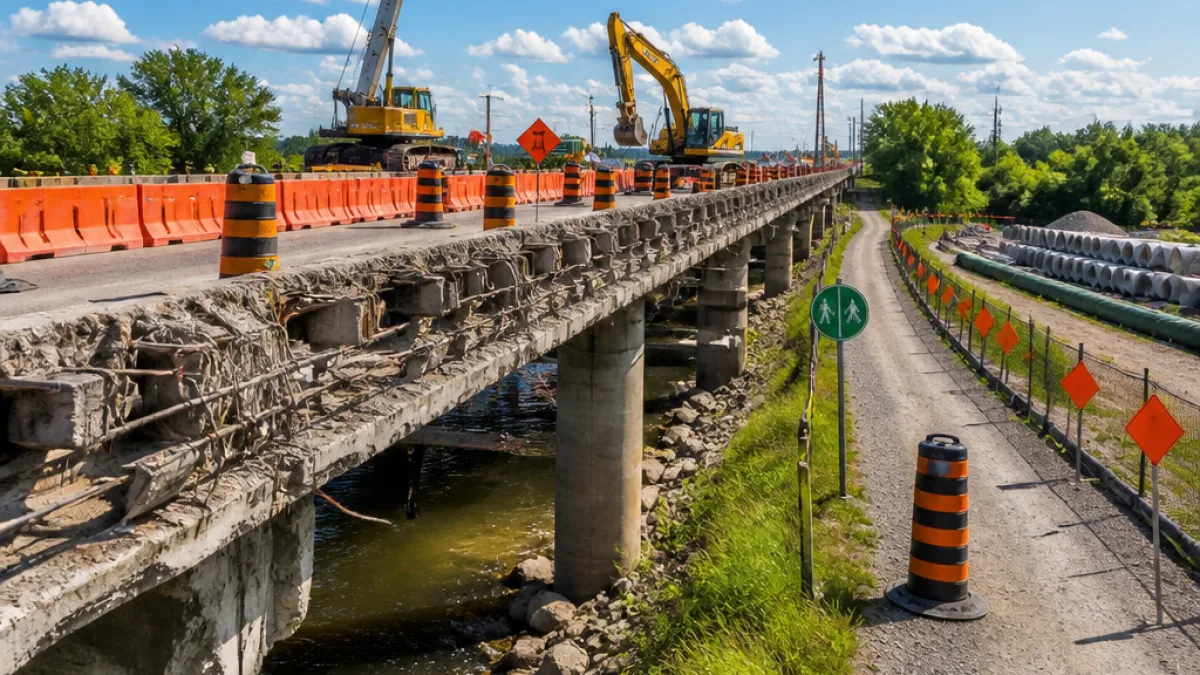
Crew activity includes demolition work on the southbound Austin Avenue vehicular bridge decks over the San Gabriel River. According to the latest update, the decks for the southbound span were removed in early June and reconstruction of the bridge deck is expected to take about two months, after which the contractor will proceed with follow-up work.
Other active projects involve utility relocations, paving and installation of traffic signals along corridors that are being widened or reconfigured. The work will affect traffic patterns and access in several neighbourhoods while construction continues.
Ongoing and upcoming projects to note
- Shell Road widening — Widening between Williams Drive and Sycamore Street to four lanes with a raised median and a shared-use path; most utility work is complete and crews are on to paving.
- Rockride Lane upgrade — Upgrading to a two-lane collector with a continuous centre left-turn lane and a 10-foot shared-use path; permanent signal work at Sam Houston and Rockride has begun.
- Austin Avenue vehicular bridges — Reconstruction of two bridge structures crossing the San Gabriel River, with southbound deck demolition just completed and deck rebuilding underway.
- Williams Drive medians — New medians and turn lanes from I-35 to Serenada Drive, plus a shared-use path on the north side; procurement is under review and construction is expected to start this summer.
- SE Inner Loop widening — A 2.91-mile stretch will be expanded to a four-lane divided roadway with an added shared-use path; utility relocations are underway on parts of the corridor.
Costs, funding and timelines
Project cost and funding differ by corridor. Several rely on a mix of municipal funds, developer- or traffic-impact fees, and grant programs. A quick summary of the key figures reported by the city follows:
| Project | Timeline | Estimated cost | Funding sources |
|---|---|---|---|
| Williams Drive medians | Summer 2026–2027 | $19.7 million | City, traffic impact fees, federal grants, tax increment financing |
| SE Inner Loop (widening) | 2026–2028 | $70.6 million | City, Georgetown Transportation Enhancement Corp. |
| Shell Road widening | Jan. 2026–Dec. 2027 | $19 million | City |
| Rockride Lane | 2025–2026 | $12 million | City |
| Austin Avenue bridges | Immediate work: deck reconstruction ~2 months (southbound) | Not specified | City |
What this means for residents
The projects combined represent substantial investment in the city’s transportation network, with several expected to take two years or longer to complete. Residents should plan for the following:
- Intermittent lane closures and detours where crews are resurfacing, demolishing bridge decks or installing utilities.
- Construction staging near schools, workplaces and commercial areas that may affect travel times during peak hours.
- Improved cycling and walking infrastructure when projects finish, including shared-use paths on multiple corridors.
For travellers who use the affected corridors, the combination of paving, widening and bridge work means motorists may need to allow extra time and follow posted signage through construction zones. The addition of shared-use paths and medians aims to improve safety for pedestrians and cyclists once projects are complete.
City officials continue to advance procurement, utility work and construction sequencing to limit disruption where possible. Residents can expect regular updates from the city as contracts are awarded and phases move from utility work to paving and finishing.
Local commuters and neighbourhood associations are encouraged to monitor official city communications for timing of lane restrictions and any temporary access changes to homes or businesses. With several large projects overlapping in schedule, coordinated traffic management will be important to keep people moving safely through the construction season.