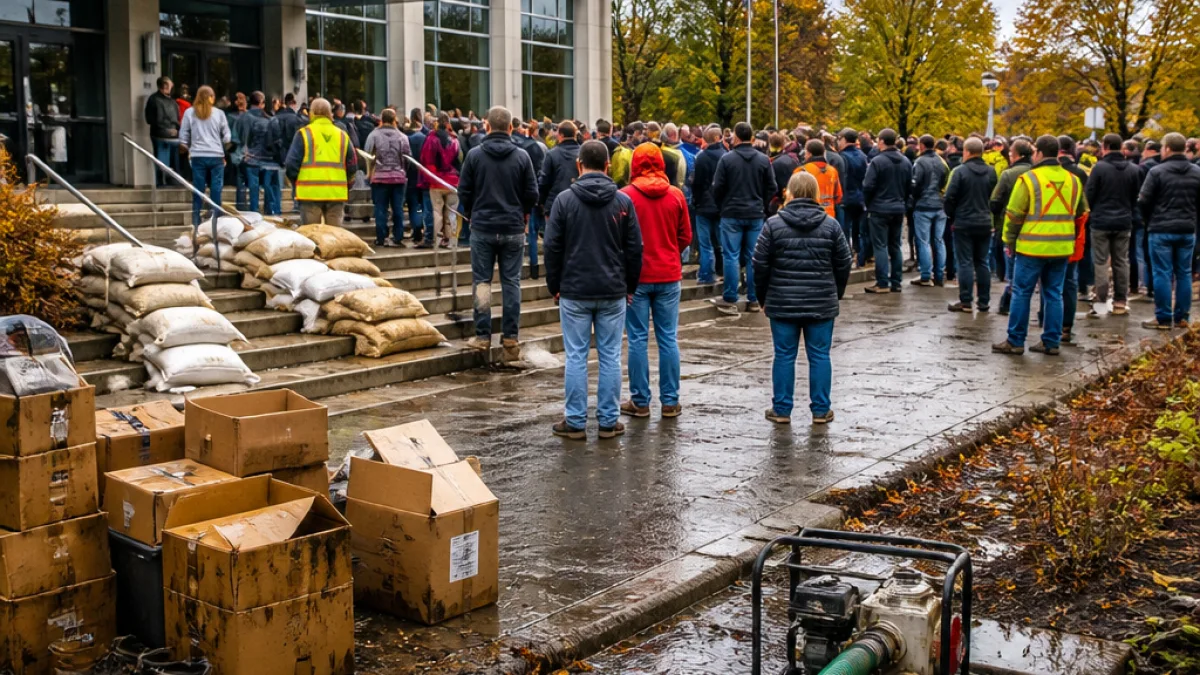
More than 100 residents gathered outside Pierrefonds–Roxboro borough hall on Monday evening to demand faster and clearer action from elected officials after repeated basement flooding in the West Island left many homeowners exhausted and out-of-pocket.
Frustration over repeated losses and rising costs
Homeowners say they have spent tens of thousands of dollars repairing flood damage, installing protective systems and paying for cleanup — only to see water return. The meeting was the borough’s first council session since widespread flooding in June inundated hundreds of homes.
One resident, who has flooded twice in less than two years, said the experience has left the family fearful about future costs and property values. He recounted investing about $50,000 to rebuild a basement after a 2024 inundation, installing a backflow valve, additional pumps and other safeguards, but the house flooded again during the June storm.
“I’m totally paranoid now,” the homeowner said, describing running four pumps during the June storm as water reached nearly 75 centimetres at its deepest point.
Weather, scale and municipal response
Environment Canada reported roughly 150 millimetres of rain fell across parts of western Montreal and the South Shore within a matter of hours during the June event. The borough says the rainfall exceeded seasonal norms and standard climate-model predictions.
Pierrefonds–Roxboro Mayor Jim Beis defended the municipal response at the meeting, saying emergency crews handled more than 300 calls during the storm and that the scope of the damage required weeks of cleanup. Borough spokesperson Marie‑Pier Cloutier said public works, police and firefighters were mobilized immediately and that special debris collections have been completed. Officials say they continue to evaluate measures to reduce the impact of future extreme rainfall.
“We have never experienced this volume of rain in such a short period of time,” the mayor said in defence of the borough’s actions.
Residents pressing for concrete plans
At the meeting, residents pressed councillors and borough staff for timelines and concrete actions: when will blocked drains be cleared, where will long-term infrastructure upgrades be made, and how will the municipality help homeowners facing repeated losses and rising insurance costs? Many expressed concern that repeated claims and visible damage could drive up premiums and depress property values in affected neighbourhoods.
- Homeowners reported spending substantial sums on flood mitigation that proved insufficient when the June storm struck.
- Residents say cleanup by city crews was uneven, with some streets seeing no immediate presence after the flooding.
- Borough officials maintain the storm was of an intensity beyond existing design and planning assumptions and say they are reviewing future measures.
Data at a glance
| Item | Reported figure |
|---|---|
| Residents at borough hall | More than 100 |
| Emergency calls handled during storm | 300+ |
| Rainfall (Environment Canada) | ~150 mm |
| Homeowner’s reported repair bill (since 2024) | $50,000 |
| Depth of basement flooding reported | ~75 cm |
While the borough points to the extraordinary nature of the storm, residents are seeking more than explanations. They want a clear plan that addresses immediate cleanup shortfalls and sets priorities for long-term investments: improved stormwater infrastructure, better inspection and maintenance of catchbasins and sewer systems, clearer emergency communication and potential financial support for repeatedly affected households.
Citywide, municipalities are grappling with more frequent intense rainfall events attributed to a changing climate, forcing questions about whether current infrastructure and planning standards are adequate. For Pierrefonds–Roxboro residents who have faced repeat losses, the stakes are personal and economic: decisions taken now will influence insurance availability, property values and whether rebuilding remains viable for many households.
Officials at the borough level say evaluations are ongoing. Residents left Monday’s meeting demanding clearer timelines and concrete commitments that move beyond assessments — seeking assurance that future storms will not leave their basements flooded a second time.