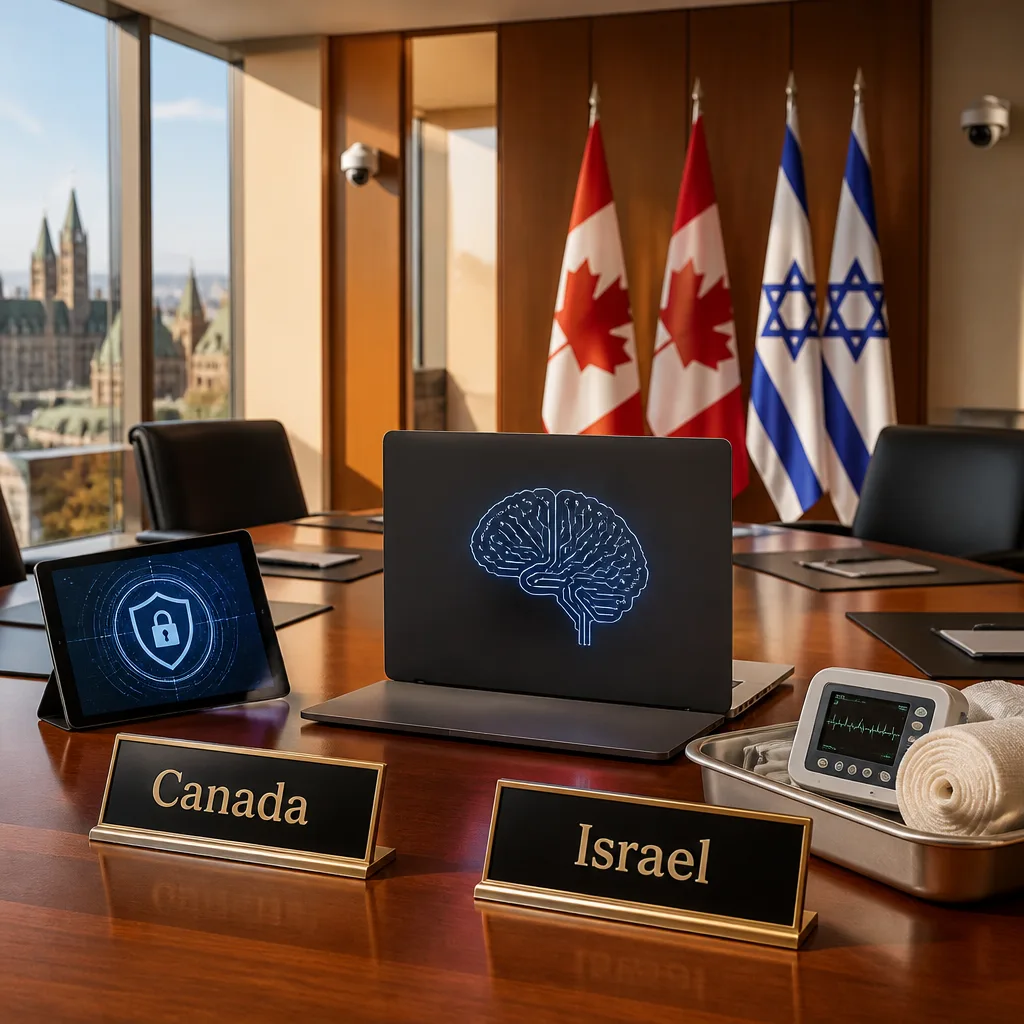
OTTAWA — Israel is seeking to reframe its relationship with Canada around practical technology cooperation, pitching itself as a source of “safer artificial intelligence” and other applied solutions even as the two governments remain deeply divided over Middle East policy.
Concrete offers despite political tensions
Israeli Ambassador Iddo Moed told The Canadian Press that Ottawa and Jerusalem share an interest in exporting technologies, opening new markets and solving problems that exist in multiple countries. The outreach comes amid what Moed called the lowest point in nearly eight decades of relations between the two countries.
“Canada and Israel are both countries that are very much looking to export technologies, to open new markets and to solve problems that also exist elsewhere,”
The diplomatic chill follows a series of Canadian actions critical of Israel’s conduct in the Middle East. The federal government has accused Israel of grave violations of international law, while Israel has accused Ottawa of steps that, in its view, undermine peace prospects — including withdrawing support in certain United Nations votes and recognising the State of Palestine.
Where technology fits into a fraught relationship
Moed said he still sees scope for collaboration with Prime Minister Justin Trudeau’s government, particularly in technology areas that include:
- Artificial intelligence — pitched as “safer” AI and potential joint projects.
- Cyber-defence — cooperation to bolster protections against cyberattacks.
- Urban data solutions — using data to improve municipal traffic management.
- Hospital-at-home — remote monitoring and telehealth models using wearables and video calls.
Israeli firms have run hospital-at-home pilot projects in Europe and the United States, and Moed says they are interested in pursuing similar pilots in Canadian provinces.
Political context shapes technical offers
The outreach comes against a backdrop of personal and diplomatic distance between leaders: Moed noted that Prime Minister Justin Trudeau has not had a formal call or meeting with Israeli Prime Minister Benjamin Netanyahu, who faces an arrest warrant from the International Criminal Court.
Trudeau has publicly accused Netanyahu’s government of failing to prevent a humanitarian crisis in the Gaza Strip by restricting delivery of essential aid, and Foreign Affairs Minister Anita Anand has said Israel’s treatment of Canadians aboard a flotilla attempting to reach Gaza violated the Vienna Convention.
For its part, Israel has framed Canada’s criticisms and diplomatic shifts as harmful to prospects for peace.
Implications and limits
The Israeli pitch highlights a recurring question for Ottawa: whether and how to separate strategic commercial and technological interests from broader foreign-policy disagreements. Technology cooperation — especially in sensitive areas such as AI and cyber-defence — typically requires high levels of trust, clear governance and shared values on data, privacy and humanitarian norms.
Moed suggested possible industry-level partnerships rather than only government-to-government programs. Among the specific examples he cited were collaborations on municipal traffic management using data analytics and expanding remote-care models used in other jurisdictions.
| Technology area | Israeli offer / example |
|---|---|
| AI | Safer AI collaboration and commercial partnerships |
| Cyber-defence | Joint efforts to strengthen defences against cyberattacks |
| Hospital-at-home | Wearable monitoring and video-based care pilots already trialled in Europe and the U.S. |
| Urban data | Traffic-flow management using municipal data |
Any practical cooperation would need to navigate not only diplomatic friction but also provincial jurisdiction in health-care delivery, and public sensitivity about partnering with a government that Ottawa has publicly criticised for its conduct in a conflict zone.
For Canadian technology and health-care officials, the question will be whether the proposed solutions deliver measurable benefits that justify engagement, and whether safeguards around data, privacy and humanitarian considerations are adequate.
At present, the outreach from Israel appears aimed at keeping commercial and technical channels open even as political debate continues at the federal level. Whether Ottawa responds with concrete pilot projects or limits the relationship to industry-to-industry talks remains to be seen.