PARIS — Iran's minister of science urged UNESCO member states to develop an international framework of binding measures to protect scientists, universities and research institutions from military attacks, arguing that safeguarding the scientific community is essential for addressing global challenges.
Proposal at UNESCO conference
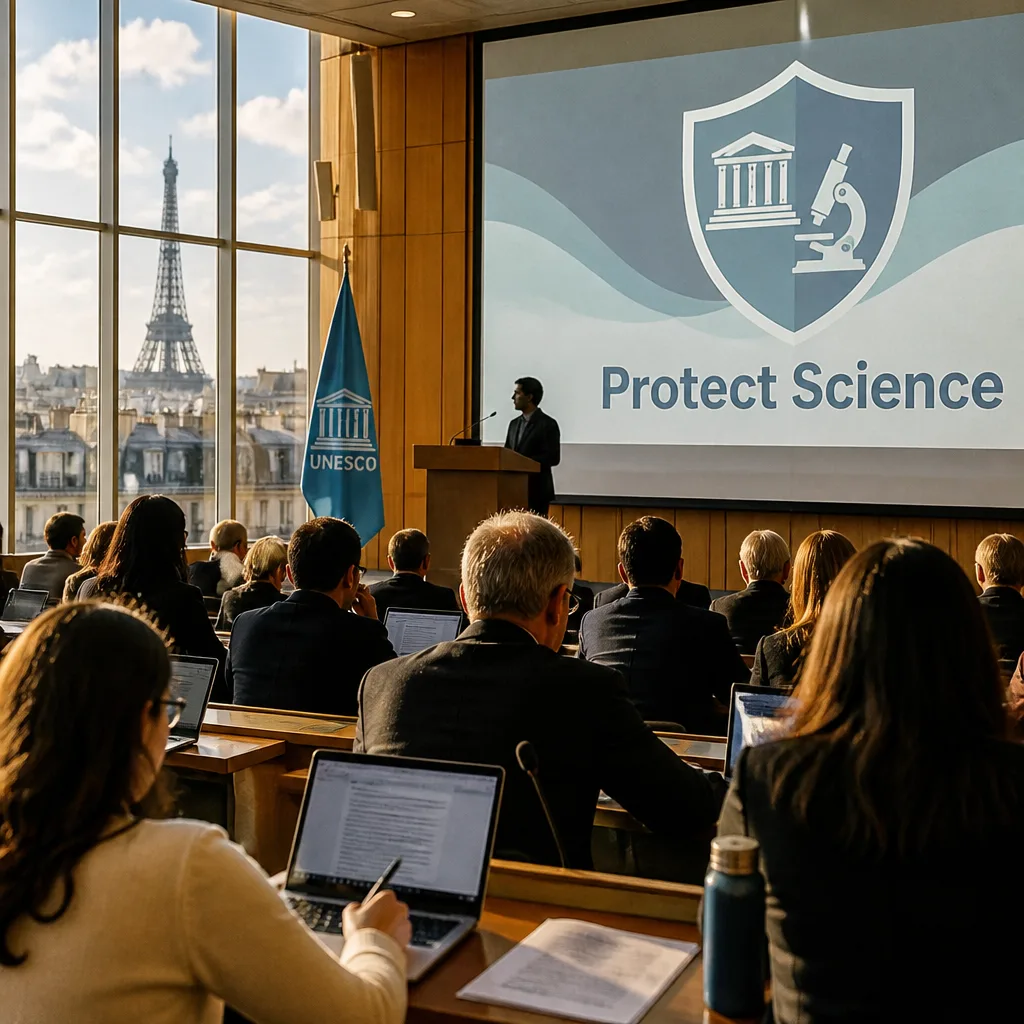
Hossein Simaei-Sarraf delivered his remarks at the global conference on the International Decade of Sciences for Sustainable Development, a three-day hybrid event held at UNESCO Headquarters in Paris from July 15–17. The decade — running from 2024 to 2033 — aims to mobilize scientific knowledge across disciplines to accelerate progress on the United Nations Sustainable Development Goals.
According to the Iranian state-affiliated news outlet Mehr, Simaei-Sarraf called on UNESCO to adopt and implement the proposed framework through the passage of binding resolutions and treaties. He insisted such measures are necessary so that "science always remain part of the solution to global issues and challenges."
"Scientists, universities, research institutions, and scientific infrastructures must never become victims of crises and conflicts. Scientists must be empowered to continue advancing knowledge for the benefit of humanity," Simaei-Sarraf said, according to Mehr.
Context and reasoning
The minister framed his call as rooted in recent painful experiences, saying the threats to science are not abstract for his country. Mehr reported him as saying thousands of civilians and many scientists were killed or injured during what he described as recent military aggressions, which the statement linked to [US‑Israel] military aggressions. He argued these attacks violate international law and the UN Charter and run counter to UNESCO's mission in education, science and culture.
Simaei-Sarraf asked how science could play its role addressing global problems when the research enterprise itself is under threat, and he urged that universities and other scientific bodies be treated as strategic assets whose protection serves humanity as a whole.
What the proposal would involve
The minister urged UNESCO to translate the idea into concrete, enforceable instruments — not only statements of principle. That call included:
- Development of an international framework aimed at legally protecting scientists and research infrastructure;
- Adoption of binding resolutions and treaties to implement and reinforce protections;
- Recognition of universities and research facilities as critical assets that merit legal and operational safeguards during conflicts.
He argued that such measures would help ensure science continues to contribute to solutions for global issues, including those addressed under the Sustainable Development Goals.
Implications and challenges
The idea of legally protecting scientists and scientific infrastructure raises complex questions for UNESCO and its member states. Binding international instruments typically require wide diplomatic agreement and formal adoption procedures, and implementation depends on states' willingness to accept new legal obligations. Debate is likely over definitions (for example, what constitutes a legitimate target versus protected scientific infrastructure), monitoring and enforcement mechanisms, and how to reconcile protections with security and military considerations raised by some states.
UNESCO already promotes the safety of cultural and educational institutions and fosters international cooperation in science policy. Turning a protection-focused proposal into binding law would be a significant step beyond existing soft-law instruments and declarations, and would require sustained diplomatic work within the United Nations system.
For now, the proposal has been placed on the record at the Paris conference and reported by Mehr; any next steps would involve discussion among UNESCO member states and their legal and policy advisers on how, and whether, to translate the concept into an adopted instrument.
| Event | Dates |
|---|---|
| UNESCO global conference on the International Decade of Sciences for Sustainable Development | July 15–17, 2026 |
As discussions proceed at UNESCO, the proposal underscores a growing international conversation about the intersection between science, security and law — and whether additional legal protections are needed to ensure research can continue amid geopolitical conflict.