Local study examines grazing approaches and emissions
Guelph — Preliminary research at the University of Guelph indicates that switching from continuous to rotational grazing can produce better weight gains and a longer grazing season for beef cattle, without increasing the amount of methane produced per pound of gain.
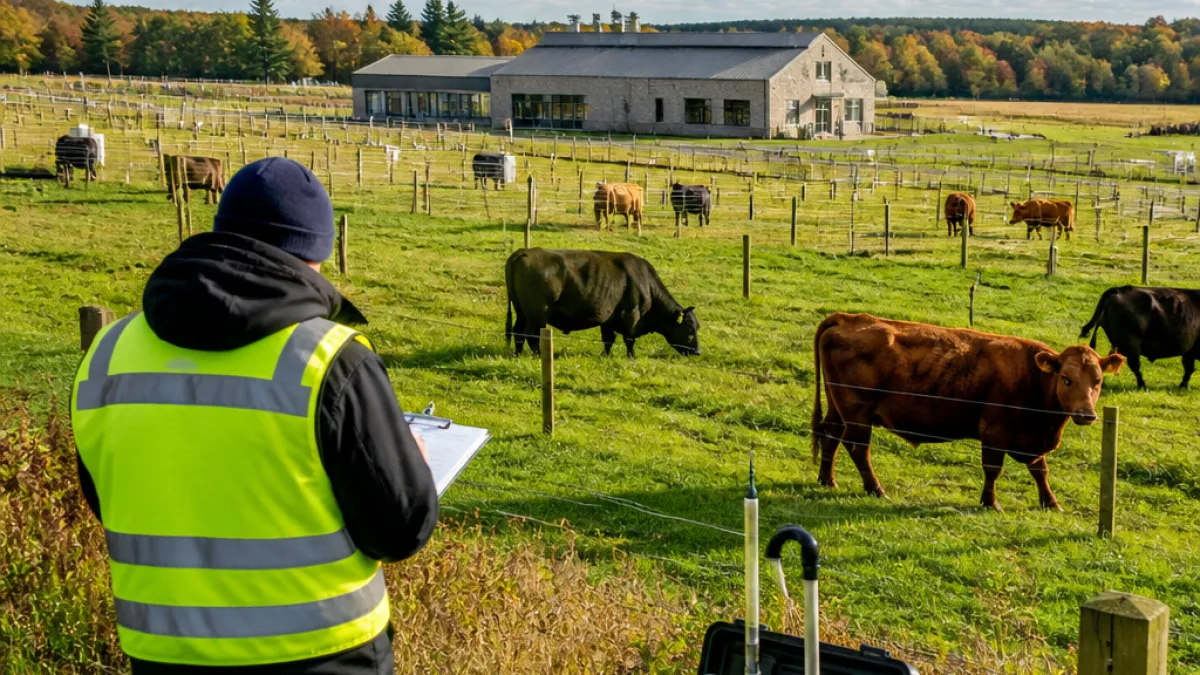
The work, led by PhD student Kathryn Kroeze under the supervision of Dr. Katharine Wood, compares how cattle perform and how pastures respond under the two common systems: continuous grazing, where animals have long-term access to an entire pasture, and rotational grazing, where animals are moved between smaller paddocks on a schedule to allow forage recovery.
What the early results show
According to the ongoing study, which is still described as preliminary, the rotational approach appears to:
- Support improved average gains in cattle compared with continuous access.
- Extend the usable grazing season by promoting pasture regrowth and more consistent forage quality.
- Not increase methane emissions when expressed as methane per pound of gain.
Those findings matter because methane intensity — the amount of methane emitted per unit of product — is a central indicator for producers and policymakers aiming to reduce the climate footprint of livestock while maintaining productivity.
Why systems differ
Continuous grazing requires less labour and less infrastructure for fencing and water, making it practical for many operations. By contrast, rotational grazing often demands more management, more fencing and carefully scheduled moves, but it can lead to more uniform grazing patterns, improved manure distribution across paddocks and better recovery time for grazed areas.
| Characteristic | Continuous grazing | Rotational grazing |
|---|---|---|
| Animal access | Full pasture season-long | Access to smaller paddocks on schedule |
| Infrastructure needs | Lower | Higher (fencing, water setups) |
| Forage recovery | Limited | Improved, allows regrowth |
| Preliminary impact on gains | Baseline | Suggests improved gains |
| Preliminary impact on methane intensity | Baseline | No increase observed |
What this means for Guelph-area producers
For farmers and advisors in the Guelph region — an area with a mix of small and mid-size beef operations and strong ties to the university’s agricultural research — the study offers evidence to inform grazing decisions. While rotational systems can require more upfront investment and management time, the potential for improved cattle performance and extended grazing days may alter cost–benefit calculations for some operations.
Extension specialists and producers will also be watching the environmental results. Methane per pound of gain is an important metric for producers responding to market and regulatory pressures to reduce greenhouse-gas intensity while sustaining profitability.
Because the research remains preliminary, the authors and the university stress the need for continued data collection across seasons and herd types before firm recommendations are made. The findings so far, however, provide a promising indication that rotational systems can deliver production gains without worsening methane intensity.
Next steps and local context
The University of Guelph has a long record of applied agricultural research that feeds into local practices. Producers interested in adapting rotational techniques should consult local extension services, consider the costs of fencing and water infrastructure, and follow emerging results from the Kroeze–Wood study as more complete data are released.
As the research progresses, it will be important for Guelph-area stakeholders to weigh practical considerations — labour, capital, pasture size and seasonal growth patterns — alongside the potential animal-performance and environmental outcomes reported to date.