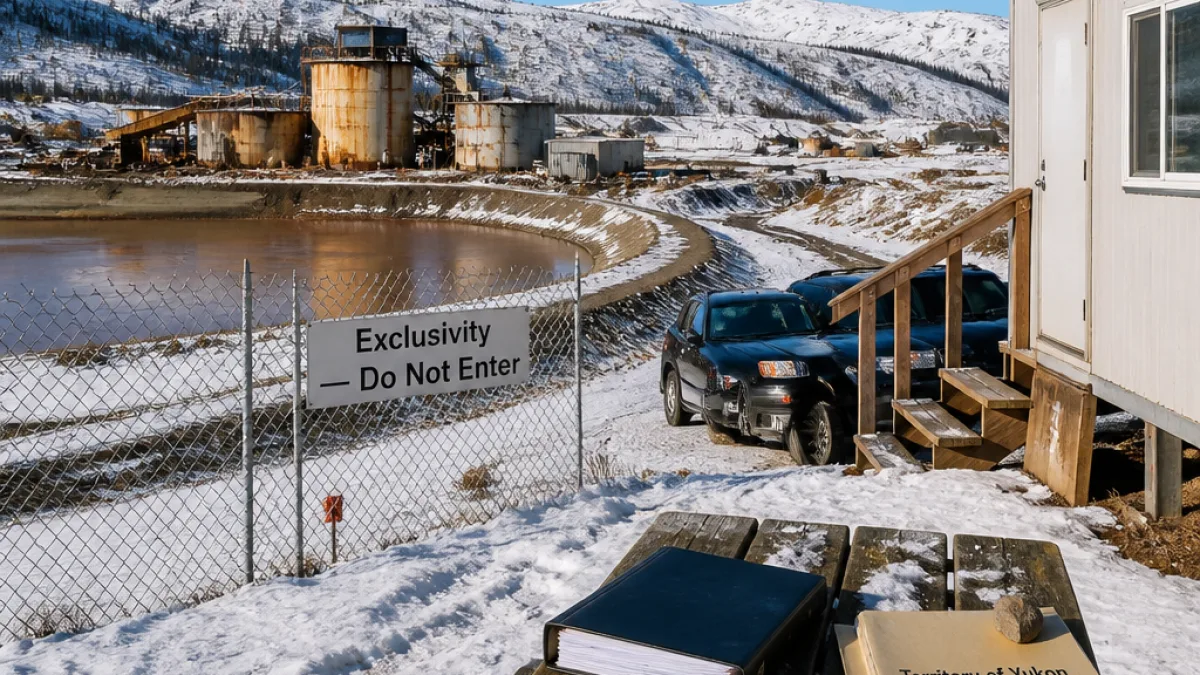
WHITEHORSE — The window for a potential purchaser to secure the troubled Eagle Gold Mine north of Mayo has been lengthened by another 90 days, the territorial government said Monday, giving the Singapore‑linked mining investor more time to complete due diligence and to negotiate key agreements with Yukon and local Indigenous partners.
What the extension means
The court‑appointed receiver first granted an exclusivity arrangement in April to Boroo Pte Ltd., a privately held mineral investment group with operations in Mongolia and South America. That period has now been prolonged to permit additional examination of the site and continued bargaining over the legal and financial frameworks required to transfer the operation and related assets.
Yukon officials said the prospective transaction carries significance beyond ownership: a sale would create an opportunity to recoup a substantial portion of public money advanced to stabilize and manage the site after the disaster.
“The territorial government says the sale of the mine and related assets would create an opportunity for it to recover the $220 million funding advanced through a receivership loan.”
Background to the receivership and spill
The Eagle Gold Mine entered receivership following a substantial environmental incident in June 2024, when a storage site released roughly two million tonnes of material contaminated with cyanide into surrounding terrain. That event prompted an immediate response from multiple agencies and left the long‑term remediation and operational future of the mine in doubt.
Since the spill, the receiver has overseen site management, and the Yukon government provided a receivership loan to fund interventions and monitoring. The reported amount associated with that financing is $220 million.
Parties involved and Indigenous engagement
Officials note that any sale would not be a simple transfer of assets. Negotiations are said to include the Yukon government and the Na‑cho Nyak Dun First Nation, whose traditional territory includes the mine site. The extension is intended to provide time for the purchaser to work through purchasing terms, environmental liabilities, and agreements that would shape future activity on the land.
Boroo Pte Ltd., the firm in exclusivity, is described as an international mining investment company. The Yukon government’s announcement does not reveal the detailed terms under discussion, nor does it disclose any proposed remediation or operational plans put forward by the investor.
Local and financial stakes
For residents of Mayo and other local communities, the outcome will affect employment opportunities, long‑term land use, and the scope and pace of environmental cleanup. Financially, a sale that transfers operations — and possibly some remediation responsibility — could allow the territory to recover some or all of the money advanced via the receivership loan.
Officials have not stated how much of the $220 million would be recoverable under the proposed transaction or what safeguards would be included to ensure continued monitoring and remediation if ownership changes hands.
Timeline and key figures
| Event | Date / Amount |
|---|---|
| Tailings release at Eagle Gold Mine | June 2024 (≈2 million tonnes contaminated) |
| Receivership loan advanced by Yukon | $220 million |
| Exclusivity agreement with prospective buyer | April 2026 (initially) |
| Exclusive period extended | Another 90 days (announced July 27, 2026) |
Next steps and public information
The extension means the receiver and parties will continue negotiations through the extended exclusivity window. Observers and community members will be watching for details about any proposed sale agreement, including:
- Which liabilities the buyer would assume, particularly environmental remediation responsibilities;
- The role and terms of any agreements with the Na‑cho Nyak Dun First Nation;
- The portion of the receivership loan the territory might recover if a deal is finalised.
The territorial government’s statement did not include a timeline for concluding the extended negotiations, nor did it provide specifics about proposed safeguards that would bind a new owner to remediation obligations. Officials have previously indicated they intend to protect public and environmental interests as talks proceed.
As discussions continue, residents of Mayo and Yukoners more widely will be watching closely for any public releases, regulatory filings or community consultations that outline the responsibilities a purchaser would accept and the commitments it would make to restore and manage the site.
(This report was compiled from a Yukon government statement and a Canadian Press dispatch.)