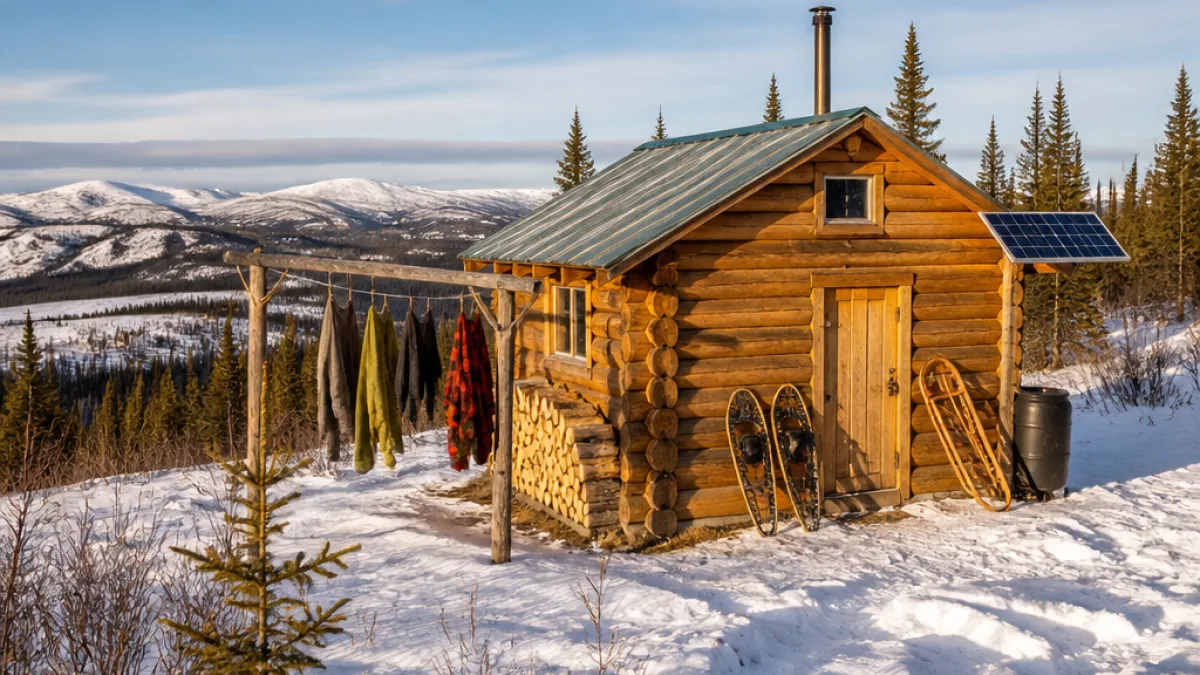
Whitehorse, Yukon — A 21st-century iteration of homesteading continues to exist in the Yukon Territory, the National Post reports, drawing a direct line between historic settlement practices and contemporary northern lifestyles.
What the National Post highlighted
The National Post published a feature and accompanying video explaining that while traditional homesteading — the settlement and cultivation schemes that opened western Canada and the United States in previous centuries — largely belongs to history, a modern variant persists in the Yukon.
The report locates living examples of people who still pursue a life that centres on self-sufficiency, small-scale land use and direct reliance on local natural resources. A photograph accompanying the story was credited to Aimee Dilger / SOPA Images/LightRocket via Getty Images.
How homesteading evolved into the present
Historically, homesteading involved government programs that offered parcels of land to settlers willing to live on and develop them. In the Yukon context, that history is tied to waves of settlement associated with mining and northern development.
Today’s version does not necessarily mirror the large-agricultural claims and formal land grants of the early 20th century. Instead, the term often describes a lifestyle in which residents prioritise:
- direct use of the land for food gathering, small-scale cultivation and fuel,
- off-grid or low-infrastructure living, and
- self-reliant household economies.
That pattern is particularly visible in territories where low population density, access to public lands and a tradition of subsistence activities make alternative life choices practicable.
Why this matters to Yukoners
The National Post piece resonates in the Yukon because it touches on questions many residents grapple with: how to balance modern development and services with remote living preferences, how to sustain livelihoods that rely on the land, and how historical patterns of settlement continue to colour land use debates.
For Indigenous communities, long-standing land stewardship practices differ from settler homesteading. The feature frames the modern homesteading narrative within a broader Canadian story of frontier development and the continuing attraction of northern landscapes to people seeking another way of life.
Practical considerations and realities
Readers considering a homestead-style life in the Yukon should be aware of practical realities that distinguish northern living from historical homesteading schemes elsewhere:
- harsh climate and short growing seasons that limit traditional agriculture,
- the need for reliable access to fuel, winterised shelter and emergency services,
- land tenure and regulatory frameworks governing use of Crown land and private parcels.
Those practicalities help explain why the modern movement emphasises small-scale food production, off-grid technologies and careful planning rather than large-scale farming.
| Topic | Historic homesteading | Modern Yukon variant |
|---|---|---|
| Land access | Government grants and homestead acts | Varied: Crown land permits, private purchase, established properties |
| Economy | Farming and settlement-driven growth | Subsistence activities, small-scale enterprises, seasonal work |
| Climate | Temperate prairie or frontier regions | Subarctic conditions, short growing seasons |
Where to learn more
The National Post feature includes a video and transcript for readers who want a narrative account. For Yukoners seeking authoritative guidance on land use, tenure and regulatory questions, territorial government resources and local land management offices provide the most reliable, up-to-date information.
Local history societies and archives also hold records that trace how settlement and land-use policies evolved in the North — useful context for anyone researching homesteading’s legacy in the territory.
As the National Post’s reporting suggests, homesteading is less a relic and more a continuing expression of a desire some people have to shape a life closely tied to land and seasons. In the Yukon, where wide landscapes and remote options remain, that expression endures in modern, adapted forms.
Photo credit in the original National Post piece: Aimee Dilger / SOPA Images/LightRocket via Getty Images.