
Scientists have described a previously unknown ape species from northern Egypt that lived about 17–18 million years ago, offering new evidence that early relatives of living apes occupied North Africa during the Early Miocene.
New species from Wadi Moghra
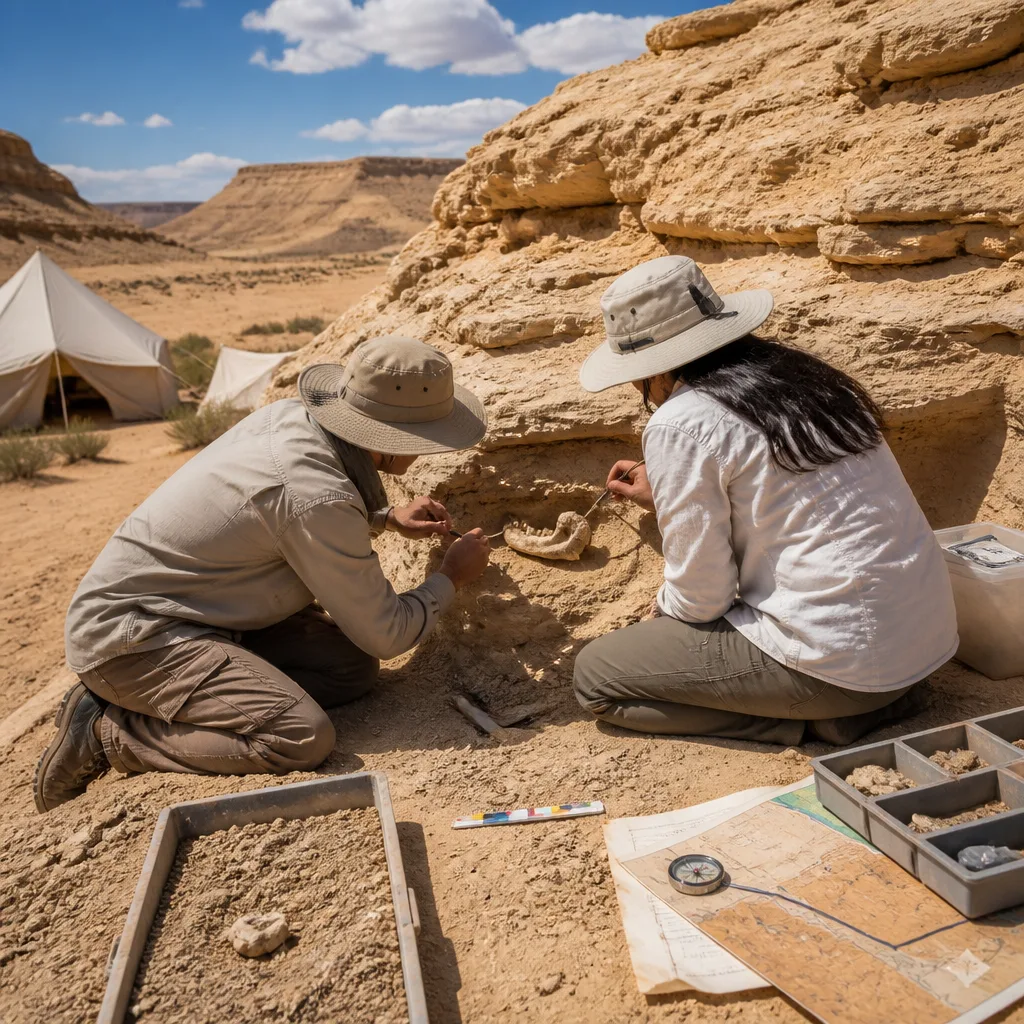
An international team led by researchers at the Mansoura University Vertebrate Paleontology Center in Egypt and the University of Southern California reported the fossils in the journal Science. The specimens, recovered from the fossil-rich site of Wadi Moghra, have been named Masripithecus moghraensis.
The find provides the first clear record of an ape in North Africa from this interval. Until now, Early Miocene sites in the region had yielded monkey remains but no confirmed apes, prompting many researchers to infer that early apes were largely restricted to more southerly parts of Africa at the time.
"We spent five years searching for this kind of fossil because, when we look closely at the early ape family tree, it becomes clear that something is missing -- and North Africa holds that missing piece,"
The remark comes from Hesham Sallam of Mansoura University, the study's senior author, underlining the targeted effort that produced the discovery.
What the fossils reveal
Analyses indicate Masripithecus is closer in its features to living apes than are any known East African species of comparable age, suggesting substantial differences among contemporaneous ape lineages. The researchers say this expands the known geographic distribution of early apes and implies that North Africa and the wider Middle East may have played a significant role in the evolutionary developments leading to modern apes.
- Species identified: Masripithecus moghraensis
- Age: ~17–18 million years (Early Miocene)
- Location: Wadi Moghra, northern Egypt
- Institutions involved: Mansoura University Vertebrate Paleontology Center (Egypt) and the University of Southern California (USA)
The new material suggests that gaps in the fossil record have likely distorted reconstructions of the early evolutionary history of crown Hominoidea — the group that contains all living apes, from gibbons and orangutans to gorillas, chimpanzees and humans, and their last common ancestor.
| Feature | Detail |
|---|---|
| Name | Masripithecus moghraensis |
| Geological age | Early Miocene (≈17–18 million years ago) |
| Type locality | Wadi Moghra, northern Egypt |
| Published in | Science |
| Lead institutions | Mansoura University Vertebrate Paleontology Center; University of Southern California |
Wider implications
Researchers have long debated the geographic origins and early dispersal of hominoids. Younger ape fossils are known across Africa, Asia and Europe, but how these later species relate to each other and to their common ancestors is unresolved. The presence of an Early Miocene ape in northern Egypt suggests the region should be considered more centrally in scenarios for hominoid diversification and dispersal.
Because Masripithecus appears to differ markedly from contemporaneous East African apes, the discovery raises questions about the diversity and ecology of Early Miocene ape lineages and the palaeogeographic corridors that connected Africa with the Middle East and beyond. The authors emphasise that filling such geographic and temporal gaps in the fossil record is essential to build a more complete picture of hominoid evolution.
The species name combines the Arabic word for Egypt, Masr, with the Greek píthēkos (ape). The specific epithet, moghraensis, honours Wadi Moghra, the locality where the fossils were found.
While the discovery does not resolve every question about early ape evolution, it provides a concrete data point that may shift interpretations of where key branches of the hominoid tree first appeared and how they spread across continents during the Miocene.