The Yukon government has announced a territory-wide policy restricting personal mobile device use in all Kindergarten through Grade 12 classrooms, a move aimed at reducing distractions and fostering learning-focused environments.
What the policy does and when it takes effect
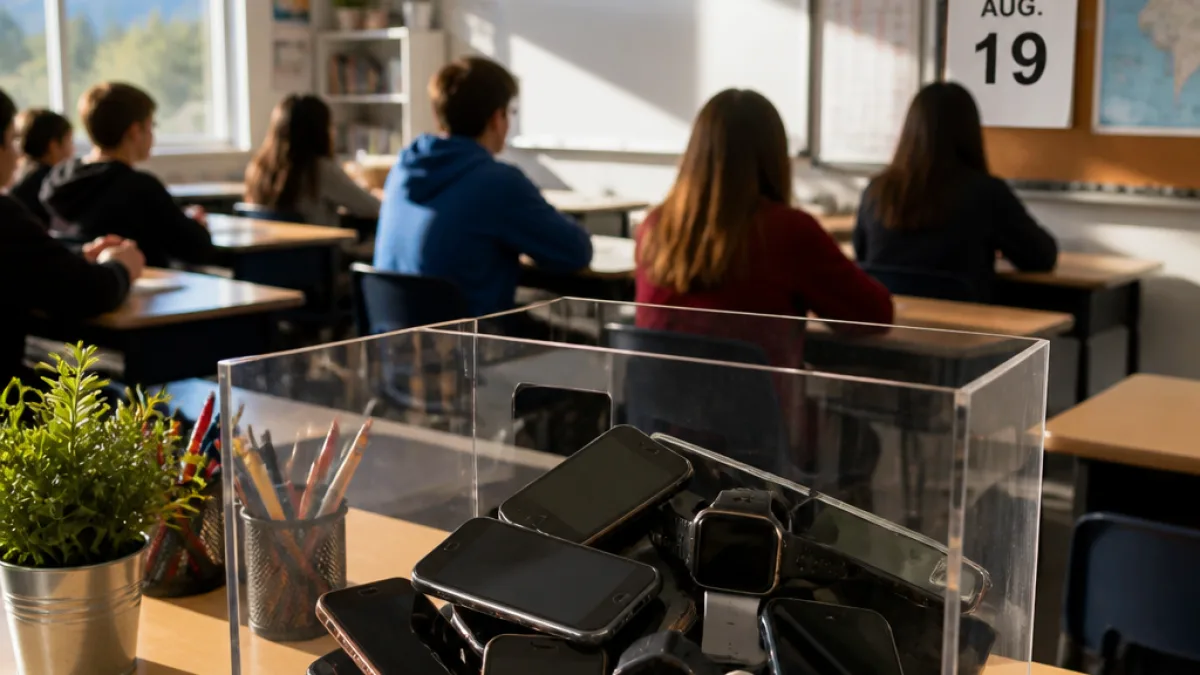
Introduced on July 21, the Personal Mobile Device Use in Schools Policy comes into force on Aug. 19. It limits the classroom use of personal devices including cell phones, laptops, tablets, smart watches and smart glasses for students across the territory.
Under the new rules, the use of personal devices will be treated differently by age group:
- Elementary students (Kindergarten to Grade 6): cannot use personal devices at all during school hours.
- High school students (Grades 7–12): may use personal devices outside of class times but are restricted during lessons.
- Exemptions: will be made for students with medical needs or those requiring devices for inclusive education purposes.
Reasons given by government
The Yukon government said the policy is intended to create classrooms where teaching and learning are the primary focus. Education Minister Scott Kent tied the measure to commitments made in the Yukon Party’s 2025 election platform and said most people see cell phones as a distraction.
“There’s issues around mental health and privacy concerns when students have personal devices with them,”
The government also pointed to similar moves in other jurisdictions, noting that some provinces, including Ontario, Manitoba and British Columbia, have implemented restrictions on devices in classrooms.
Responses from the community
The policy has drawn mixed reaction. While government officials present the measure as supporting student focus and well-being, the announcement has prompted concern among some students and education sector representatives. The head of the educators’ union expressed worries about the impact of a blanket restriction and how it will be implemented in diverse classroom settings.
Union leaders and some teachers have previously raised questions about enforcement, the role of teachers in policing devices, and whether the policy adequately distinguishes between social distraction and legitimate classroom uses of technology.
Practical questions for schools, families and students
As the school year approaches, families and school administrators will need clarity on several operational details, including:
- How schools will handle devices brought to school but not used during the day.
- What documentation is required to obtain an exemption for medical or inclusive education reasons.
- How disciplinary measures will be applied if students violate the policy.
School boards and individual schools are expected to provide implementation guidance in the weeks ahead. Families should watch for communications from their local school and the territory’s education department describing procedures and exemption processes.
How Yukon’s rules compare
| Elementary | High school | |
|---|---|---|
| Use during class | No use allowed | Not permitted |
| Use outside class time | Not permitted | Permitted |
| Exemptions | Medical/inclusive education | Medical/inclusive education |
Across Canada, a variety of approaches exist: some provinces have province-wide bans, while other jurisdictions leave rules to individual school boards. Yukon’s decision places it closer to provinces that have enacted territory- or province-level restrictions.
Next steps and timeline
The policy takes effect on Aug. 19, before the start of the 2026–27 school year for many schools. In the coming weeks, the territory’s education department and local schools will need to publish operational guidance, answer questions about exemptions and clarify enforcement practices.
Parents and guardians should expect direct communication from their child’s school about how the policy will be applied locally, and what steps are needed if a student requires an exemption.
The decision marks a significant change for Yukon classrooms and will test how uniform territory-wide rules perform across different communities, from Whitehorse to smaller northern and rural schools where access to technology and supports may differ.