The U.S. Army Corps of Engineers has published a technical report that independently evaluated 374Water Inc.’s AirSCWO waste‑destruction system and recorded a 99.9993% destruction and removal efficiency for per‑ and polyfluoroalkyl substances (PFAS) measured in aqueous film‑forming foam (AFFF), the company said.
What the report measured
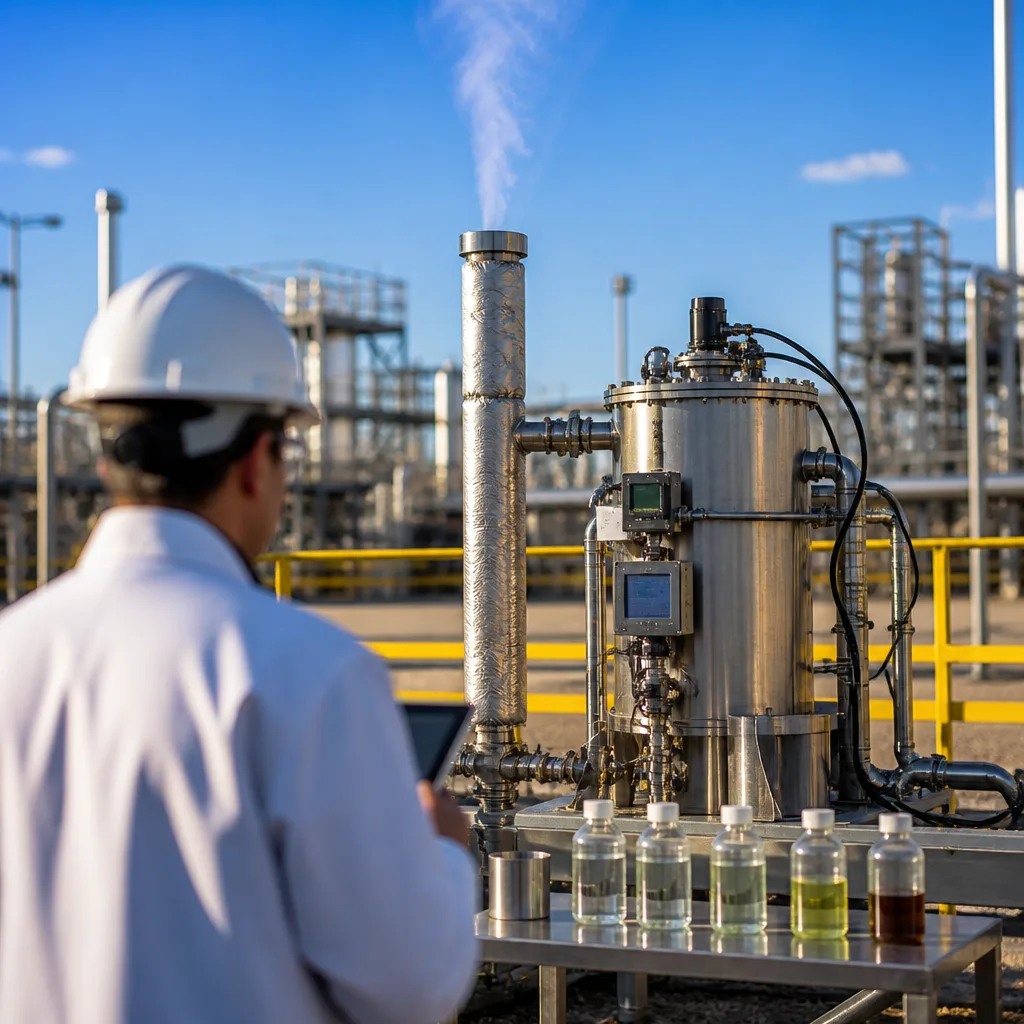
The demonstration, conducted at 374Water’s Orlando facility with Arcadis as a co‑author, used certified U.S. Environmental Protection Agency test methods to assess several performance metrics: PFAS destruction rates across targeted compounds, gaseous emissions from the system’s stack, and treated‑effluent quality.
- Total PFAS destruction and removal: 99.9993% (measured by the Total Oxidizable Precursor, TOP, Assay across 42 PFAS compounds).
- Individual compound destruction: ranged from 99.994% to 100% based on EPA Method 1633 testing.
- Gaseous emissions: near‑zero fluorinated emissions; detectable rate reported at 0.0005 grams per hour compared with a PFAS throughput of 16.6 grams per hour into the unit.
- Effluent quality: treated liquid met U.S. EPA maximum contaminant levels for all regulated PFAS compounds; chemical oxygen demand and total organic carbon were reduced to near non‑detectable levels.
| Metric | Reported result |
|---|---|
| Total PFAS destruction (TOP Assay) | 99.9993% |
| Individual PFAS range (EPA 1633) | 99.994%–100% |
| Stack detectable fluorinated emission | 0.0005 g/hr vs 16.6 g/hr throughput |
Implications and immediate context
PFAS — long‑lived chemicals used in firefighting foams and many industrial applications — are notoriously persistent and difficult to destroy. The Army report offers what the company frames as rigorous, independent confirmation that the AirSCWO process can oxidize PFAS and associated organics to levels consistent with discharge standards while producing negligible fluorinated emissions.
“This is exactly the kind of rigorous, independent validation that the federal market demands,” said Howard Teicher, vice‑president of government at 374Water.
The report also notes reductions in chemical oxygen demand and total organic carbon in treated effluent, indicating broader oxidation of organic constituents in AFFF. Arcadis’ independent role in co‑authoring the report is highlighted by the company and 374Water as a further check on measurement and analysis.
What remains unanswered
While the outcomes reported are specific and promising, questions remain about scaling the process, throughput limits, operational costs, long‑term monitoring of emissions in different feedstocks, and how the system performs on other PFAS‑containing wastes beyond AFFF. The Army’s evaluation focused on a demonstration at a single facility; broader field deployments and peer‑reviewed publications would provide more comprehensive validation for regulators and potential purchasers.
For federal and municipal decision‑makers grappling with contaminated sites and firefighting foam stockpiles, the report could accelerate interest in thermal‑oxidation solutions. For now, the data present a strong case that AirSCWO can achieve very high PFAS destruction percentages under the conditions tested, with treated effluent that met U.S. EPA limits in this demonstration.