More than 100 wildfires burning across Ontario have forced evacuations and destroyed two First Nations communities, sending displaced people to centres including Thunder Bay, where local organisations have shifted operations to provide immediate support.
Local organisations pivot to emergency response
Community groups and Indigenous organisations in Thunder Bay say they are providing culturally appropriate aid and basic necessities to evacuees arriving from the north. Among those affected is Gakijiwanong Anishinaabe Nation, which has ties to the Bois Forte Band of Chippewa in Minnesota, according to reporting cited from Minnesota Public Radio.
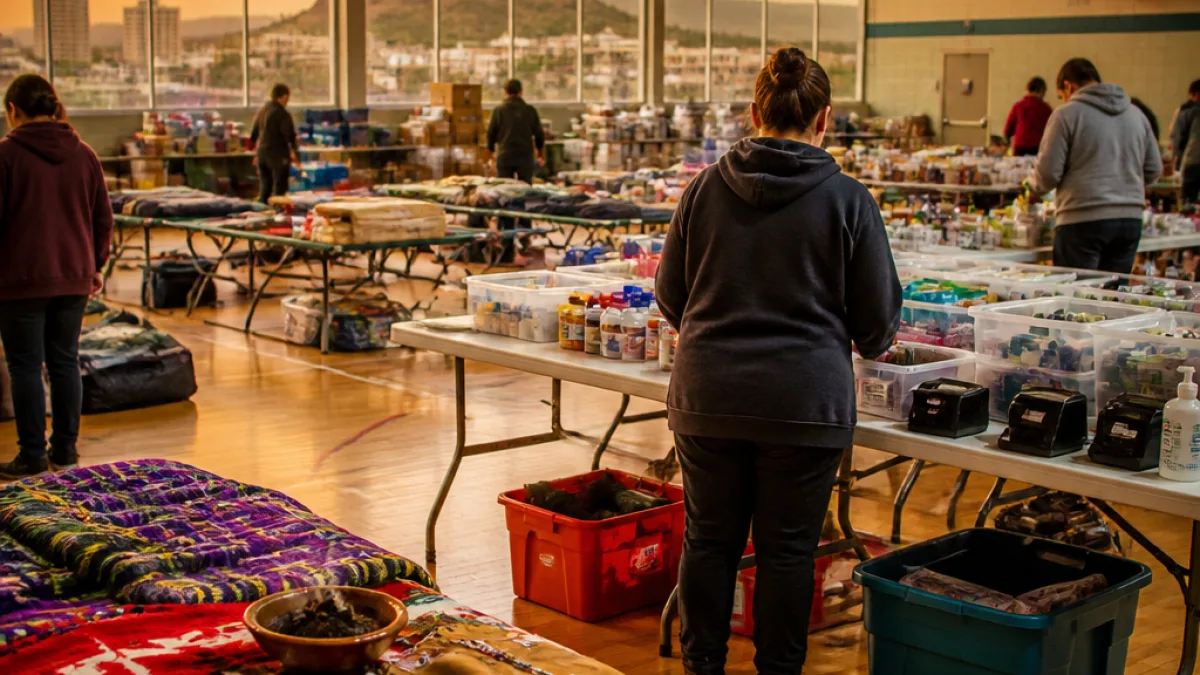
The Ontario Native Women’s Association (ONWA) has redirected staff and resources to support displaced families, offering a range of services tailored to evacuee needs. The organisation’s CEO, Cora McGuire‑Cyrette, who is a member of Bingwi Neyaashi Anishinaabek First Nation, described the assistance being provided.
“Services include cultural support, food, clothing, hygiene supplies, children’s items, internet access and help with medications,”
McGuire‑Cyrette also said ONWA adapts its response based on the needs identified by evacuees.
What support is available in Thunder Bay
Local agencies have focused on both immediate relief and maintaining cultural connections for those displaced. The city has become a temporary hub for people who left communities threatened or destroyed by the fires.
- Cultural supports — practices and items to help sustain traditions and community ties.
- Basic necessities — food, clothing and hygiene supplies provided to families on arrival.
- Health supports — assistance accessing medications and health advice.
- Connectivity — internet access so evacuees can contact relatives and access information.
Authorities and charitable bodies are also coordinating where possible with Indigenous leadership to ensure supports reflect community priorities. The emphasis, according to ONWA’s statement, is to listen to evacuees and adjust services accordingly.
Local consequences and community response
Thunder Bay’s role as a regional service centre means sudden increases in demand for shelter, health and social services. Many evacuees rely on community networks and Indigenous organisations for immediate relief, while municipal and provincial agencies handle logistics for longer‑term needs. The presence of displaced families strains existing local resources but has also prompted a rapid, community‑led response.
City officials and service providers have not released comprehensive figures on how many people have arrived in Thunder Bay, but reporting indicates many evacuees are staying in the city while larger emergency responses continue in affected northern regions.
How residents can help
Community organisations accepting donations and volunteers are likely to prioritise items identified by evacuees, including children’s items and hygiene supplies. Those wishing to assist should seek guidance from established Indigenous and local relief organisations to ensure donations meet current needs and cultural considerations.
| Need | Provided by |
|---|---|
| Food and clothing | Local community groups and Indigenous organisations |
| Cultural supports | Ontario Native Women’s Association and partnering Indigenous groups |
| Internet access | Local service points coordinated by relief organisations |
| Medication assistance | Health and community service providers |
As the wildfire situation evolves, Thunder Bay organisations say they will continue to adapt their services based on the changing needs of evacuees. For now, the focus remains on ensuring displaced families have immediate access to essentials while efforts continue to assess longer‑term housing and health needs.