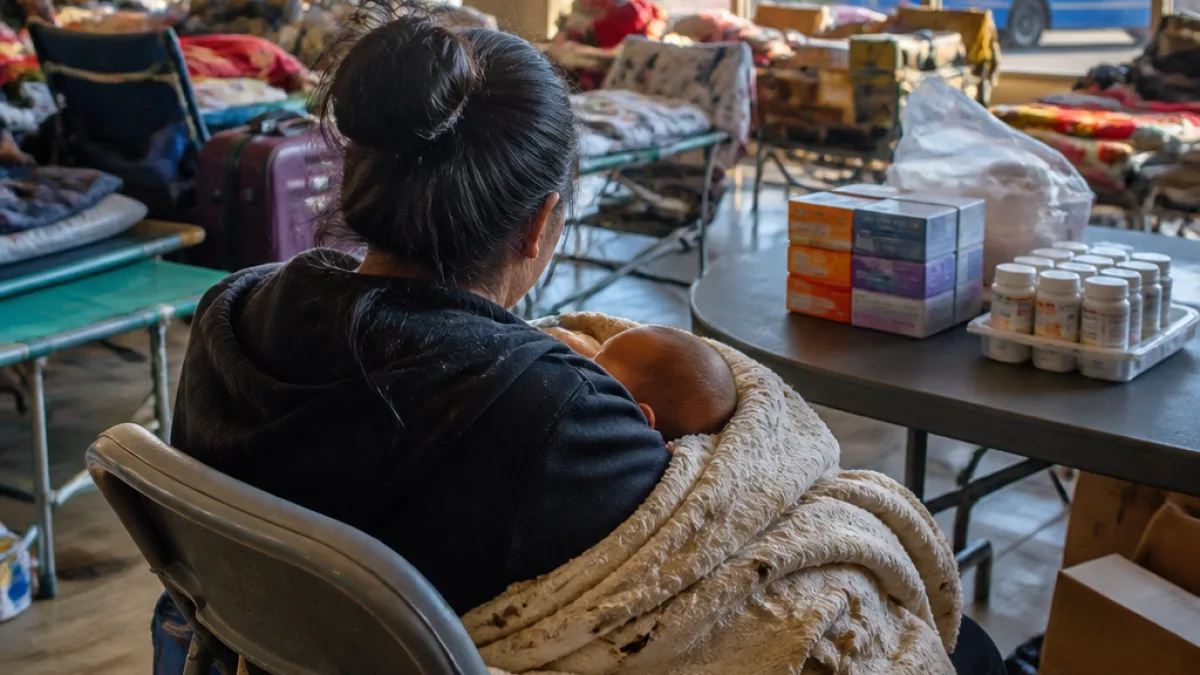
More than 2,800 people are sheltering in host communities across Ontario after wildfires prompted large-scale evacuations this month — and a disproportionate share are from First Nations in the province's north, local leaders and evacuees say. Families, elders and people with underlying health conditions are navigating unfamiliar cities hundreds of kilometres from home while dealing with smoke-related illnesses, supply problems and mounting uncertainty about when they can return.
Dispersed, far from home
Many of the evacuees were initially moved to regional centres such as Thunder Bay before being flown farther south to the Greater Toronto Area. Some who left remote communities like Neskantaga — an Ojibway First Nation roughly 440 kilometres northeast of Thunder Bay — were first sent to Thunder Bay and later to Mississauga because of limited local accommodations.
Yolanda Sakanee, a mother from Neskantaga, said health issues from smoke and shortages of infant formula added to the pressure on families before they had to leave the community, which declared a state of emergency on July 16. Sakanee said she wants to return but feels the situation in her home community remains uncertain.
"There [were] no rooms in Thunder Bay for everybody and we all like to be in one place," Sakanee told CBC News.
Health, mental-health and logistical needs
First Nations leaders and health officials say the challenges extend beyond physical safety. Evacuees report respiratory problems related to wildfire smoke and gaps in essential supplies. Community leaders and health authorities are urging governments and host cities to coordinate culturally appropriate supports, including mental-health liaisons and connections to community elders and leadership.
Officials have highlighted specific groups among evacuees who are especially vulnerable:
- Families with young children facing supply shortages, such as baby formula;
- Older adults requiring continuity of care; and
- People with underlying medical conditions who need stable access to medications and medical follow-up.
Calls for inquiry and longer-term questions
Some First Nations leaders have called for a public inquiry into Ontario's handling of this season's wildfires, saying the scale of evacuations and the displacement of Indigenous communities demand a full review. The calls echo broader critiques about emergency readiness for remote communities, evacuation logistics and the availability of supports once evacuees arrive in urban centres.
Local health authorities have encouraged host communities and provincial agencies to proactively reach out to Indigenous leadership and ensure evacuees can access culturally safe services. A vice-president with the Sioux Lookout health authority urged officials to connect evacuees with community liaisons for mental-health support.
Where evacuees are and some figures
Public reports and community statements provide a partial picture of the displacement so far. The data below summarises known figures referenced by evacuees and regional officials.
| Measure | Figure |
|---|---|
| Total wildfire evacuees in Ontario | More than 2,800 |
| Evacuees from Neskantaga First Nation | More than 130 |
| Distance of Neskantaga from Thunder Bay | Approximately 440 km |
| State of emergency declared (Neskantaga) | July 16 |
Local impact and practical considerations
Host cities across Ontario — including Thunder Bay, Toronto and Mississauga — are coping with sudden demand for hotel rooms, shelters and services. For evacuees, the displacement brings added costs and stressors: disrupted schooling for children, the need to navigate unfamiliar health systems, and challenges keeping families together when accommodation is limited.
Advocates say practical measures can reduce the immediate strain. Those measures include:
- coordinated intake that keeps families together,
- central contact points linking evacuees to their home communities and band offices, and
- provision of culturally appropriate mental-health supports and access to elders or community workers.
For now, many evacuees are waiting for clear timelines and conditions that would allow a safe return. Until then, community leaders and health authorities continue to press for resources and coordination to address medical, mental-health and logistical needs while people are far from home.
This report will be updated as provincial officials and First Nations provide further details on the evacuation response and supports for displaced residents.
Angelica Santos is the Ontario correspondent for NEXO RADAR, reporting from Thunder Bay and surrounding communities.