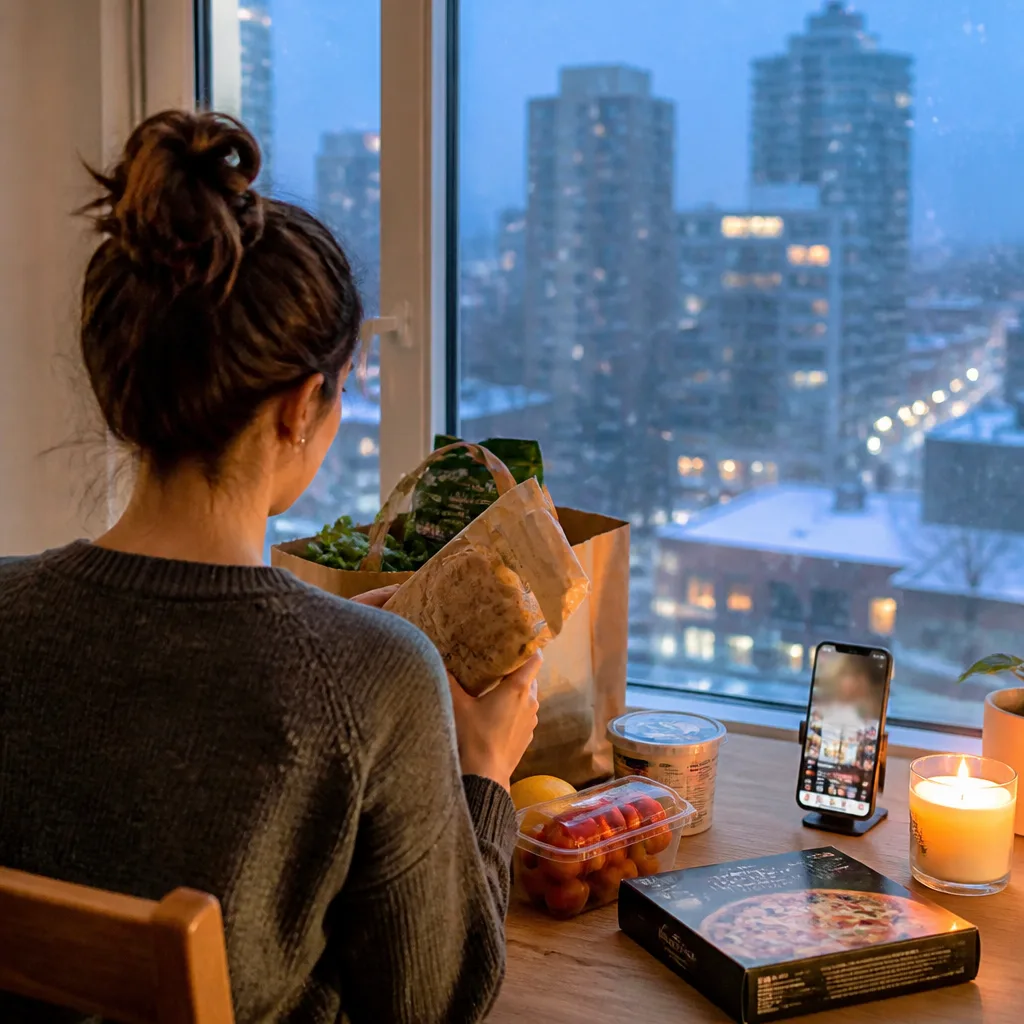
Content creators are increasingly presenting solitary life not as isolation but as a deliberate, desirable lifestyle — and Canadian creators are part of the trend. Videos documenting quiet routines, simple pleasures and solo nights in have drawn large online audiences, prompting fresh conversations about the distinction between being alone and being lonely.
From private routine to public trend
One of the best-known faces of this movement is Lana Isa, a software sales manager in her 20s based in Toronto. A clip in which she performs a nightly routine — grocery unpacking, heating a frozen pizza, lighting a candle and gazing at the snow outside — has attracted about 7 million views on TikTok. Isa’s combined following on TikTok and Instagram is close to 400,000, according to the report.
Her videos, which include late-night fast-food drives, lakeside reading sessions and an episode about being locked out of her apartment, present an unvarnished portrait of single, childfree life that many viewers find soothing rather than pitiable. The trend, as described in recent coverage, flips the script on the familiar social-media tropes of curated abundance and constant companionship.
Why the appeal?
Creators in this niche often emphasise calm, routine and the ordinary as sources of contentment. For some, sharing these private rituals becomes a way to normalise choices — such as remaining single or childfree — that can carry stigma. In Isa’s case, chronic transitions in school, isolation during the COVID-19 pandemic and cross-country moves contributed to a real-life context in which she had few close friends for an extended period.
“People don't talk about having no friends a lot... I think it's still what people would consider embarrassing or a little taboo.”
The line between aspirational lifestyle and candid documentation is intentionally blurred by creators. Many of the videos avoid glamour and instead focus on the tactile and mundane — cooking a simple meal, enjoying the sound of snowfall, or reading alone in nature — which can feel both intimate and soothing to viewers.
What this says about social norms
The trend raises questions about contemporary notions of independence, companionship and public performance. On one hand, it provides visibility for people whose daily lives do not fit dominant narratives about success and social connectivity. On the other, critics might worry about romanticising solitude when some people are experiencing involuntary isolation.
Creators and commentators cited in the coverage suggest a distinction: choosing solitude as a lifestyle is not the same as being isolated against one’s wishes. The popularity of these videos indicates a sizeable audience that either identifies with or is curious about a quieter, more self-contained mode of living.
How it plays out online
The content is primarily short-form and visually straightforward, which seems to help it travel across platforms. A simple formula emerges in many of the most-viewed posts:
- Everyday routine or ritual (meals, cleaning, personal care)
- Minimal editing and ambient sound to create a sense of presence
- Text or voiceover that frames the scene as a lifestyle choice rather than a complaint
That approach encourages empathy and curiosity rather than judgement, and it allows audiences to engage with the aesthetic of calm rather than the mechanics of a creator’s social life.
| Item | Example from report |
|---|---|
| Creator | Lana Isa, Toronto |
| Platform reach | ~400,000 followers (TikTok and Instagram) |
| Notable clip | ~7 million views on TikTok |
Whether the trend will broaden beyond its current niche remains to be seen. For now, these creators have carved out space to depict singlehood on their own terms — uncomplicated, often mundane and sometimes quietly celebratory.
That reframing has practical implications. It may lessen stigma for people who live alone by choice or circumstance and prompt a rethink in how friends and family respond to those lifestyle decisions. At the same time, publicising solitude as a calm, curated aesthetic risks overlooking the supports some people need to avoid harmful isolation.
As social media continues to reshape how we classify and commodify ways of living, the conversation around solitude is likely to evolve — opening up both solidarity and scepticism in equal measure.