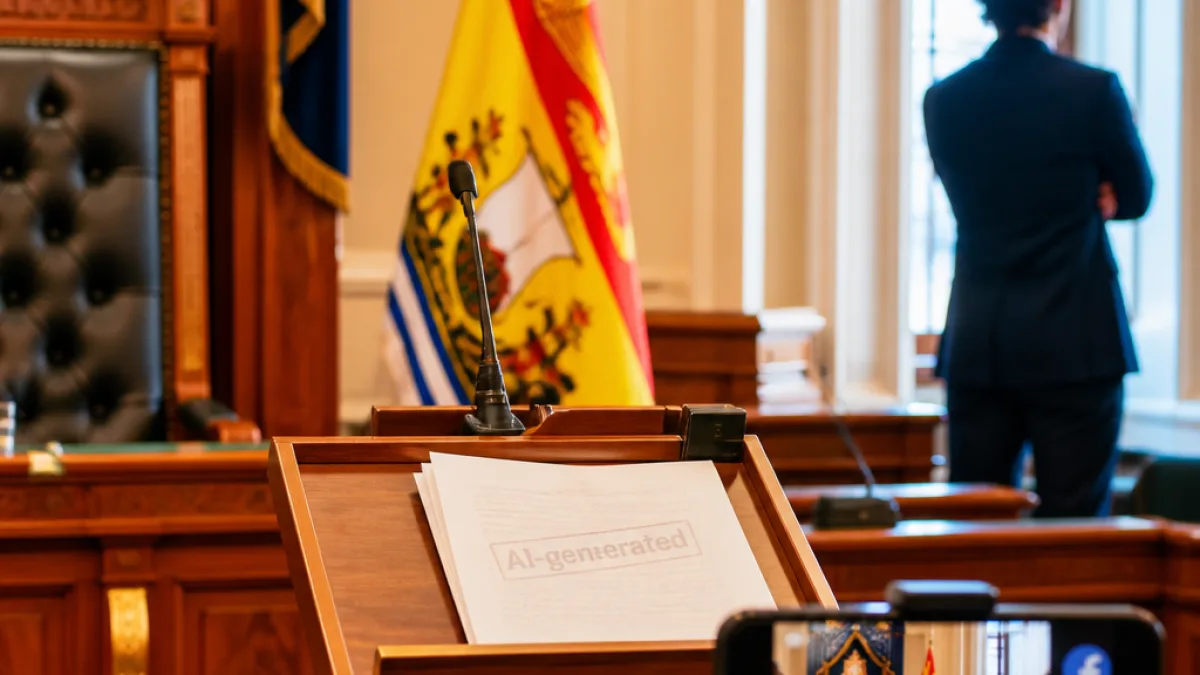
Progressive Conservative MLA Bill Oliver of New Brunswick drew widespread attention this week after parts of a speech that circulated online showed signs of having been generated with artificial intelligence. The Canadian Press reported the video, which went viral, prompting discussion about the use of AI in political communications and the need for transparency when public officials deploy emerging technologies.
What happened
The video of the speech, shared widely on social media, led viewers to conclude that AI was used to write portions of the remarks. The report did not include a statement from the MLA or his office confirming the use of AI; it noted only that the speech appeared to involve artificial intelligence and that the clip attracted viral attention online.
Why it matters in New Brunswick
The episode raises questions relevant to voters across the province about how elected officials create and deliver public statements. In an era where AI tools can rapidly produce polished text, the public may reasonably expect clarity on whether words delivered in the legislature or at public events come directly from an elected representative or from an algorithm. The issue touches on accountability, authenticity and the standard of disclosure that citizens should expect from their representatives.
- Transparency: Voters may want to know whether their elected officials are using AI to draft policy statements or speeches.
- Accountability: If material generated by AI contains errors or misleading content, the human speaker must still answer for it.
- Trust in public discourse: Frequent or undisclosed use of AI could erode public confidence in the authenticity of political communications.
Broader context
Across Canada and internationally, political actors have begun deploying AI tools for writing, speechwriting and campaign content. That trend has sparked debates among ethicists, technologists and lawmakers about whether public officials should disclose when they rely on generative AI, what standards should guide such disclosure and how to ensure voters can distinguish human-authored statements from machine-generated ones.
While the report on Mr. Oliver notes the apparent use of AI, it did not provide details about which tool, if any, was used or how extensively AI was involved in drafting the speech. Nor did it contain comment from the MLA’s office. Those gaps leave open basic questions about the degree of human oversight, editing and final approval in the material that reached the public.
What we know
| Fact | Source detail |
|---|---|
| Subject | Progressive Conservative MLA Bill Oliver |
| Allegation | Speech appeared to use artificial intelligence |
| Coverage | Video went viral online; reported by The Canadian Press |
| Official response | No confirmation included in the report |
Practical considerations for voters and journalists
As generative AI becomes more accessible, there are practical steps both the public and the media can take to assess political communications:
- Ask whether an official or their communications staff openly discloses the use of AI in drafting material.
- Seek source documents where possible — speech drafts, press releases or emailed statements — to check for signs of algorithmic composition and human revision.
- Use critical reading: repetitive phrasings, unusually generic policy language or sudden shifts in tone can be indicators that a text was generated or heavily edited by AI.
Next steps
At the local level, this incident may prompt political offices to clarify their practices and for legislatures, journalists and civic groups to discuss whether guidelines or disclosure expectations should be established. For now, the report serves as a reminder that the technological landscape for political communication is shifting rapidly, and that transparency will be central to preserving public trust.
As developments unfold, voters in New Brunswick will be watching for statements from the MLA’s office and any broader discussions among provincial political parties about how to handle AI-generated content in the public sphere.