Progressive Conservative MLA Bill Oliver says he has learned an important lesson after acknowledging that portions of a speech delivered in the provincial legislature were prepared with the help of artificial intelligence (AI) and contained AI prompts that were not removed from his printed notes.
Viral clip reveals prompting lines read aloud
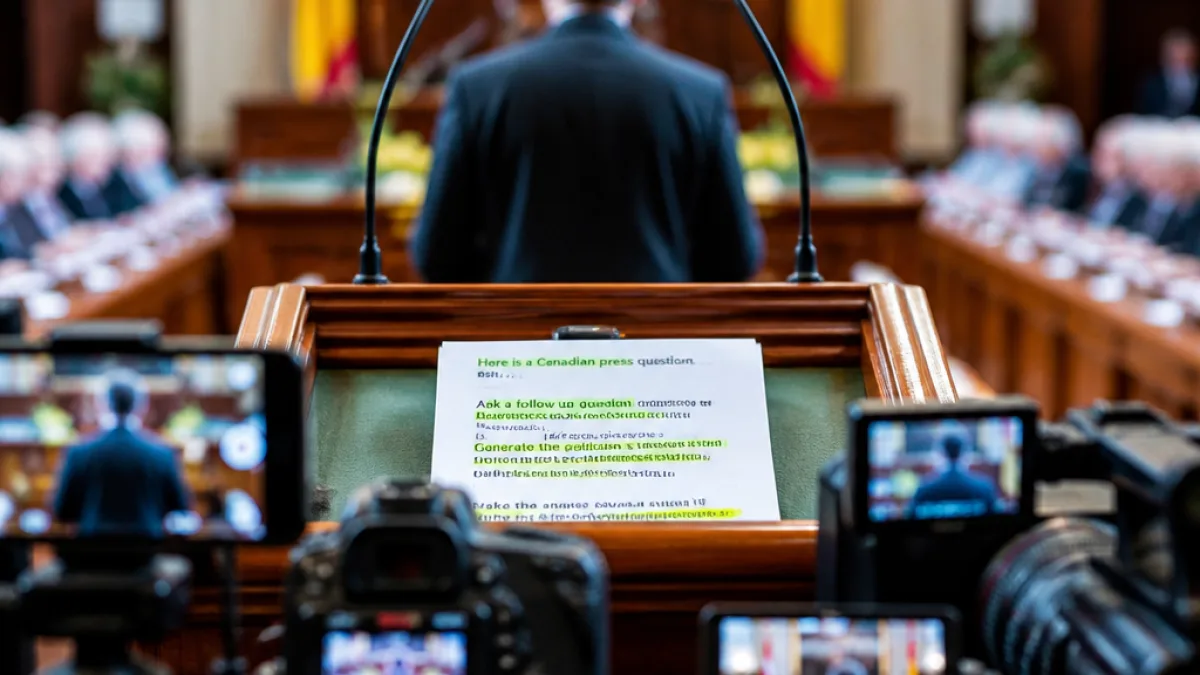
The incident occurred during a speech on June 9. A recording of the legislature shows Mr. Oliver pausing at one point to read aloud a line that appears to be an instruction to an AI writing tool: “
Here’s a more natural, flowing version of that section that reads like a legislative speech rather than a series of short points.” He later makes another apparent reference, saying “
here’s a more developed and flowing version of the section.”
The footage has been widely shared on social media and attracted international attention, with coverage from outlets overseas. In a statement released on Wednesday, Mr. Oliver said he had not adequately reviewed the text before delivering his remarks and acknowledged the error.
MLA stresses sentiment was his own
Mr. Oliver told constituents and the public that while AI was used in preparing the speech, the sentiment of the speech reflected his views. He added that the use of AI had highlighted the need for greater care when relying on such tools in public-facing materials.
He said, in part, that when the final version of the speech was printed “AI prompts were not removed, which were spoken by me and has caused much concern of many individuals.”
Questions about transparency and trust
The episode revived broader debate about the use of AI by elected officials and public servants. Legal and communications experts have warned that undisclosed or poorly handled AI use can erode public trust, particularly when automated text remains visible in official documents or speeches.
In this case, the legislature’s recording indicates that no other members reacted visibly to the prompts. That has led to questions about how such materials are vetted before they are used in the chamber.
- Public scrutiny: The video triggered scrutiny online and coverage by international media.
- Disclosure: The MLA has acknowledged the mistake and said he failed to properly review the printed speech.
- Broader implications: Observers say the incident highlights the need for clear guidelines around AI usage in political communications.
Timeline of the episode
| Date | Event |
|---|---|
| June 9 | MLA Bill Oliver delivers speech in the provincial legislature that includes apparent AI prompts. |
| Recent days | Video from the speech goes viral on social media and attracts international media attention. |
| Wednesday | Mr. Oliver issues a statement acknowledging the use of AI and saying he hadn’t adequately reviewed the final text. |
Practical context for public officials
This episode is a practical reminder for elected officials, staff and communicators about how AI tools are increasingly integrated into drafting and briefing processes and the precautions needed to avoid mishaps. Best practices frequently recommended by communications professionals include:
- Thoroughly reviewing and editing any AI-generated text before printing or public delivery.
- Removing all editing instructions, prompts or internal notes from materials intended for public use.
- Clearly disclosing when substantive drafting assistance has been provided by automated tools, especially for formal or official statements.
Mr. Oliver’s statement stressed that while AI is becoming more common as a tool across many fields, it “should never replace our own ability to express our thoughts and convictions.” He said he had learned a lesson from the incident and reiterated that the underlying message of his speech was his own.
The episode is likely to renew conversations within the province about how legislators and their offices adopt and oversee new technologies — balancing efficiency with transparency and public accountability.
As AI tools continue to spread into political and administrative work, communications teams across jurisdictions will face increasing pressure to establish clear policies to prevent similar mistakes and to preserve public confidence in official discourse.