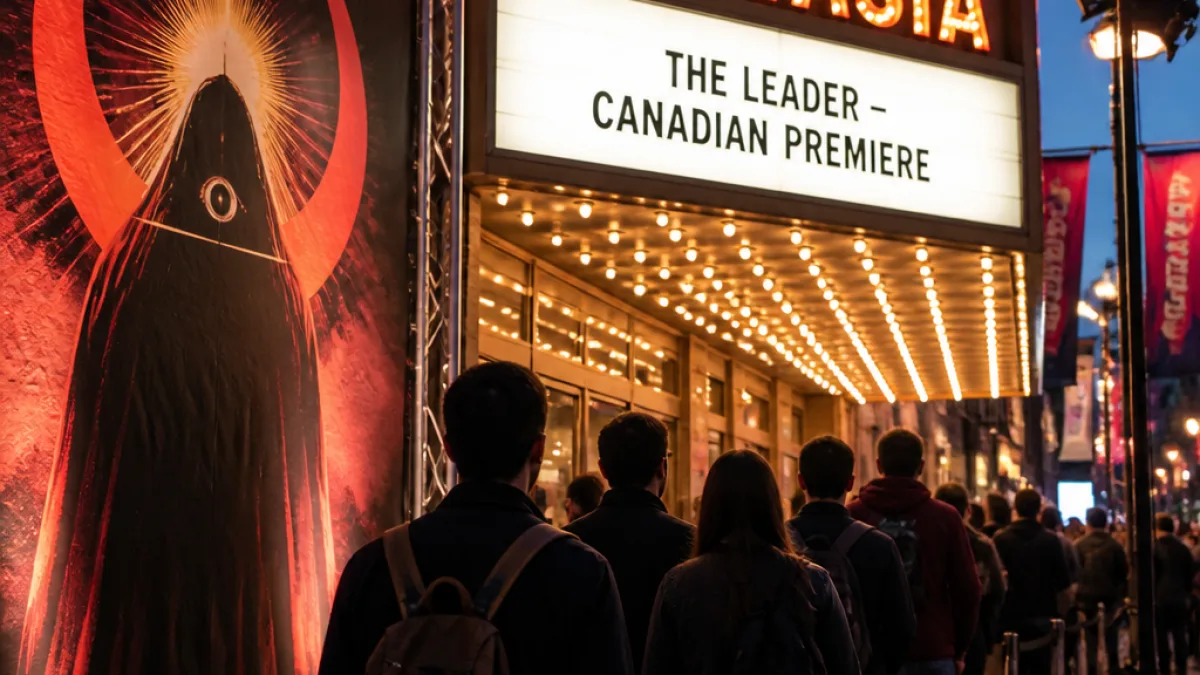
The Canadian premiere of The Leader at the Fantasia International Film Festival in Montreal offered more than just a screening: it was a local occasion for grappling with one of the most disturbing chapters of recent American history through cinema. Director Michael Gallagher presented a film that reframes the 1997 Heaven’s Gate mass suicide as a story about human longing and manipulation, a perspective he told the festival he has pursued since the event affected his childhood.
A personal lens on a public tragedy
Gallagher, a San Diego native, told the Fantasia audience that the mass suicide — which he said took place in his neighbourhood when he was a child — left him seeking answers. The film centres on the figures who became known as leaders of the group: Bonnie Lu Nettles and Marshall Herff Applewhite, here depicted by Vera Farmiga and Tim Blake Nelson. It examines how a mix of dissatisfaction, conviction and persuasive teaching drew vulnerable people into a doctrine that treated human bodies as mere “vehicles” for another form of existence.
The premiere in Montreal placed the film before an audience attuned to Fantasia’s reputation for provocative, genre-driven cinema. Festival-goers heard Gallagher explain that his approach was to look beyond tabloid headlines and to portray followers not as caricatures but as people searching for meaning — an angle he said drove him to make the film.
“I was eight years old, 39 people committed suicide in my neighborhood, and it just impacted me like you wouldn’t believe,” Gallagher said, describing the impulse that led him to revisit the story.
Performances and themes
Actors and the storytelling choices were a focus of discussion after the screening. Farmiga said she was attracted to the project because it asked the audience to reconsider easy dismissals of cult members as merely “lunatics” and to explore the humanity beneath sensational headlines. That emphasis on empathy — not to excuse harm but to understand how ordinary people can be drawn into extreme belief systems — underpins the film’s dramatic arc.
The movie depicts the pair adopting the names Do and Ti as they teach, recruit and bind followers through promises of transcendence. Gallagher told attendees that the film aims to show how dogmatic language and the search for structure and purpose can combine in dangerous ways, particularly for people in transitional or vulnerable moments in their lives.
- Film: The Leader
- Director: Michael Gallagher
- Stars: Vera Farmiga, Tim Blake Nelson
- Event: Canadian premiere at Fantasia International Film Festival, Montreal
| Element | Details |
|---|---|
| Subject | Heaven’s Gate group and its leaders |
| Approach | Dramatic, character-focused re-examination |
| Tone | Human-centred, investigative |
Local significance and festival context
Fantasia’s programming often brings challenging material to Montreal audiences, and this film’s presence in the festival schedule reflects that curatorial bent. For local viewers, the screening offered both the experience of witnessing accomplished performances and an occasion to debate how filmmakers should handle traumatic real-world events. The subject matter — references to suicide and a notorious cult — carries an explicit content warning communicated by festival and press, underscoring the sensitivity required when engaging with the material.
After the screening, discussions among festival attendees and film professionals touched on ethical representation, the responsibility of dramatizing historical harm, and the ways movies can open paths to empathy without excusing wrongdoing. Those are debates Montreal audiences, many of whom attend Fantasia precisely for its willingness to test cinematic and moral boundaries, were prepared to engage in.
As the film continues its festival run, its Montreal premiere will stand as a moment when an international director and notable cast used Fantasia’s platform to pose hard questions about belief, vulnerability and the human consequences of charismatic leadership. For residents of a city that hosts a wide array of international cultural events, the screening was a reminder of how local festivals can prompt broader conversations about history, trauma and the purpose of storytelling.