
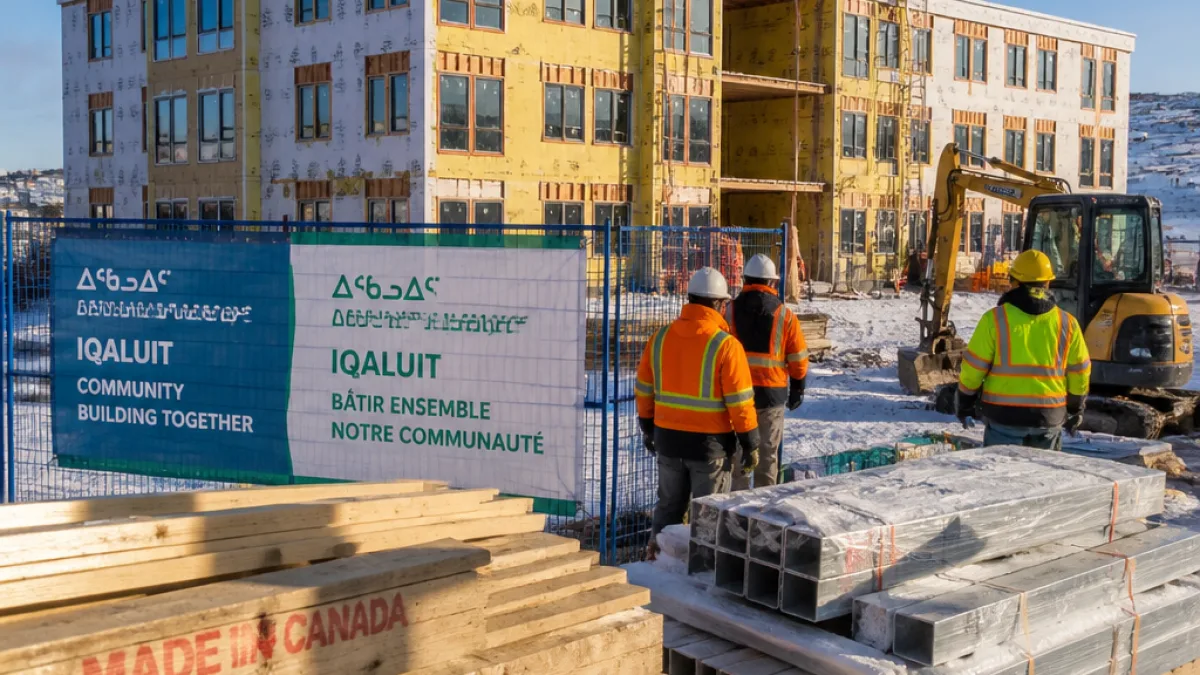
Iqaluit — An Inuit-owned business has been awarded a $35.6-million contract to construct a 23-unit apartment building in Iqaluit, marking one of the first infrastructure projects delivered under the federal government's Buy Canadian procurement rules.
Local company, local impact
The contract was announced by Federal Public Works and Procurement Minister Joël Lightbound, who said the build will prioritise Canadian-made materials — mainly steel, aluminium and lumber — in line with the policy that came into effect late last year. The new building is intended to provide housing for some of the approximately 200 federal government employees working in the city.
“We’ve been very focused on what we can do to shore up the Canadian economy,” Lightbound said.
Arctic Fresh Projects Inc., the Inuit-owned firm selected for the job, will lead a development that supporters say could stimulate contractors and suppliers in Nunavut and neighbouring Nunavik by creating demand for locally provided services and goods tied to construction and maintenance.
Why this matters in the North
Nunavut has a long list of infrastructure needs — from runways and harbours to power plants and health facilities. When federal projects specify Canadian-made materials and favour Canadian suppliers, northern businesses that can scale to meet those requirements stand to benefit. For Nunavut communities, the potential gains include more work for local tradespeople, increased opportunities for Inuit firms and reduced reliance on distant supply chains.
At a national meeting of premiers in Charlottetown, Nunavut Premier John Main used the forum to underline the territory’s need for more infrastructure investment, particularly in health care. He said Nunavut wants to build services closer to home and needs stronger federal partnership to do so.
Practical elements of the Iqaluit project
The publicly announced details are focused on the contract value, unit count and material sourcing. The project highlights how the Buy Canadian policy is intended to shore up domestic industries at a time when trade uncertainties have put pressure on traditional export markets.
- Contract value: $35.6 million
- Units: 23 apartments
- Purpose: Housing for some federal employees in Iqaluit
- Materials: Predominantly Canadian steel, aluminium and lumber
- Owner/Constructor: Arctic Fresh Projects Inc. (Inuit-owned)
| Item | Detail |
|---|---|
| Project value | $35.6 million |
| Number of units | 23 |
| Primary materials | Canadian steel, aluminium, lumber |
Broader context and timing
The Buy Canadian framework took effect in December and sets out rules to prioritise domestic suppliers and materials for federal construction projects. Ottawa has framed the policy as a tool to bolster Canadian industry as global trade relationships shift and some traditional markets decline.
The announcement came amid heightened trade tensions that have influenced federal economic planning. In this climate, the targeted procurement rules are intended to create more predictable demand for Canadian producers and help protect jobs and manufacturing capacity within Canada.
Questions for Nunavut businesses and governments
For Nunavut’s private sector, the Iqaluit contract raises practical questions about capacity: which local firms can supply prefabricated elements, HVAC, electrical work, finishing trades and maintenance, and how quickly can they mobilize? For territorial and municipal governments, aligning permitting, transportation and local labour strategies with federally funded projects will be important to keep timelines and costs under control.
Community leaders and contractors will also watch how the Buy Canadian rules are applied in practice: whether material thresholds and sourcing requirements are workable in Arctic conditions, and whether procurement processes enable meaningful participation by Inuit-owned businesses and northern suppliers.
What to expect next
The Arctic Fresh Projects development will be tracked for its employment impacts, procurement choices and the extent to which northern companies benefit directly or indirectly. If the project proceeds on schedule and demonstrates that Canadian-sourced inputs and local firms can deliver in a cost-effective way, it may become a template for other federal investments across Nunavut and Nunavik.
For residents in Iqaluit, the immediate effect will be increased housing stock for federal employees — a modest but practical step toward easing accommodation pressures in the capital. For the territory’s economy, the larger test is whether this represents the start of sustained, procurement-driven work flows that northern businesses can rely on in the years ahead.