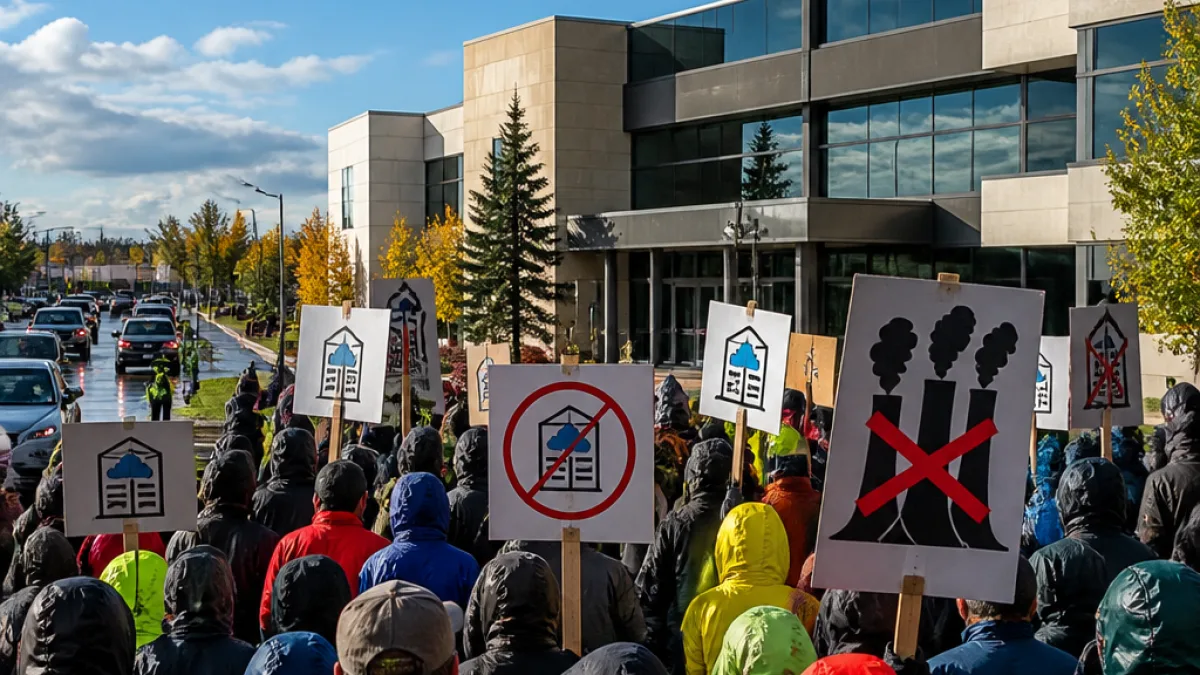
Morinville, Alta. — Several hundred people braved rain and a long weekend to protest outside the Sturgeon County office on Sunday, voicing opposition to Meta’s proposal to build a one‑gigawatt artificial intelligence data centre in the county.
Local anger over scale, resource use and costs
The morning rally drew car honks and hand‑made signs, with some demonstrators carrying images of Meta chief executive Mark Zuckerberg and slogans critical of large corporations. Organizers said turnout exceeded expectations for a rainy Sunday.
“For a rainy day, on a long weekend, I wasn’t expecting this many people … but it’s awesome,” said organizer Ben Baril, a 20‑year‑old business student at the University of Alberta.
Speakers and attendees described the proposed project — which Meta has said would be a more than $13‑billion facility and would be online within the next two to three years — as too large for the area and potentially costly to local households. Concerns voiced at the rally included increased demand for water and electricity and the prospect that utility rates could rise as several large data centres locate in the province.
“We don’t want this data centre here, and we don’t want this data centre anywhere else,” said Jessica Tomashiro, a Sturgeon County resident who attended the protest. She told the crowd she was worried about how much higher her already high utility bills could climb if large AI facilities begin consuming significant local resources.
What is being proposed?
Meta has publicly outlined plans for a substantial campus in Sturgeon County, describing it as a one‑gigawatt artificial intelligence data centre. Data centres of this scale house vast computing hardware used to process and store information for AI applications and internet services. Meta has indicated the project would be among several similar investments by large tech firms across Canada amid rising demand for AI infrastructure.
At the protest, critics said the company’s plans had not been sufficiently explained to residents and that official consultations had not answered key questions about local impacts.
Community concerns and questions
- Water use: Opponents said data centres have a significant thirst for water for cooling systems and are concerned about availability and pressure on local water supplies.
- Energy demand: A one‑gigawatt facility represents large electricity consumption; residents fear higher rates or pressure on local generation and transmission.
- Transparency and consultation: Protesters said they want clearer public information on how impacts will be managed and who will bear costs.
Organizers estimated hundreds attended the demonstration; media reports and photographs from the scene showed a large crowd gathered outside the county office with many carrying placards and chanting slogans directed at corporate power.
Broader context for Alberta
Alberta has been attracting interest from major technology companies seeking land and reliable power for data centres as demand for AI processing grows worldwide. Proponents argue these projects bring investment, construction jobs and long‑term property tax revenue. Critics counter that the scale of resource consumption and potential impacts on local communities warrant more stringent oversight and community benefits agreements.
| Item | Detail |
|---|---|
| Project size | 1 gigawatt (proposed) |
| Estimated investment | $13‑billion‑plus (company figure) |
| Timeline | Company says online within two to three years |
Meta has not issued new public comments at the rally site. The company previously announced the Alberta campus and its intended investment. Local government officials have responsibilities under planning and utility regulation frameworks but must balance economic development with community concerns.
Protest organizers said they plan to continue public demonstrations and community meetings to press for greater transparency and to advocate for alternative uses of local resources. The rally underscored how rapid interest in AI infrastructure is provoking debates in smaller communities about the trade‑offs between large corporate investment and local environmental and cost impacts.
As the province considers how to manage incoming data‑centre projects, residents and municipal representatives will face decisions about land use, infrastructure capacity and how to ensure communities receive tangible benefits from major developments.
Reporting from Morinville for NEXO RADAR.