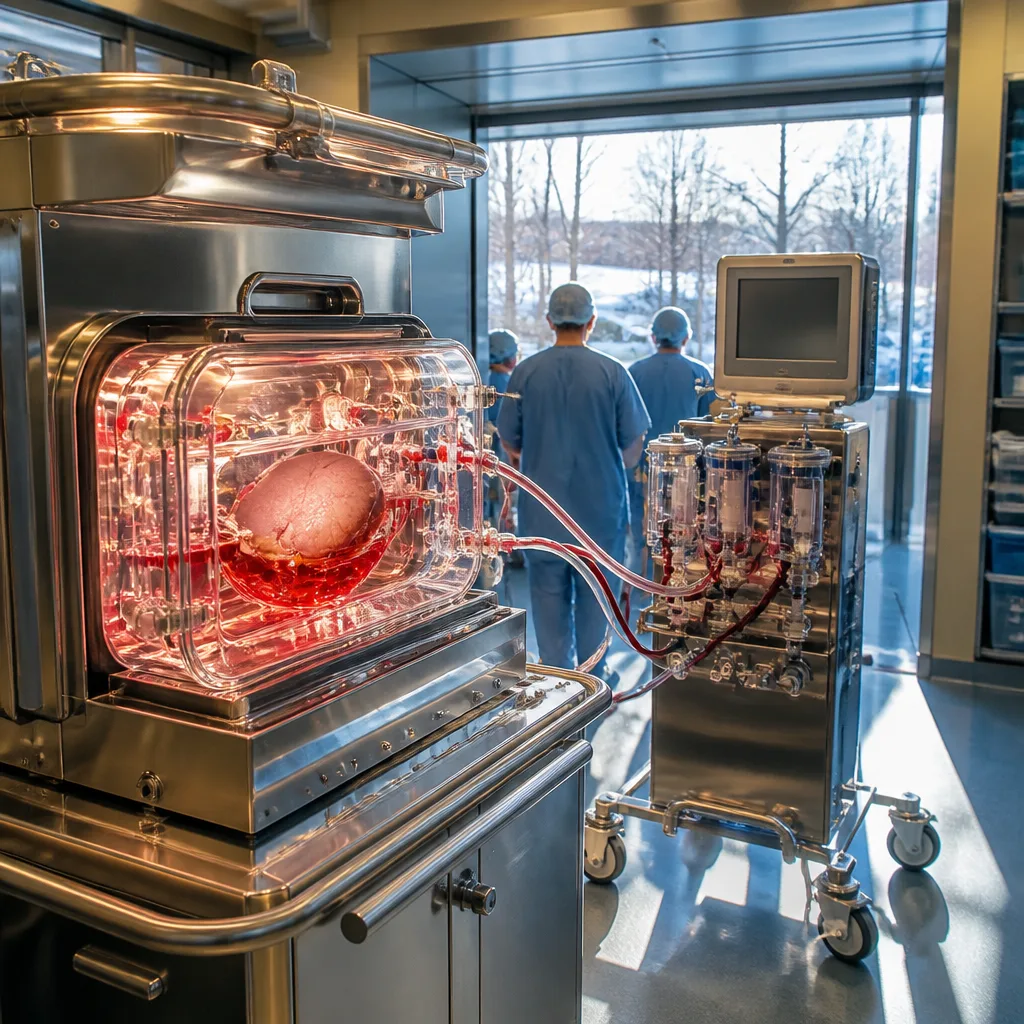
The University of Alberta Hospital in Edmonton has become the first Canadian centre to use the XVIVO Kidney Assist Transport, a device approved by Health Canada at the end of 2025 that circulates oxygenated perfusate through donor kidneys during transport. The hospital and transplant surgeons say the machine is designed to limit organ injury and may speed recovery for recipients.
What the device does and why it matters
The XVIVO system keeps kidneys on a controlled circulation with oxygen during the interval between retrieval and transplantation. Surgeons have long struggled with damage to organs taken from deceased donors, which carry a higher risk of injury compared with living-donor kidneys and therefore an increased risk of post-transplant failure.
“What’s unique about this new technology for us is it introduces oxygen into the circulation, which improves the outcomes of our patient’s kidneys after transplant,” said Dr. Max Levine, surgical director of the University of Alberta Hospital’s kidney transplant program.
Dr. Levine characterised the technology as an evolution of previously available transplant techniques and said the evidence supporting oxygenated perfusion prompted the centre to adopt it. Clinicians believe limiting injury to donor organs can translate into faster recovery for patients and better graft survival, although long-term outcome data from Canadian use is not yet available in the public record.
Local demand and patient experience
Give Life Alberta reports that more than 300 people in the province are awaiting a kidney transplant. Edmonton’s early adoption is intended to capitalise on what clinicians see as growing evidence in favour of oxygenated machine perfusion for organs from deceased donors.
One patient who received a kidney after the hospital began using the new transport system described his experience. David Cliplef, a veterinarian who progressed over several years to severe kidney failure, said his renal function had fallen into the single digits before transplantation.
“I was diagnosed at about 14, 15 per cent kidney function, kind of went up and down a little bit,” Cliplef said. “Eventually it progressed to somewhere around seven per cent.”
Clinicians say organs from deceased donors are at greater risk of injury and that the device helps reduce that damage and promotes faster recovery, particularly for higher-risk kidneys.
Implications and unanswered questions
Adoption of oxygenated perfusion technology across Canadian transplant centres could alter how organs are managed between retrieval and implantation, potentially increasing the usability of kidneys that might otherwise be declined. The move in Edmonton follows Health Canada’s approval and the hospital’s decision to implement the system immediately.
Key points that remain to be tracked include:
- Comparative outcomes over time between kidneys transported with oxygenated perfusion and those transported under previous standard methods.
- Effects on wait-list dynamics in Alberta and nationally if more organs are preserved successfully.
- Costs, logistics and training needed to scale the technology to other Canadian centres.
In the short term, the hospital’s adoption offers clinicians and patients a new option intended to lower the risk of early graft dysfunction. The broader clinical and system-level benefits will require follow-up studies and reporting of outcomes as more cases accumulate.
| Item | Detail |
|---|---|
| Device | XVIVO Kidney Assist Transport |
| Regulatory status in Canada | Approved by Health Canada (end of 2025) |
| First Canadian centre to use | University of Alberta Hospital, Edmonton |
| Alberta wait-list | More than 300 people awaiting a kidney transplant |
The technology represents one of several innovations aimed at improving transplant success rates and expanding the pool of usable organs. For now, Edmonton’s early experience will be watched closely by other Canadian transplant programmes and provincial health administrators weighing adoption and funding decisions.
Reporting for this story relied on statements from the University of Alberta Hospital and Give Life Alberta, and on comments provided by transplant clinicians and a recipient featured in local coverage.