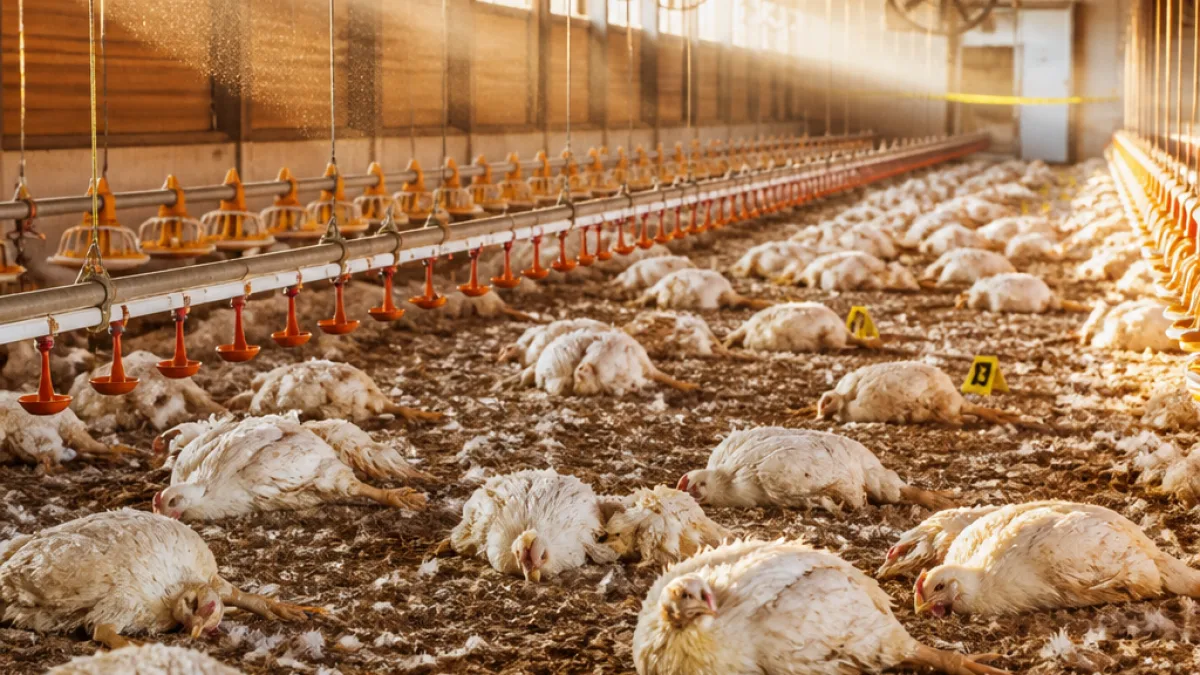
Approximately 10,000 chickens died after an intruder deliberately turned off ventilation fans at a poultry barn near Lunenburg, RCMP investigators said Friday.
What happened
Royal Canadian Mounted Police say the break-in occurred last Friday night at a two-storey barn in the Pine Grove area. The breach involved the ventilation system on the barn's first floor being switched off, cutting air circulation for birds housed there.
Without adequate airflow, temperatures on that lower level climbed sharply. By the following morning, investigators recorded conditions on the first floor that reached about 37 C, creating an environment in which the birds could not survive; birds on the second floor were reported to be unaffected.
"When (workers) were approaching the barn about 12 hours later, they knew that something was wrong because they could smell … the odour of 10,000 chicken carcasses decaying," RCMP Cpl. Mandy Edwards said in an interview.
Investigation details and unanswered questions
RCMP say the act appears intentional. Investigators later determined no property was stolen and there was no obvious physical damage to the building itself. That, they say, suggests the motive was to harm the birds rather than to gain goods.
Authorities are asking anyone with information to contact local police. At this stage, investigators have not disclosed suspects or a clear motive for the intrusion.
Impact on the farm and community
The loss of 10,000 birds represents a substantial economic and emotional blow to the farm and potentially to local poultry supply, depending on the operation's scale and role in regional production. Even without wider supply disruption, the event raises questions about security at agricultural operations and the vulnerability of livestock to deliberate harm.
Local farmers and community members often rely on mutual assistance and proximity; incidents like this can deepen anxiety among neighbours and those working in animal agriculture. Biosecurity protocols, emergency planning for farm infrastructure and reporting mechanisms now fall into sharper focus.
Practical takeaways for farmers
While the RCMP investigation continues, animal producers can consider steps to reduce vulnerability and improve response times should similar incidents occur:
- Review and secure access points to barns and mechanical rooms that house ventilation controls.
- Install or test alarm systems tied to critical systems such as ventilation and temperature monitoring.
- Ensure staff know emergency contact procedures and check schedules, particularly overnight and on weekends.
- Document and photograph farm infrastructure so investigators can more easily detect tampering or damage.
Broader context
Intentional harm to livestock is a criminal matter with potential charges ranging from property damage to animal cruelty, depending on evidence and applicable provincial statutes. For producers, the immediate concerns are animal welfare, financial loss and the need to work with authorities to preserve evidence while maintaining biosecurity.
RCMP have not said whether the incident will trigger a wider review of security standards or if neighbouring farms have reported similar intrusions. They continue to appeal to anyone who may have seen suspicious activity in the Pine Grove area to come forward.
| Item | Detail |
|---|---|
| Location | Pine Grove area, near Lunenburg |
| Structure | Two-storey poultry barn |
| Casualties | About 10,000 chickens (first floor) |
| Recorded temperature | ~37 C on first floor |
| Evidence of theft/damage | None reported |
For families and farm staff affected, practical supports and counselling may be available through provincial agriculture services and local mental-health resources. Animal-welfare investigators and police often work with producers to assess losses and provide guidance on next steps.
This incident underscores how quickly a mechanical alteration can become a large-scale animal-welfare crisis. As investigators continue to piece together what led to the deaths, residents are being urged to report any unusual activity or information that might assist the RCMP probe.
This report will be updated as more details become available from police and farm representatives.