Niutech, a Chinese company that develops continuous industrial pyrolysis systems, has announced a new process and equipment intended to extract titanium‑iron and other strategic minerals from low‑grade tailings. The firm says the system operates at markedly lower temperatures than conventional smelting and combines waste treatment, tailings enrichment and energy recirculation in a single workflow.
What the technology claims to do
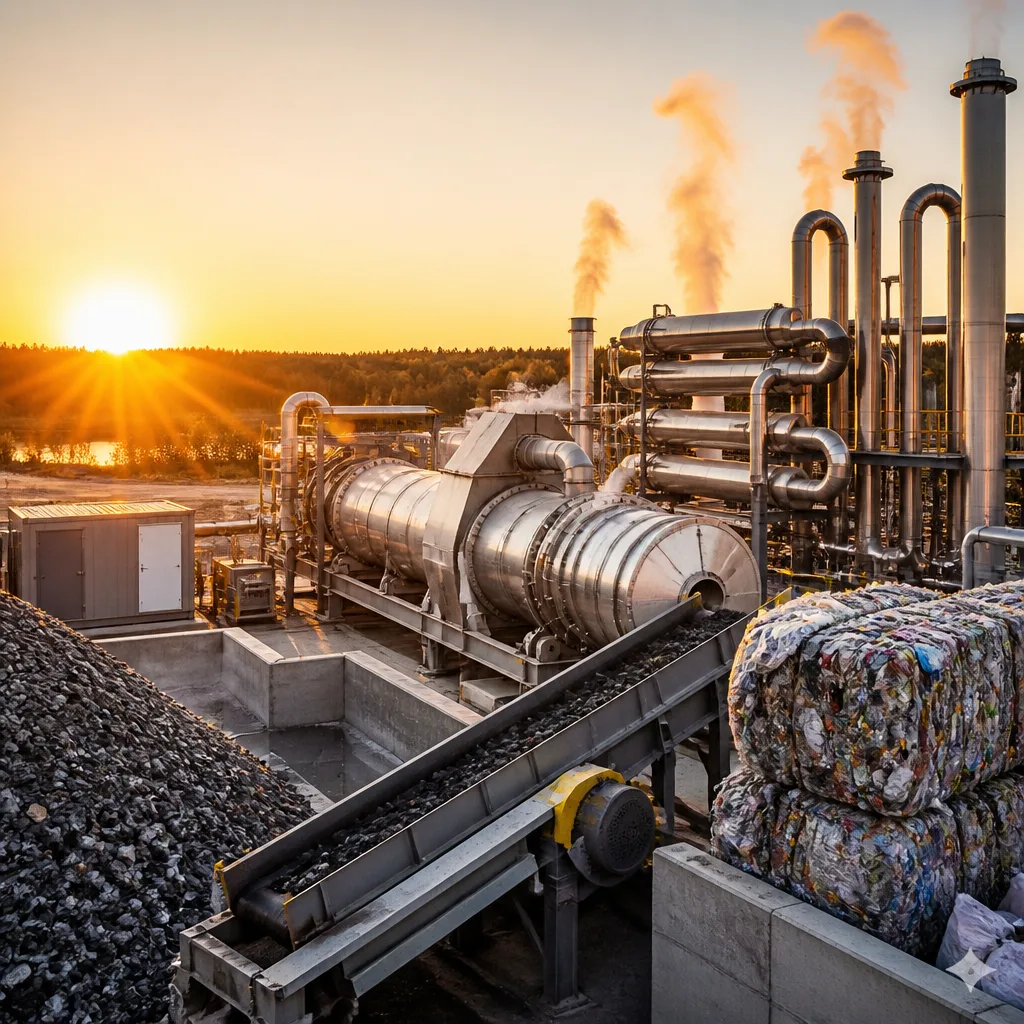
The firm describes its approach as a low‑temperature pyrolysis–in‑situ reduction system. According to the company, the design uses organic waste, including discarded plastics, as a reducing agent: the organic feedstock is pyrolysed at low temperature to produce reducing gas, which is then used within the same integrated line to reduce iron and concentrate titanium in tailings.
Niutech says a national professional body has evaluated the work and judged the achievement to have reached an "internationally advanced level." The company is building a demonstration plant in Linyi, Shandong Province, reported as a 300,000‑tonne‑per‑year demonstration project intended to convert tailings into higher‑grade titanium‑rich material.
Performance metrics the company highlights
Niutech supplied several specific performance claims for the new process. The firm says the system:
- operates below 700°C (industrial range claimed at 550–600°C);
- achieves a reduction rate of more than 50% for the targeted material;
- recovers over 93% of waste heat;
- reduces energy consumption by more than 36% compared with traditional routes;
- cuts carbon dioxide emissions by roughly 40% according to the company’s figures.
| Metric | Claim |
|---|---|
| Operating temperature | 550–600°C (below 700°C) |
| Reduction rate | >50% |
| Waste heat recovery | >93% |
| Energy consumption reduction | >36% |
| CO₂ emissions reduction | ~40% |
Context and questions
Recovery of valuable minerals from mine tailings is a growing focus for industry and governments seeking to secure critical materials and reduce environmental liabilities. Titanium and iron are widely used across aerospace, defence, chemical and infrastructure sectors, and processing technologies that can turn waste streams into higher‑value feedstocks can affect supply chains.
Niutech positions its equipment as part of a broader push for safer, lower‑carbon industrial processes. The company emphasises the integration of municipal and industrial solid wastes as reducing agents and the recycling of process heat, casting the system as both a resource recovery and waste‑management measure.
Reported claims in company releases, however, warrant independent verification. The announcement notes an assessment by a national‑level professional institution but does not name the organisation, nor does it publish peer‑reviewed data or third‑party test results that would allow independent comparison with existing pyrometallurgical or hydrometallurgical routes.
Important practical questions include the chemical composition and variability of the tailings that can be processed, the nature and preprocessing of the organic wastes used as reducing agents, the composition of off‑gases and residues, and the lifecycle greenhouse‑gas balance when all inputs and outputs are considered. Implementation at scale will also hinge on capital costs, operational reliability and compliance with emissions and waste regulations.
Next steps and implications
The company has started construction on the stated demonstration project in Linyi. If the pilot meets the performance claims, it could spur wider deployment in regions with significant titanium‑iron tailings. For resource owners and policymakers, the technology could offer an additional pathway to unlock value from previously uneconomic material while addressing tailings management challenges.
For now, the news is an outline of an industrial concept backed by a company announcement and selective performance figures. Independent technical assessment and transparent operational data from the forthcoming demonstration will be needed before the process can be judged ready for broader adoption.
Reporting for NEXO RADAR's Technology desk.