
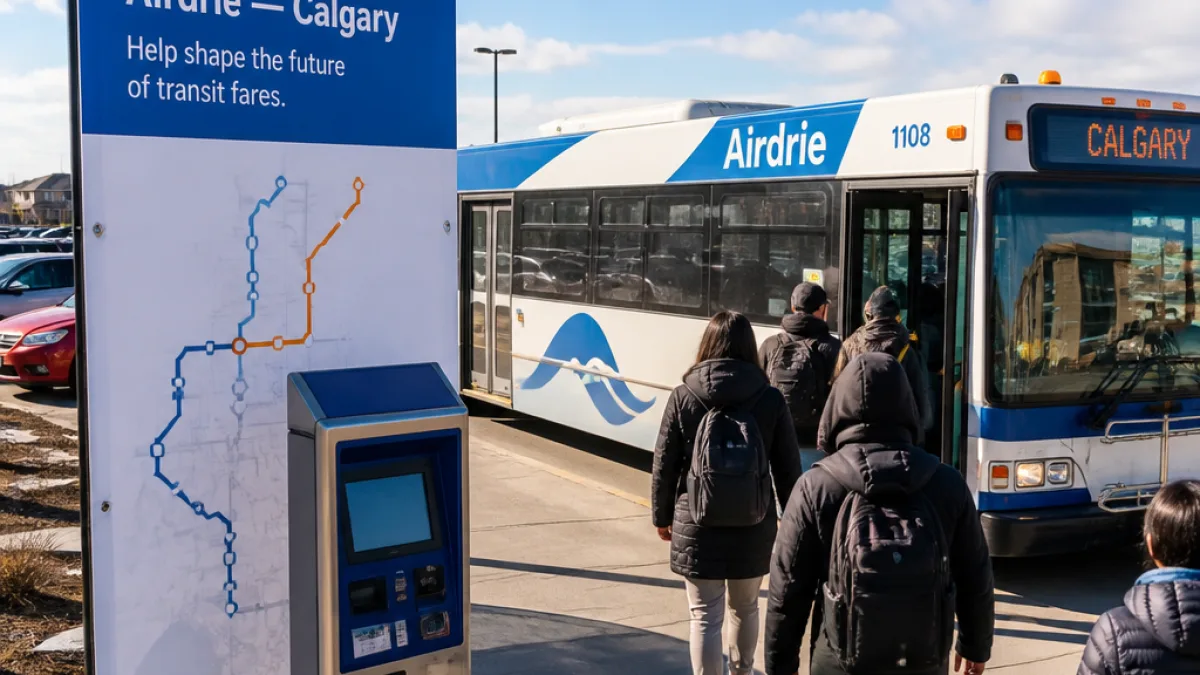
The City of Airdrie has launched a push to make regional transit simpler and less costly for commuters after Calgary agreed to further study the idea of integrated fares between the two municipalities.
Ridership rebound and shifting travel patterns
City officials say the move builds on Airdrie's newly approved Transit Master Plan, adopted to respond to rapid population growth and changing travel behaviour since the COVID‑19 pandemic. According to the city, transit use has now surpassed pre‑pandemic levels and roughly 60 per cent of riders are travelling to or from Airdrie — not just making trips within the municipality.
Mayor Heather Spearman told NEXO RADAR the previous 10‑year strategy was outgrown by fast changes in demand. "We blew right past it," she said, describing how ridership has returned and expanded beyond expectations.
Why fare integration matters
At present, commuters who travel from Airdrie into Calgary typically pay an Airdrie fare then must pay again to transfer to Calgary Transit if they need to continue beyond one of Airdrie's downtown drop‑off points. That duplication creates a financial and logistical barrier for many regular users.
Spearman said the city has been strengthening regional co‑operation with Calgary and Rocky View County on shared issues such as water, economic development and transportation. The transit proposal is intended to make public transit a more attractive alternative to driving, especially as rising fuel, insurance and parking costs push households to consider other options.
"We want to take some of the pressure off of our local infrastructure as well," Mayor Heather Spearman said.
The mayor noted students and families with multiple vehicles are among those likely to benefit from simplified pricing. The city argues that easier, integrated fares would better support commuters travelling for work, post‑secondary education, health‑care appointments and other daily needs.
How Airdrie started the process
In June, Spearman wrote to Calgary Mayor Jeromy Farkas and Calgary city council asking them to explore fare integration. Calgary has agreed to further examine the idea, a development city staff say could facilitate pilot programs or negotiations on a shared pricing model.
- Transit Master Plan: new guiding document for the next five to 10 years, replacing an older 10‑year strategy that was overtaken by growth.
- Ridership: above pre‑pandemic levels; ~60% commuting to or from Airdrie.
- Goal: single fare or integrated fare arrangements to reduce cost and complexity for riders crossing municipal boundaries.
Local consequences and next steps
If Calgary and Airdrie reach an agreement on integrated fares, it could reduce the out‑of‑pocket cost for many commuters and potentially increase transit use further. For Airdrie, higher transit usage could ease pressure on local roads and decrease demand for parking downtown. The shift would also align with broader municipal efforts to manage growth sustainably.
City staff have not released a detailed timeline for negotiations or a pilot program. Any change to fare structures will require operational discussions between transit agencies, financial modelling and agreement on revenue‑sharing, plus possible approval from elected councils in both municipalities.
| Item | Current status |
|---|---|
| Transit Master Plan | Approved by Airdrie; guides next 5–10 years |
| Ridership | Surpassed pre‑pandemic levels; ~60% intermunicipal travel |
| Fare integration | Requested by Airdrie; Calgary to explore |
For Airdrie commuters, the work now underway with Calgary will determine whether regional transit becomes both simpler and more affordable. Officials say the goal is to remove friction that currently discourages public transit use and to support long‑term planning as the city continues to grow.
This story will be updated as municipal staff provide further details and Calgary indicates the scope of its review.