WATERLOO — A severe and widening water shortage in Waterloo Region has prompted officials to halt water servicing agreements for proposed construction projects, a move that effectively freezes many development approvals and has deep implications for the region’s economy and residents.
From local wetlands to a regional crisis
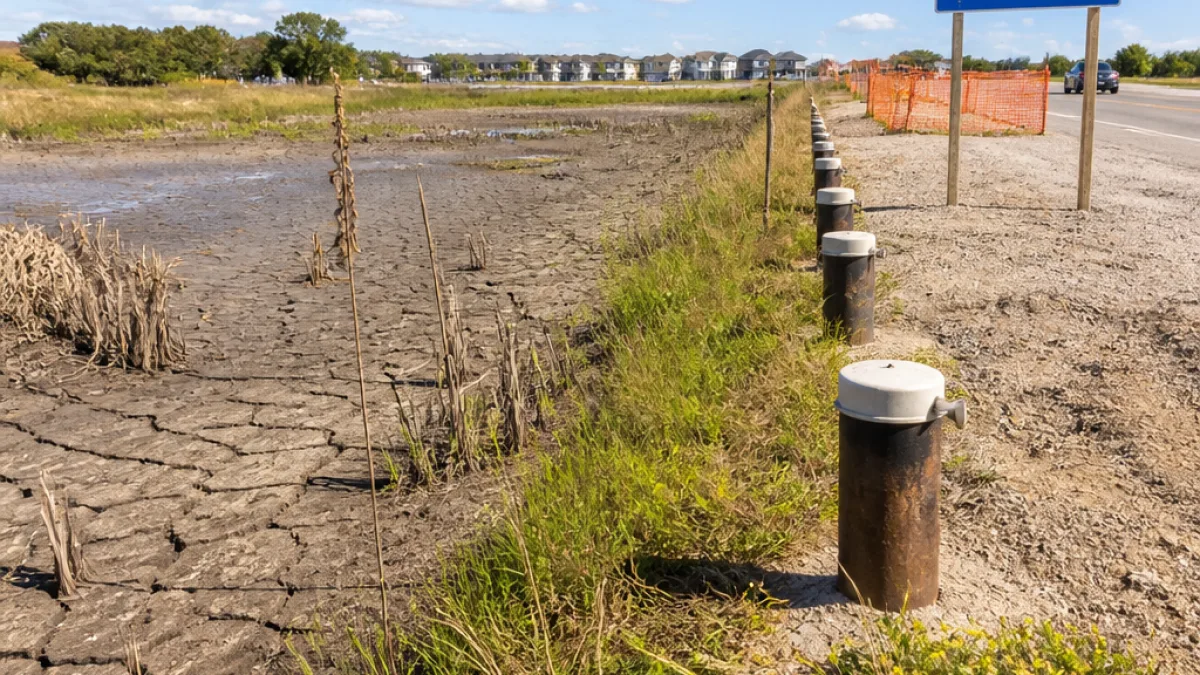
For decades families in rural areas such as Wilmot Township relied on shallow wetlands and private wells for household and agricultural needs. In recent years those water sources have diminished. Residents describe ponds and wetlands that once teemed with wildlife now reduced to bare mud and exposed shoreline. The change has coincided with an increasing number of reported well failures, particularly since 2021.
One resident recalled the gradual disappearance of a familiar wetland and the growing recognition among neighbours that the problem was not isolated.
“Everybody thought they were on their own little island with their well issues,”she said, describing how neighbours eventually realised the losses were widespread.
Why approvals were paused
Regional officials cite a combination of causes for the shortfall: low aquifer levels, deferred or under-maintained infrastructure, delayed water-supply projects and a problematic formula used to calculate the region’s available supply. The decision to stop new servicing agreements was presented as a necessary but disruptive measure to prevent further strain on an already stressed system.
- Environmental signs: drying wetlands and reduced surface water levels in rural townships.
- Infrastructure issues: aging pipes and postponed upgrades limiting delivery and capacity.
- Planning gaps: supply-calculation methods that underestimated future demand.
Local impacts and wider consequences
The pause on servicing agreements has immediate consequences. Lenders and developers reacted with concern when approvals were suspended, introducing uncertainty into housing and commercial projects already under way. For rural residents, failing wells mean increased costs and potential loss of access to drinking water or irrigation supplies.
Municipalities in the tri-cities — Kitchener, Waterloo and Cambridge — share water and wastewater responsibilities with the Region of Waterloo, which must now balance short-term needs for residents and agriculture with longer-term growth plans tied to the area’s tech and education sectors. The interruption to approvals also raises questions about regional economic forecasts and the viability of planned construction in the near term.
Path forward
Officials face several interlocking tasks: reassess aquifer and surface-water data, accelerate essential infrastructure projects, revisit the supply-calculation methodology and provide targeted support to households with failing wells. Any solution will require coordination across municipal and provincial agencies and transparent communication to residents and developers.
| Issue | Immediate effect |
|---|---|
| Low aquifer levels | Increased private well failures |
| Deferred infrastructure | Reduced delivery capacity |
| Supply-calculation flaws | Overestimation of available water |
As the region considers remedies, residents will be watching how quickly water projects can be advanced and whether short-term relief — such as emergency well support or interim servicing measures — will be provided. The unfolding situation serves as a reminder that historic water patterns cannot be assumed indefinitely, and that planning for growth must account for changing hydrology and ageing systems.
Local leaders and households now confront the difficult task of securing reliable water supplies while protecting the region’s reputation as an attractive place for new residents and investment.