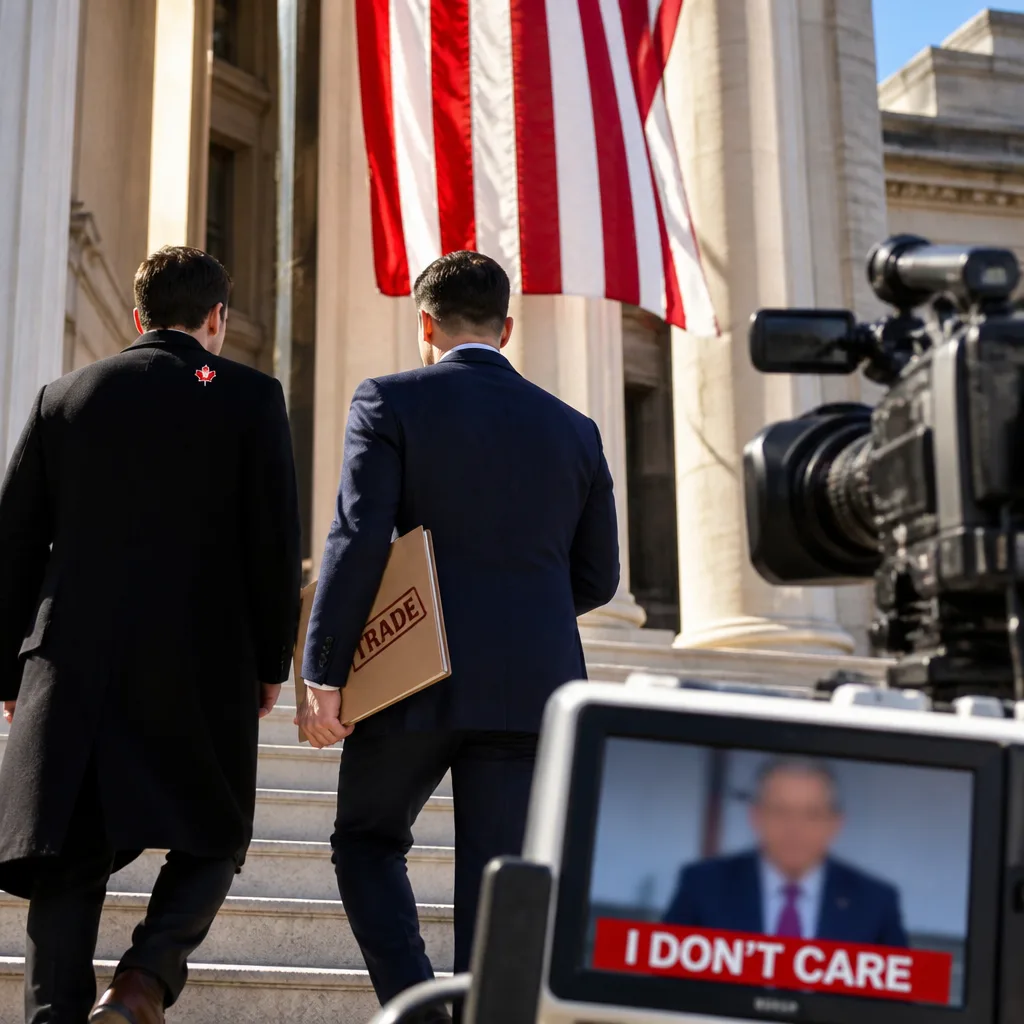
Canada-U.S. Trade Minister Dominic LeBlanc is in Washington this week seeking progress on trade talks as U.S. President Donald Trump told Fox News he “doesn’t care” if the Canada-U.S.-Mexico Agreement is updated — a dismissal that complicates Ottawa’s efforts to secure wider concessions on tariffs and industry irritants.
Negotiations continue amid blunt U.S. remarks
LeBlanc’s office confirmed that chief U.S. trade negotiator Janice Charette is accompanying the minister as they attempt to bridge differences with the current U.S. administration. The visit comes as Ottawa seeks a broader arrangement that would address outstanding tariff measures on Canadian goods.
“I don't care. I mean I don't really want to. I'd rather be independent. Mexico and Canada need us, we don't need them. The deal is important for them, it's not important for us.”
The comments, made by Mr. Trump on Fox News, signal an unwillingness from the White House to prioritise negotiations over the North American trade pact known as CUSMA. That stance increases pressure on Canadian officials who have been negotiating both to resolve disputes under the existing agreement and to pursue a broader trade settlement with the United States.
Policy priorities and the clock on tariffs
Ottawa has indicated it is aiming not just to limit irritants within CUSMA but to secure the removal of tariffs affecting key Canadian sectors. The federal government has named steel, aluminium, lumber and the auto industry among areas of concern.
The discussions take place against the backdrop of new U.S. measures, including a referenced 50 per cent tariff recently announced on certain Canadian goods, which heighten the urgency for Canadian negotiators to find common ground.
| Issue | Canadian concern |
|---|---|
| Tariffs | Removal of duties on steel, aluminium, lumber, autos |
| Agreement revision | Possible updating of CUSMA vs broader bilateral deal |
Domestic and diplomatic implications
A blunt turn by the U.S. president toward eschewing CUSMA raises several practical and political challenges for Canada. Diplomatically, it signals an unpredictable negotiating partner in Washington and could require Ottawa to recalibrate its tactics — shifting from efforts to modernise elements of the continental agreement to seeking discrete, sector-by-sector resolutions.
Economically, Canadian exporters face uncertainty. Industries targeted by U.S. tariffs may experience increased costs and market disruption while Ottawa presses for relief. The prospect that the United States views the pact as expendable could also unsettle businesses that depend on integrated North American supply chains.
- LeBlanc continues talks in Washington with chief negotiator Janice Charette.
- Trump’s comments suggest low U.S. appetite for updating CUSMA, favouring unilateral independence rhetoric.
- Canada’s aims remain focused on lifting tariffs and resolving sector-specific disputes.
The CBC report also noted a comment by Prime Minister Mark Carney last week that while CUSMA matters, his administration is focused on securing a comprehensive trade agreement with the U.S. rather than limiting efforts to resolving CUSMA-specific disputes. That view underscores Ottawa’s effort to balance short-term mitigation of tariffs with a longer-term strategy for North American economic ties.
With LeBlanc in Washington and public remarks from Mr. Trump underscoring a U.S. tone of independence, Canadian officials will need to weigh whether to pursue incremental fixes under CUSMA, negotiate isolated sectoral exemptions, or seek alternative arrangements to protect exporters and jobs.
How Ottawa responds in the coming days and weeks will shape trade relations across the continent and influence Canadian industry exposure to U.S. policy shifts.