
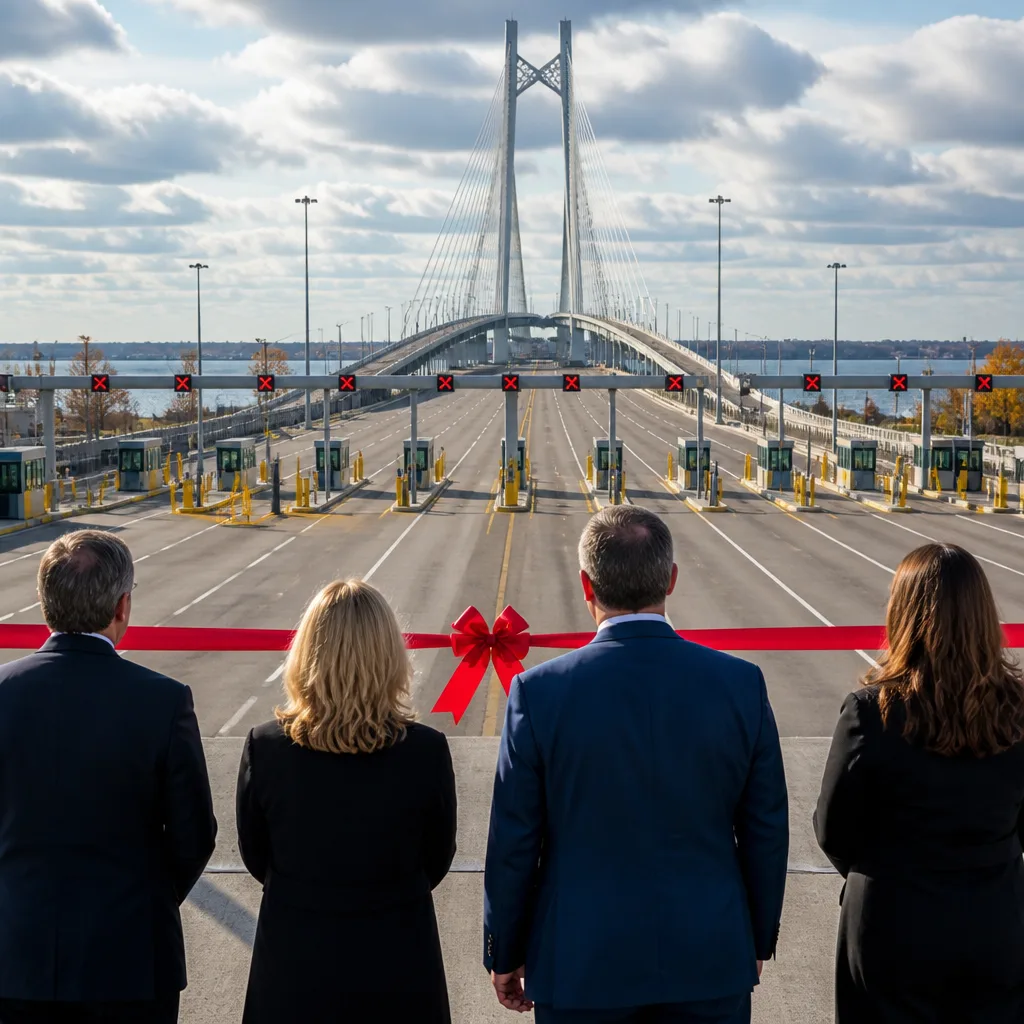
Windsor — Canadian officials on Friday formally opened the long‑anticipated Gordie Howe International Bridge, heralding new capacity at a major cross‑border gateway even as tensions with the United States over tariffs and the bridge’s revenue deal appeared on full display.
Opening marked by economic promise and diplomatic friction
At a ceremony staged on the Canadian side near the customs booths, federal and provincial officials emphasised the bridge’s role in improving freight flow and securing jobs on both sides of the border. Housing and Infrastructure Minister Gregor Robertson highlighted the project’s inspection capacity and road connections as central to reducing delays for commercial carriers.
“That faster predictable border crossing will save carriers roughly 850,000 hours a year,” Robertson told the assembled crowd, adding that the time savings translate into “billions of dollars of economic savings and thousands of jobs.”
The event had been planned as a joint celebration with U.S. counterparts, but was pared back to a Canada‑only ceremony after President Donald Trump announced new tariffs affecting roughly US$28 billion in Canadian exports. Mr. Trump also posted about the toll‑revenue arrangement during the ceremony, underscoring the diplomatic strain surrounding the project.
What the bridge delivers — and what remains disputed
Officials repeatedly framed the bridge as an investment in efficiency that will benefit both countries, citing features intended to streamline border processing and reduce congestion. Construction of the new crossing has been one of the largest binational infrastructure undertakings in recent decades.
Yet the celebration could not fully sidestep disagreement over a provision in the agreement that allocates a portion of toll income to a U.S.‑controlled fund. Under the deal, 50 per cent of net toll revenues for the first 15 years will be directed to an economic development fund “solely controlled” by the United States, a point that has drawn criticism and became a focal point of public attention during the opening.
| Feature | Canada side | U.S. side (Detroit) |
|---|---|---|
| Inspection lanes | 24 | 36 |
| Estimated annual carrier time savings | 850,000 hours | |
| Toll revenue split (first 15 years) | 50% to a U.S. controlled economic development fund | |
Reporters pressed Mr. Robertson about whether the United States could still back out of that arrangement and about the role of the Moroun family, owners of the nearby Ambassador Bridge, which has long been the primary crossing in the Windsor‑Detroit corridor. The minister sought to keep his remarks positive and focused on the bridge’s benefits, saying Canada will be repaid over time for the investment.
Local voices and the bridge’s namesake
The ceremony also paid tribute to the bridge’s namesake. Murray Howe, son of hockey legend Gordie Howe, addressed the audience and reflected on his family’s connection to the region and the significance of the naming.
- Officials emphasised the bridge’s potential to reduce cross‑border delays and strengthen trade.
- Tariff announcements by the U.S. president turned the originally binational ceremony into a Canada‑only event.
- A contested provision directing half of net toll receipts to a U.S.‑controlled fund for the first 15 years remains a source of controversy.
As commercial traffic shifts to the new crossing, policymakers and business leaders will be watching whether the projected time savings and economic gains materialise, and whether ongoing political tensions affect the long‑term operating arrangements for the bridge.
The opening represents a major milestone for Canada’s border infrastructure, but the surrounding dispute over tariffs and toll revenue underscores the fragility of cross‑border co‑operation at a time when trade relations face renewed pressure.