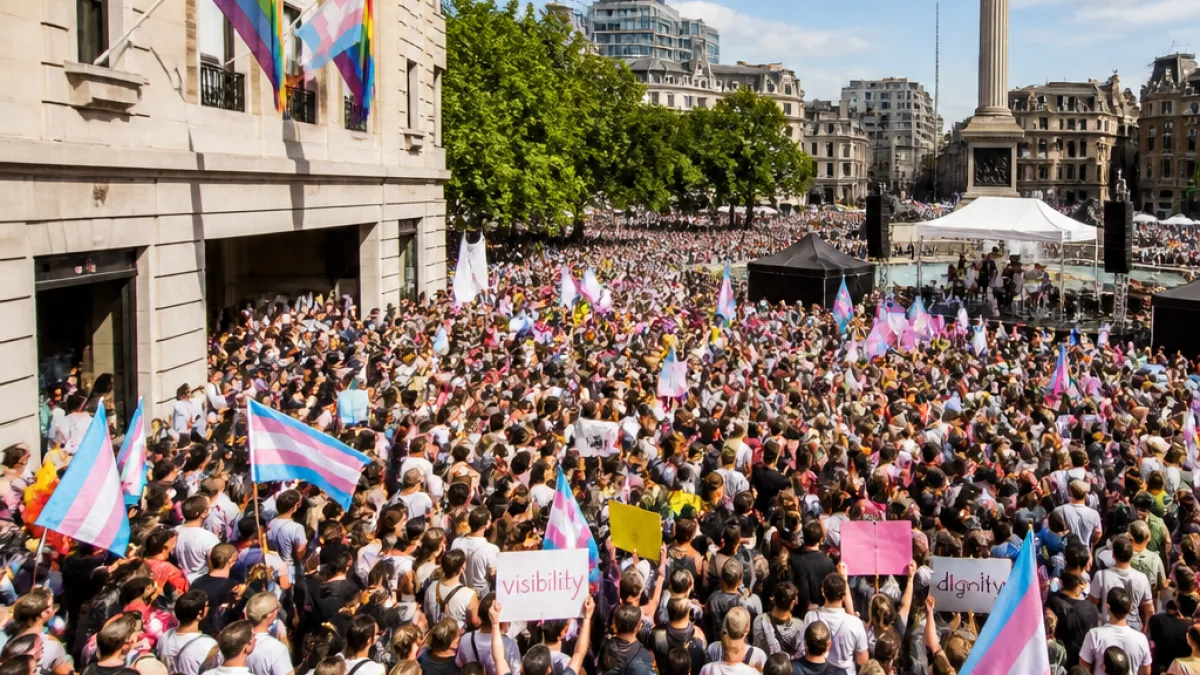
Tens of thousands of people took part in London Trans+ Pride on Saturday, marching through central parts of the capital and gathering in Trafalgar Square to hear speeches from trans activists.
Largest march since guidance change
The event began near BBC Broadcasting House at Langham Place around 13:00 and proceeded towards Trafalgar Square, where organisers and campaigners addressed the crowd. London Trans+ Pride described the political context for this year’s march as "stark", after the Equalities and Human Rights Commission (EHRC) published new guidance in May requiring single-sex spaces to be used on the basis of biological sex.
The guidance, approved by ministers, followed a landmark Supreme Court decision last year that ruled the definition of a "woman" under the Equality Act should be based on biological sex. When that guidance was introduced, the women and equalities minister, Bridget Phillipson, said it aimed to help organisations implement the law and allow people to live free from discrimination and harassment.
Voices on the march
Organisers said a wide range of public figures and performers were expected to attend. Among those mentioned were actors from recent television hits and social media personalities. The BBC and Metropolitan Police did not provide an official figure for attendance when asked.
Campaigners and attendees framed the event as both a celebration and a defence of trans lives and rights. One of the co-founders of London Trans+ Pride, Lewis G Burton, said ahead of the march that the event exists to remind people that trans people are "not headlines, culture war talking points or distractions from society's real issues, we are human beings."
"We are not headlines, culture war talking points or distractions from society's real issues, we are human beings." — London Trans+ Pride co-founder Lewis G Burton
Attendees described the atmosphere as emotionally charged and cathartic. Registered mental health nurse Alex Palumbo told reporters the march was important because "by being proud, we allow other people to discover and express themselves in authentic ways." Another participant, who gave only his first name, Simon, said he had joined to show support for trans people as attitudes in society had become "so malevolent" towards part of the community.
What the EHRC guidance means for public debate
The EHRC guidance and its political approval have become central to the debate that unfolded on the march. The guidance instructs organisations that single-sex spaces should be provided on the basis of biological sex, reflecting the Supreme Court ruling on the Equality Act. Government ministers said the intention was to give organisations clear and accessible advice about how to implement existing law.
Critics of the direction of national policy have used public gatherings such as Trans+ Pride to argue for the human impact of legal and regulatory changes. Organisers have said the march is intended to centre lived experience and to provide space for trans people and allies to speak about the real effects of policy and public rhetoric.
Local implications and community response
Though the event took place in central London, its themes reverberate across communities, including here in Ontario, where debates about access to services, single-sex spaces and legal protections for transgender people are also active. Local community organisations and health professionals often watch national developments closely because changes to guidance and legal interpretations can affect service delivery, support groups and funding priorities.
- Location: March began at Langham Place and ended at Trafalgar Square.
- Context: Held after EHRC guidance on single-sex spaces and a Supreme Court ruling defining "woman" by biological sex.
- Purpose: Described by organisers as both celebratory and a response to a tense political backdrop.
The march closed with speeches by trans activists in Trafalgar Square. Organisers and attendees said the gathering was about visibility, dignity and challenging what they described as dehumanising public narratives. For many who attended, the event offered both political protest and personal affirmation amid continued public and legal debate.
| Item | Detail |
|---|---|
| Start time | About 13:00 BST |
| Start point | Langham Place, near BBC Broadcasting House |
| End point | Trafalgar Square |
The march and its messaging are likely to remain part of ongoing national conversations about rights, public spaces and how legislation is interpreted — debates that community organisations, health providers and local authorities will continue to monitor closely.