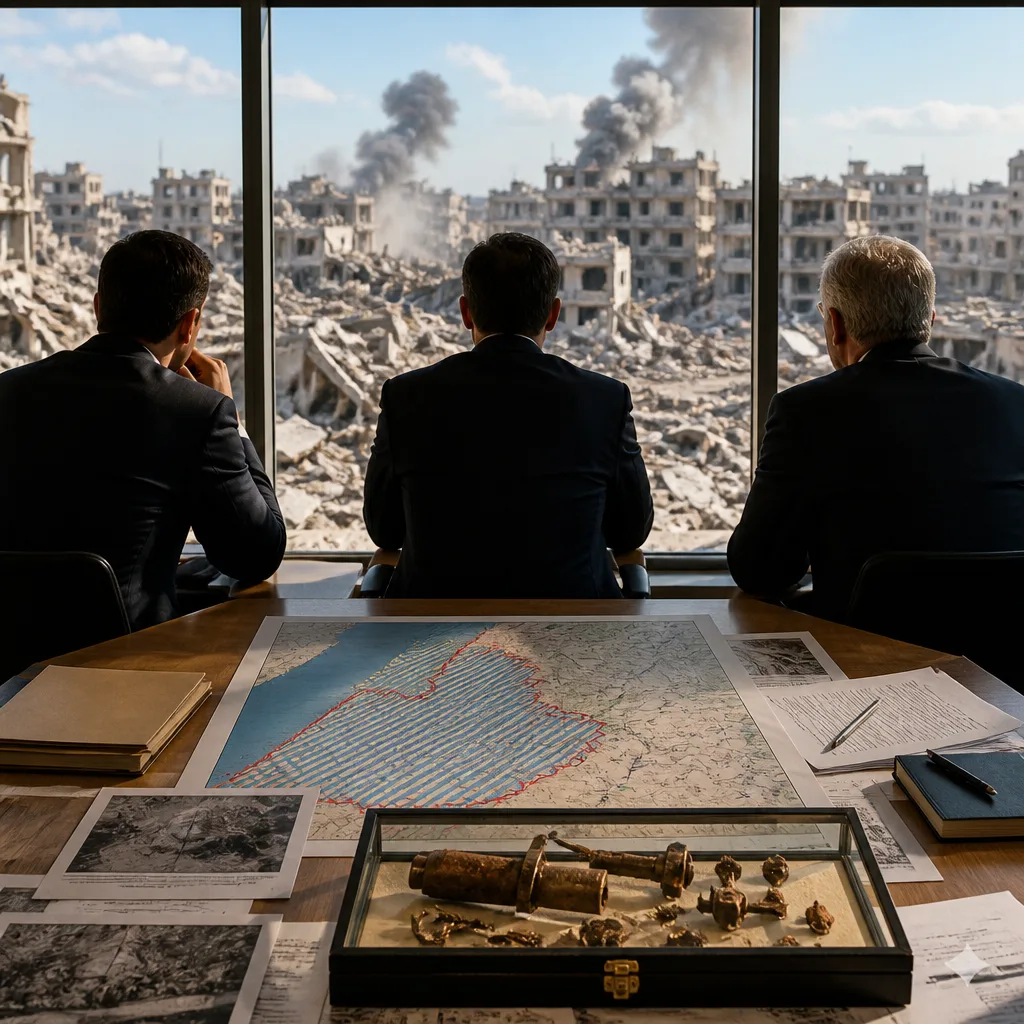
Diplomatic negotiators are examining a fraught proposal that would see Hamas relinquish its weapons while Israel withdraws from roughly 70 per cent of Gaza. The bargain, if it were to hold, could provide a rare route towards easing hostilities — but the political, security and humanitarian barriers are profound.
Why the idea has traction and why it may fail
"There are many reasons why it might not work. At the same time, it is potentially a rare chink of light in a bleak picture."
The concept centres on mutual concessions: Hamas would be required to disarm; Israel would pull back from most of the territory it currently controls. In theory, that exchange could reduce the immediate risk of renewed large-scale combat and create space for reconstruction and governance arrangements in Gaza.
But the realities on the ground complicate any straightforward implementation. The war has produced deep mistrust between the parties, vast destruction of infrastructure and civilian life, and the deaths of very large numbers of people. Those facts shape public expectations and political constraints for negotiators on all sides.
Human cost that shapes politics
Civilian suffering in Gaza is described as catastrophic for more than 2 million people. Damage has been widespread: homes, livelihoods and services have been devastated. The scale of loss also sharpens domestic pressures in Israel, where many citizens view the removal of Hamas’s military capacity as essential to future security.
Official tallies cited by the analysis include:
- More than 70,000 Palestinians reported killed during the war, with an additional 1,000+ deaths since the recent ceasefire;
- More than 20,000 children reported killed since Oct. 7, 2023, according to UNICEF, with at least 1,000 babies among the dead and wounded;
- On 7 October 2023, attackers from Hamas and associated groups killed nearly 1,200 people in Israel and took 251 hostages.
| Category | Figure |
|---|---|
| Palestinians reported killed (war) | 70,000+ |
| Additional deaths since ceasefire | 1,000+ |
| Children killed (UNICEF) | 20,000+ |
| Casualties on 7 Oct. 2023 | ~1,200 killed; 251 hostages taken |
Complicating factors on both sides
For many Palestinians, the scale of destruction and continuing displacement has fed fears that policies and practices amount to forced expulsion. Reports of organised demolition and the hiring of contractors to continue clearing damaged areas have reinforced those concerns.
Within Israel, a large majority of the population views Hamas as a persistent, potentially lethal threat unless it is fully disarmed and stripped of power. That political reality constrains Israeli decision‑makers: any agreement perceived as leaving Hamas with residual capacity would be politically risky.
Regional actors also affect prospects. Senior officials in Jordan and Egypt, according to the analysis, suspect some elements within Israel’s political establishment may be pushing conditions that could lead to large-scale displacement of Palestinians across neighbouring borders — a scenario with major regional repercussions.
What a path forward would demand
A credible process would require:
- clear, enforceable mechanisms for disarmament and verification;
- security guarantees to prevent a power vacuum or immediate resurgence of armed groups;
- a robust plan for civilian protection, reconstruction and governance in Gaza;
- regional and international backing to bolster implementation and provide monitoring.
Absent those elements, the proposal risks collapsing under the weight of mutual suspicion and the realities of post‑conflict reconstruction. Yet proponents argue that, handled carefully, the scheme could transform a stalemate into a negotiated transition — however narrow and precarious.
The coming weeks and months will test whether diplomatic energy and international pressure can bridge the gulf between what is politically necessary for Israel and what is acceptable to Palestinians and regional neighbours. For now, the plan remains a delicate and uncertain opening amid a landscape of enormous human tragedy.