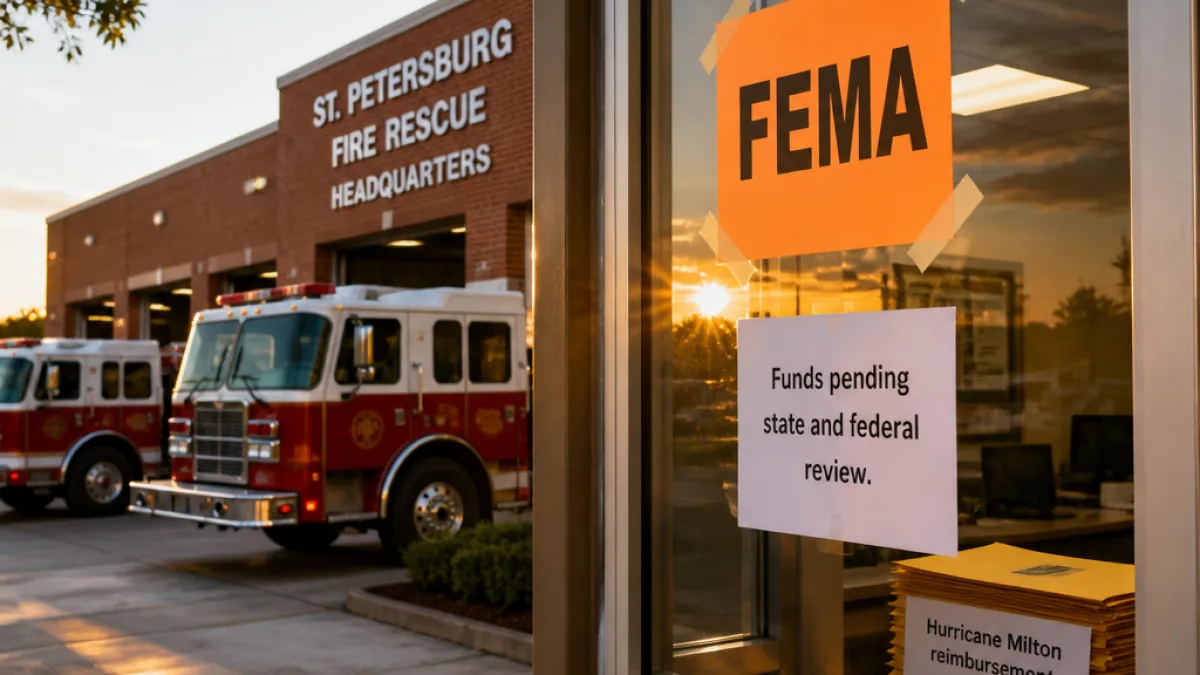
St. Petersburg officials say the city has been allocated $1.4 million from the Federal Emergency Management Agency to reimburse emergency response costs tied to Hurricane Milton, but the cash remains caught up in a multi-layered review process before it reaches municipal coffers.
Allocation confirmed, payment still pending
The award was part of a broader FEMA announcement that included nearly $55 million in disaster recovery and mitigation funding for Florida. While much of that package targets infrastructure and future storm-preparedness projects across the state, St. Petersburg’s allocation is intended to reimburse expenses the city already paid during its Hurricane Milton response.
Deputy Chief of Emergency Services Brett Ciskoski said the bulk of the reimbursement relates to overtime worked by firefighters and rescue personnel who were on duty before, during and after the storm.
“The money has been set aside, but there is a tremendous amount of administrative validation in the process,” Ciskoski told the Catalyst. “FEMA has allocated it, but it cannot be awarded until it goes through the Florida Division of Emergency Management.”
What the funding covers and what it does not
St. Petersburg, like many municipalities that respond to federally declared disasters, paid response costs up front. The FEMA award falls under the agency’s Public Assistance Program, which helps state and local governments recover eligible emergency response and infrastructure expenses after disasters.
- Primary eligible costs cited: overtime for Fire Rescue personnel and related emergency response expenses.
- Purpose of reimbursement: to restore city funds already expended, not to provide new operating revenue.
- Administrative requirement: documentation of expenditures and completion of state and federal review layers before payment.
Ciskoski emphasised that the reimbursement is intended to restore the city’s budget rather than augment current Fire Rescue operating accounts, noting “It doesn’t go back to Fire Rescue because the city already prepaid those costs.”
Concurrent mitigation applications
While St. Petersburg awaits the reimbursement, officials are also pursuing mitigation funding to reduce damage in future storms. Ciskoski said the city has an outstanding application through FEMA’s Hazard Mitigation Grant Program aimed at repair and strengthening work for the Fire Rescue headquarters and the city’s master fire station.
| Item | Detail |
|---|---|
| FEMA allocation to St. Petersburg | $1.4 million (for Hurricane Milton response) |
| Statewide FEMA announcement | Nearly $55 million in disaster recovery and mitigation funding for Florida |
| Main eligible expenses | Overtime for firefighters and rescue personnel; eligible emergency response costs |
The delay between allocation and payment highlights the administrative complexity local governments face when seeking reimbursement after major weather events. Agencies must thoroughly document expenditures and pass multiple layers of review, beginning with the state emergency management office and extending to FEMA.
For municipalities such as Milton, Ontario, the St. Petersburg case is a reminder of two realities: responding to severe weather typically requires cities to pay first and seek reimbursement later, and even when federal funds are allocated the timeline for receiving them can be protracted. That can place short-term pressure on municipal budgets and influence decisions about reserve levels, insurance and the prioritization of mitigation projects.
As jurisdictions across North America adapt to more frequent extreme-weather events, the interplay between immediate response costs and longer-term mitigation funding will remain a critical factor for local governments planning for resilience.