CHARLOTTETOWN — New Brunswick, Nova Scotia and Prince Edward Island have signed a memorandum of understanding committing the three provinces to co-ordinate future electricity planning, a step provincial leaders say will strengthen reliability and may lower costs for consumers.
What the agreement covers
The provinces will work together to produce a regional road map for electricity transmission to be completed by next spring. The MOU also directs officials to examine the merits of creating an independent electricity system operator to manage power flows across the Maritimes.
“It benefits all three of our provinces and really strengthens our ability to be resilient,”
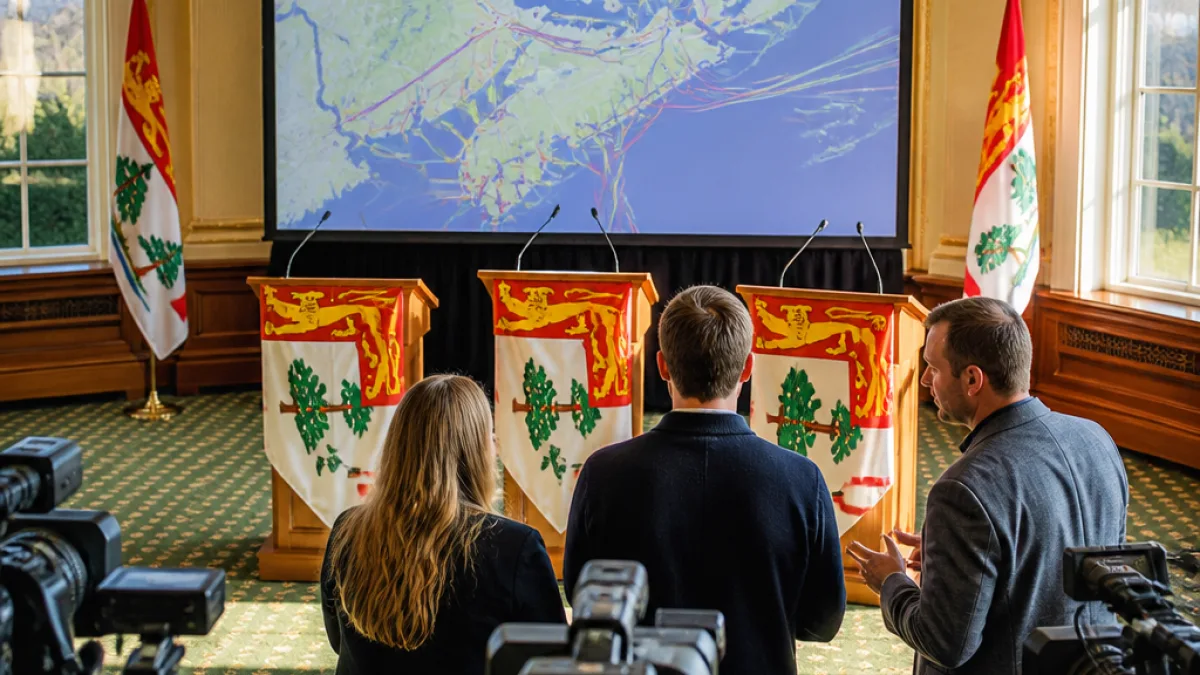
The remark was made publicly by New Brunswick Premier Susan Holt at an announcement in Charlottetown. The three premiers — Holt, P.E.I. Premier Rob Lantz and Nova Scotia Premier Tim Houston — unveiled the plan ahead of a meeting of premiers with Prime Minister Mark Carney.
Federal support and immediate work
Alongside the MOU, the federal government announced a $5.9-million contribution to begin technical and planning work for two new undersea power cables between New Brunswick and P.E.I. Officials say the funding will kick-start studies and initial design work needed to assess feasibility and route options.
| Item | Commitment |
|---|---|
| Regional transmission road map | To be completed by next spring |
| Independent system operator | To be examined as an option for the Maritimes |
| Federal funding | $5.9-million for initial undersea cable planning |
Why leaders call it important
Premiers framed the agreement as a first step toward a more integrated grid across the eastern provinces. They argue that closer co-ordination can reduce duplication, target investment where it is most needed and improve the region’s resilience to outages and shifting demand.
Energy analysts welcomed the move as pragmatic. Michelle Robichaud, president of the Atlantica Centre for Energy, told reporters the memorandum is a significant milestone toward a unified electricity system, saying collaboration helps identify where financing will have the most impact and keeps grids stable while supporting economic growth.
“Collaboration allows us to look at where the money should be more efficiently spent in order to ensure that the grids remain reliable and stable and able to support economic development in the region,”
Possible role for a regional operator
The provinces said an independent operator could function like an air-traffic controller for electricity: identifying gaps in the system, directing power where it’s needed and overseeing competitive procurement for new capacity, including wind projects. Officials said the model would help coordinate generation and transmission planning across provincial boundaries rather than leaving each jurisdiction to act alone.
No decision has been made on the operator’s creation; the MOU limits the current commitment to studying and planning the option. The road map and related technical work are intended to inform that choice.
Implications for Islanders
For Prince Edward Island, the arrangement could mean better-connected transmission links to the mainland and improved access to electricity from a larger pool of generation. Islanders may see changes over time in how new projects are selected and how costs are allocated across jurisdictions, depending on the design of any regional market or operator.
Officials have not yet outlined timelines beyond the road map deadline or how regulatory approvals and rate impacts will be handled. Those questions will be central to future discussions as the provinces move from planning toward implementation.
Next steps
- Provincial officials will complete the regional transmission road map by next spring.
- Technical planning for two undersea cables will advance with the help of $5.9-million in federal seed funding.
- Work will proceed to evaluate establishing an independent Maritimes electricity system operator.
The announcement marks a notable instance of co-operation among the three Maritime premiers on energy policy. Officials say the planning phase will determine whether the initiative can be translated into concrete infrastructure and a governance model that benefits ratepayers across the region.
— Alastair MacPherson, NEXO RADAR