Prince Edward Island’s premier is publicly standing his ground as his government prepares for substantial infrastructure investment and faces growing unease within the Progressive Conservative ranks.
Premier says stability needed ahead of big projects
Rob Lantz told reporters this week he is the right person to guide the governing PCs through a period of major projects and growth, even as some grassroots members express dissatisfaction after a recent byelection defeat.
“I remain the right person to lead the Progressive Conservatives and guide the province into a future of major infrastructure investments,”
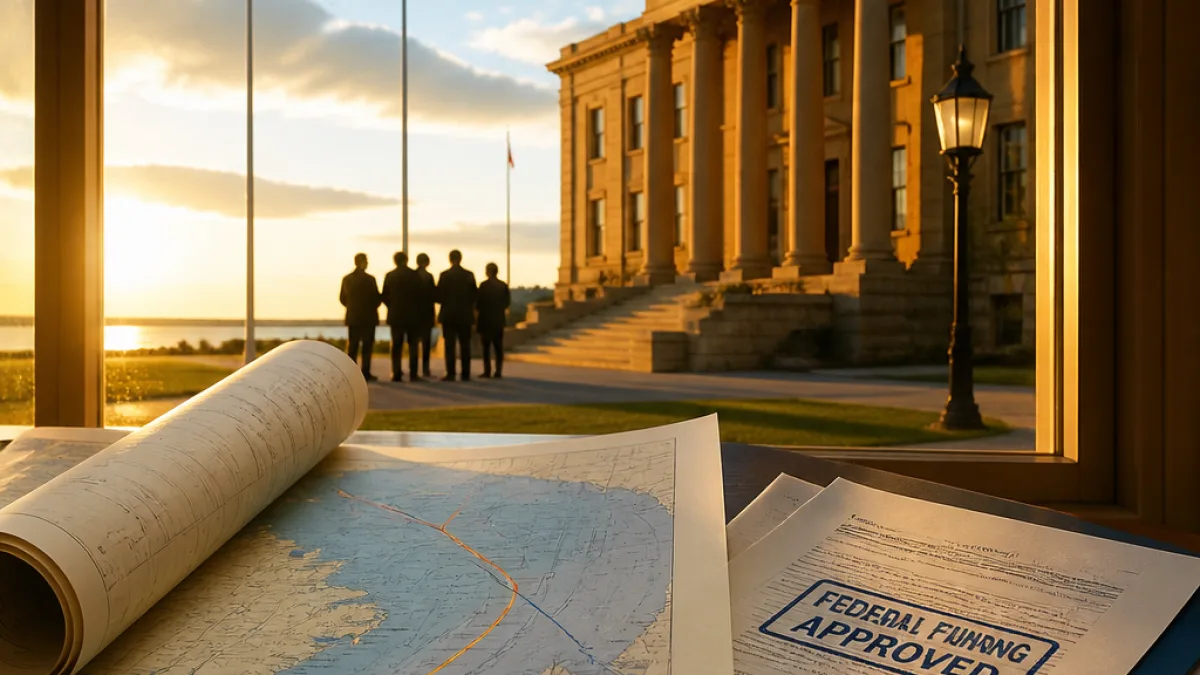
The remark came amid discussion of an electricity expansion that would add two new submarine power cables linking P.E.I. and New Brunswick. The federal government announced $5.9 million in funding for planning work on that project last week, when the province hosted Canada’s premiers, territorial leaders and the prime minister.
What the electricity project would entail
Officials say the plan would involve adding two submarine power cables to the island’s existing connections to the mainland. Two of the four current subsea cables were replaced in 2017 at a cost of more than $142 million, and the premier acknowledged the full cost of adding two more cables is expected to be significant.
| Item | Detail |
|---|---|
| Federal planning funding | $5.9 million |
| 2017 cable replacements | More than $142 million |
Political pressure within the party
The premier acknowledged there is some discontent among grassroots members of his party following the byelection loss. Party president statements to media indicate no formal request has yet been made for a meeting to hold a vote of confidence.
- Premier stresses focus must remain on growth and major investments ahead of the next election.
- Party president says no formal request received for a confidence meeting.
- Officials highlight federal contribution for planning the subsea cable expansion.
While the premier pressed for continuity to oversee planned projects, the source material also noted the province’s net debt continues to grow — an element that will shape debate about both timing and financing of large-scale infrastructure work.
Context and implications for Islanders
Any expansion of the island’s electricity link to the mainland has practical implications for ratepayers, energy reliability and the long-term resilience of P.E.I.’s grid. The addition of submarine cables would increase transfer capacity and redundancy, but it would also carry a substantial price tag and require careful fiscal planning.
For Islanders, questions will centre on how much of the cost will be borne provincially versus federally, the project timeline, and whether the investment will translate into lower rates, improved reliability or greater capacity for renewable generation on the island.
Next steps
With federal planning dollars in place, the province will look to complete studies and design work before committing to construction. The premier has framed the project as part of a broader agenda to foster growth and position P.E.I. for the future, while party insiders weigh the political consequences of recent electoral setbacks.
How the PCs reconcile internal calls for change with the demands of overseeing complex, costly infrastructure projects will be a theme to watch as the government moves from planning to potential procurement and construction stages.
As always, Islanders will be watching both the technical details of any subsea cable proposal and the political dynamics that surround major public-investment decisions.