
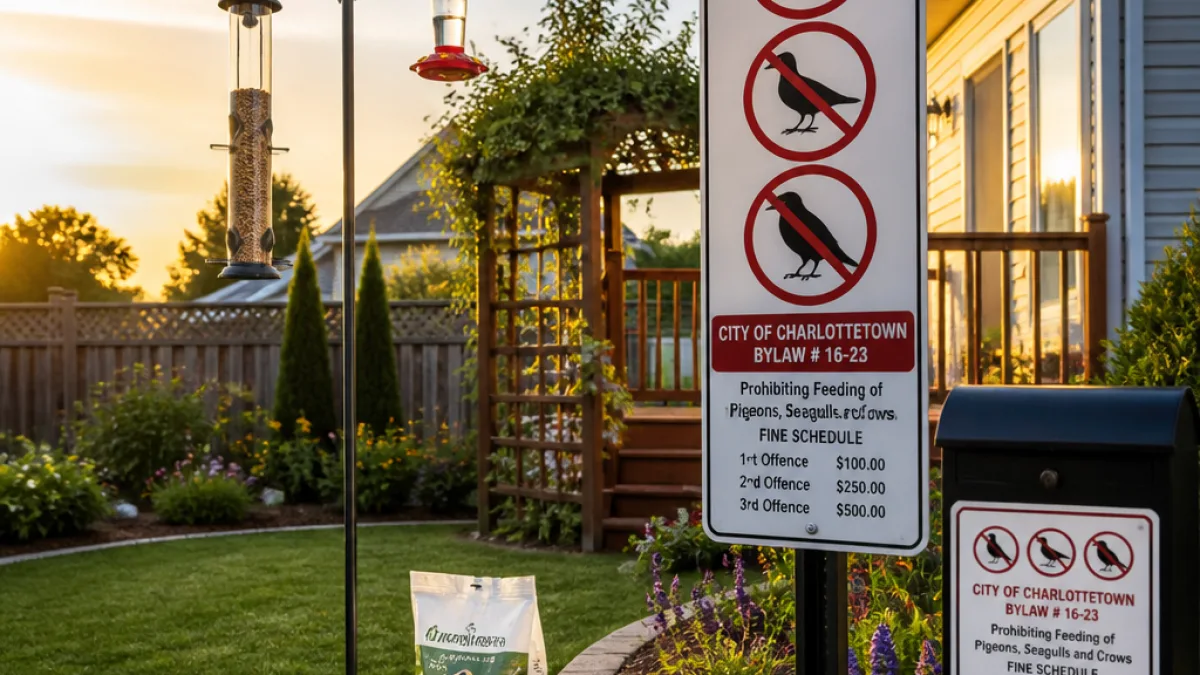
Charlottetown has enacted a new municipal bylaw that places limits on how residents may feed wild birds on private property, clarifying what types of feeders are allowed and which bird species may be intentionally fed. The measure is aimed at reducing nuisance wildlife, limiting neighbourhood conflicts and encouraging safe, responsible interactions with urban birds.
What the bylaw says
Under the new regulation, residents who choose to feed backyard birds must use elevated bird feeders when offering food to songbirds and hummingbirds. Deliberate feeding of certain species is prohibited: the bylaw specifically bars feeding of pigeons, seagulls and crows. It also bans the distribution of excessive quantities of feed — for example, spreading an entire bag of seed across a lawn.
The bylaw sets out a graduated penalty scheme for non‑compliance: an initial fine of $200, rising to a maximum of $1,000 for more serious or repeated offences. City officials say enforcement will emphasise education before tickets are issued.
"He will not be going around the city of Charlottetown with binoculars looking to see who's causing issues with bird feeding in the city,"
That comment reflects the city's approach that bylaw officers will respond to complaints and aim to inform residents before resorting to fines.
Why council moved to regulate feeding
The city says the bylaw is intended to address situations where excessive or inappropriate feeding creates problems for neighbours and public spaces. Feeding that attracts flocks of pigeons, gulls or crows can increase noise, droppings, property damage and the presence of scavengers — concerns often raised by residents living near intense feeding activity.
Julie McCabe, chair of Charlottetown's protective and emergency services committee, told media the rule is not aimed at typical, responsible bird enthusiasts. "Most people who enjoy feeding birds responsibly won't be affected," she said, noting the policy targets excessive behaviours that create nuisance issues for surrounding properties.
Practical rules and examples
- Permitted: elevated feeders for songbirds and hummingbirds with modest portions of seed or nectar.
- Prohibited: intentionally feeding pigeons, seagulls or crows.
- Prohibited: spreading large volumes of seed or grain across lawns or other surfaces that attract large congregations of birds.
City staff advise residents who enjoy bird feeding to keep feeders clean, place them away from property lines where possible, and avoid leaving spilled seed that could attract unwanted species. The bylaw officer will prioritise education and remediation where a complaint is substantiated.
| Issue | Bylaw position |
|---|---|
| Songbirds and hummingbirds | Allowed with elevated feeders |
| Pigeons, seagulls, crows | Feeding prohibited |
| Excessive feed distribution | Prohibited |
| Penalties | $200 initial fine; up to $1,000 maximum |
Local consequences and community response
For many Charlottetown homeowners and renters, feeding backyard birds has been a longstanding pastime and a way to connect with nature. The bylaw narrows the acceptable practices but does not ban everyday backyard birding. Those who feed small numbers of songbirds or maintain hummingbird feeders should generally be unaffected, provided they follow the elevated‑feeder requirement and avoid attracting prohibited species.
Neighbours who have complained about large flocks, sanitation problems or property impacts may see relief if enforcement curbs the most persistent offenders. The city’s emphasis on education first suggests residents who unintentionally breach the rules will be given an opportunity to correct their practices before facing fines.
Charlottetown's move reflects broader municipal concerns about balancing wildlife appreciation with community health and safety. As the bylaw comes into effect, residents seeking guidance can contact the city's protective and emergency services office for specifics on acceptable feeder types, placement and recommended maintenance practices.
The new rules will be of particular interest to people who live in denser neighbourhoods or near parks and waterfronts, where congregations of scavenging birds can have a greater impact on neighbours and public spaces. For most responsible bird feeders, the change will be an encouragement to follow simple best practices rather than a major restriction.
The city has not signalled a timetable for active ticketing and continues to emphasise that enforcement will be complaint‑driven and focused on repeated or excessive cases.