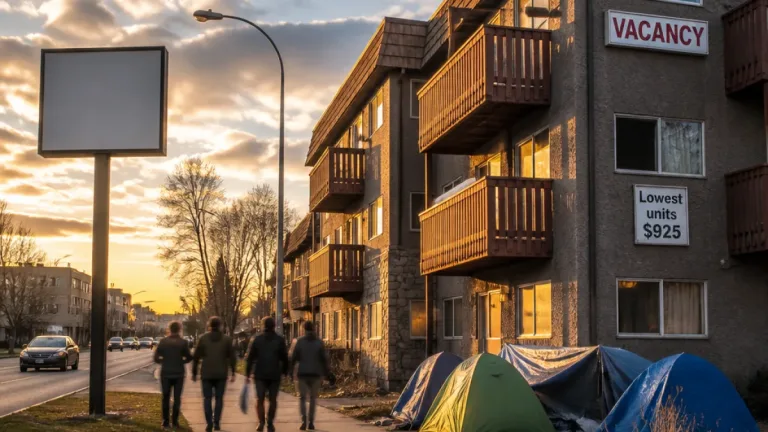

WINNIPEG — The Manitoba government says it has moved 249 people who were living in encampments into transitional or permanent supported housing since it launched a new strategy early last year.
Progress measured, challenges remain
Housing Minister Bernadette Smith announced the updated figure in a news release Friday, noting the total represents an increase from the number the province had reported in February. The government described the placements as the result of co-ordination with local partners and community organisations across the province.
"The NDP government is on track to house 700 Manitobans experiencing homelessness by 2031."
That target — to end chronic homelessness for an estimated 700 people living in camps by 2031 — remains the stated aim of the provincial effort. The figure of 249 housed so far provides an early measure of progress, but advocates and municipal officials caution that demand for supports remains high.
What the local numbers show
Local groups and city officials have documented continuing pressures in Winnipeg, where the transition from encampments to indoor housing is part of a larger effort to address chronic homelessness. End Homelessness Winnipeg published figures earlier this year showing a high number of people experiencing long-term housing instability.
| Measure | Number |
|---|---|
| People moved from encampments into housing (provincial update) | 249 |
| Previously reported by province (February) | 186 |
| Provincial goal (by 2031) | 700 |
| Estimated chronically homeless in Winnipeg (advocacy group) | 4,463 |
| People in encampments in Winnipeg (end of June) | 216 in 69 encampments |
| Encampments last summer (approx.) | 100 encampments; ~700 people |
| Encampments cleared or cleaned (Nov 2025–last month) | 141 |
City and community responses
City spokespeople have provided periodic tallies of encampment locations and cleanup activity. A spokesperson for Winnipeg’s mayor reported that municipal counts at the end of June identified about 216 people living across 69 encampments, a decline from an estimated 700 people in roughly 100 encampments the previous summer.
Municipal crews say they have cleared or sanitised more than 140 sites since late 2025, work that the city characterises as part of managing public safety and sanitation concerns while supporting transitions to indoor housing.
On-the-ground complexity
Advocates for people with lived experience of homelessness say moving people indoors requires not only units but wraparound supports — addiction services, mental-health care and outreach — that help recently housed people remain stable. The province has framed its initiative as a coordinated strategy that involves non-profit housing providers, municipal staff and community organisations.
- Provincial placement total reported: 249.
- Provincial target of people in camps to be housed by 2031: 700.
- Local advocacy group estimate of chronically homeless in Winnipeg: 4,463.
Officials say the pace of placements has increased since the program’s launch, but they did not provide a detailed breakdown of where the newly occupied units are located within the province or the mix between transitional and permanent supported housing for the 249 people named in the update.
That detail matters to service providers and neighbours alike. Transitional housing often includes time-limited stays and on-site supports, while permanent supported housing combines long-term tenancy with tailored support services; both approaches are seen as important parts of a broader strategy to reduce chronic homelessness.
What comes next
The province has set a long-range objective of ensuring the roughly 700 people living in camps will have housing by 2031. For now, community groups and city staff will continue tracking encampment numbers and advocating for expanded supports to keep newly housed residents stable.
As summer moves forward, the outcomes for people who left encampments for indoor housing will be a key measure of whether the combination of units and supports is sufficient to prevent returns to homelessness.
— Grace Bautista, NEXO RADAR