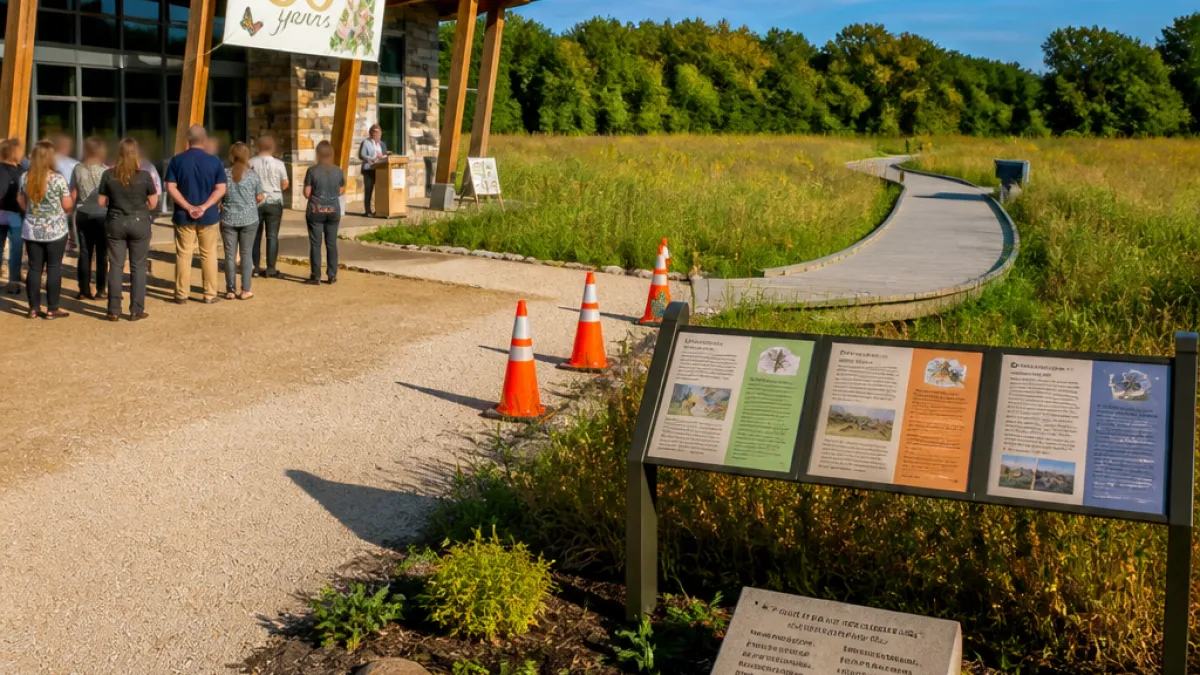
The Living Prairies Museum celebrated its 50th anniversary on Saturday with a project launch that brings new funding and a promise to make the 13-hectare tall grass prairie more accessible to a broader range of visitors.
Half a century of prairie preservation
Designated a park in 1974 and opened as the Living Prairie Museum with an interpretive centre in 1976, the site is one of the last remaining remnants of tall grass prairie in North America. City and provincial officials used the anniversary event to outline a package of support for what organisers called the "Prairie for Everyone" revitalization.
"The fact that we are into five decades here is really indicative of the love and care that people have for the Living Prairie Museum," said Mayor Gillingham.
Speakers at the event stressed two linked goals: conservation of the rare ecosystem and improved public access so that more people can learn about the prairie first-hand. Mike Moyes, Manitoba’s minister of Environment and Climate Change, said the museum plays an important role in both preserving the habitat and in educating younger generations about its value.
Funding and planned upgrades
Organisers said the funding comes from multiple sources to advance accessibility and interpretation at the site. The City of Winnipeg committed capital dollars and funding from the land dedication reserve, while the provincial contribution was channelled through the Manitoba Habitat Conservancy’s conservation trust. Additional support came from Trails Manitoba and Friends of the Living Prairie Museum.
| Source | Amount |
|---|---|
| City of Winnipeg | $57,000 |
| Province (Manitoba Habitat Conservancy) | $56,000 |
| Trails Manitoba & Friends group | $18,000 |
Curator Marika Olynyk said the money will pay for a series of upgrades intended to open the prairie to visitors who have previously faced mobility or language barriers.
- New accessible pathways designed for wheelchairs, walkers and strollers.
- Multilingual interpretive signage to improve engagement for non-English speakers and newcomers.
- An expansion of the medicine garden to showcase Indigenous and traditional plant knowledge.
Organisers expect most of the work to be completed this fall, with some projects continuing into next spring.
Access, education and community reach
Olynyk said the initiatives grew from several years of planning and an effort to combine multiple funding streams. The upgrades are meant to make the museum physically easier to navigate and to broaden its appeal as a learning destination.
"It’s been really exciting. It is an initiative we’ve been thinking about for a few years, so we were able to bring together a bunch of funding sources to put in a whole bunch of new accessible and inclusive things, so hopefully more people can come and visit," she said.
Officials noted the project also aims to strengthen outreach to diverse communities. The multilingual signs and improved pathways are expected to help newcomer families, seniors and people with mobility devices visit the prairie and learn about its plants, insects and the cultural importance of the landscape.
Why the prairie matters locally
Conserving a piece of tall grass prairie has ecological and educational importance. These habitats support a variety of plants and wildlife adapted to the prairie environment, and their scarcity in North America makes remaining sites significant for biodiversity and research.
Local groups including Friends of the Living Prairie Museum have been involved for decades in stewardship activities such as invasive species removal, native planting and educational programming. The new funds are intended to amplify those efforts by bringing more visitors to the site and creating inclusive learning opportunities.
Organisers say the anniversary and funding announcement are both a celebration and a call to build broader connections between the prairie and the Winnipeg community—particularly families and school groups who can benefit from outdoor environmental education.
Work on the Prairie for Everyone project will begin immediately, with much of the construction and installation planned for completion this coming fall and some components carrying on into next spring.
For visitors, volunteers and local educators, the upgrades are aimed at making the Living Prairie Museum a more welcoming place to discover a rare and vanishing ecosystem right on the city’s doorstep.